A Democrat and an independent are vying for the anti-incumbent mantle in Alaska's U.S. House race.
The race between Bill Hill and Matt Schultz is heating up.

Candidates Matt Schultz, Bill Hill and their supporters agree on one thing: Republican U.S. Rep. Nick Begich III has failed to stand up for everyday Alaskans and needs to be replaced.
What they don’t agree on is who has the best chance of replacing him.
Is it Schultz, a Democrat and firebrand Anchorage pastor who’s stood up for transgender rights, attended No Kings protests, and blasted Donald Trump and ICE on social media?
Or is it Hill, an independent from rural Alaska who commercial fishes for salmon, worked construction jobs and in schools, and has more guns than he can count?
That debate is heating up among those seeking to unseat Begich, a freshman representative who’s largely endorsed the Trump administration’s major policy initiatives.
Supporters of both Hill and Schultz acknowledge that Begich will be more vulnerable if either Hill or Schultz drops out and unifies, rather than splits, the anti-incumbent movement.
But for now, there’s no consensus about which one should do it, and whether such a decision should be made before or after Alaska’s open primary in August — even with Hill pulling in union endorsements and posting strong fundraising numbers in recent weeks.
“There's no smoke filled room, and there's no real power for the party to dictate that,” said Eric Croft, chair of the Alaska Democratic Party. But at a certain point before the general election, Croft added, in a reference to a classic 1986 fantasy film: “In the words of The Highlander: There can only be one.”
‘How come no one is protecting us?’
Nick Begich III is a technology entrepreneur and a member of a longtime Alaska political family that has sent other members to the U.S. House, U.S. Senate and state Senate. His uncle Tom Begich is currently running for Alaska governor as a Democrat.

Begich was first elected to the U.S. House in 2024, after losing in 2022 to Democrat Mary Peltola. In his first year in office, he voted for Trump’s One Big Beautiful Bill Act, which expanded opportunities for oil and other development in Alaska but also sharply cut spending on food stamps and Medicaid, the health-care program for low-income Americans.
The bill could cause some 13,000 Alaskans to lose their Medicaid coverage due to new work requirements, according to a February 2026 analysis published by the state health department. The legislation also placed another 5,000 Alaskans at risk of losing access to food stamps, according to projections by advocacy groups.
Schultz was the first well-funded candidate to announce a challenge to Begich, saying in an October launch video that Alaskans had been “forgotten by those in power.”
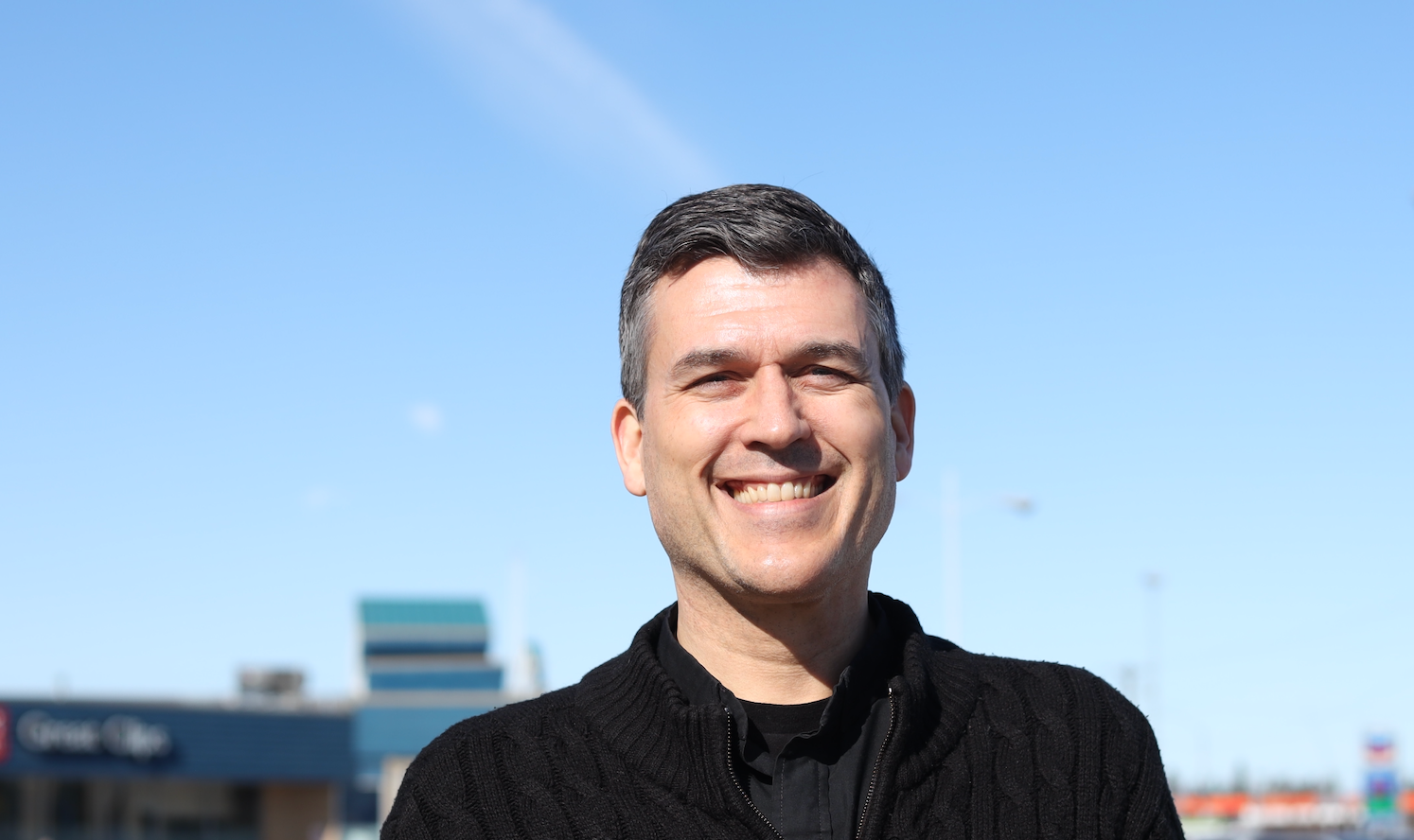
The 53-year-old Presbyterian pastor grew up in New York state and first came to Alaska in 1997 before going back to the East Coast for graduate school and returning to Alaska in 2013.
From the pulpit at Anchorage’s First Presbyterian Church, and on social media, Schultz has spent years advocating for a range of Alaskans: homeless and queer people, women seeking abortions, participants in the Black Lives Matter movement.
“So many people in my congregation and my family came up to me after the most recent presidential election, literally in tears, saying, ‘How come no one is protecting us?’” Schultz said in an interview. “As a pastor and as a parent, that’s when you raise your hand and say, ‘I will.’”
Since entering the race, Schultz has taken steps to appeal to centrist voters — toning down his social media presence and saying he’s not campaigning against Trump.
But in spite of an early pledge to travel widely across the state, his campaign — and his financial support base — has stayed largely within the more urban areas of the state. Schultz has not yet visited any small rural communities since his launch, and more than half of his individual donations were from Anchorage in his most recent campaign finance disclosure.
And while Schultz says he respects Second Amendment rights of “lawful gun owners,” he also owns no firearms himself in a state where some two-thirds of homes have at least one.
“There’s lots of things I support people’s freedom to do or to have,” he said. “That doesn’t mean I do or have them all.”
A Bush upbringing
Three months after Schultz announced his campaign, Hill entered the race, with a launch video that depicts him hunting for ptarmigan on the tundra and jumpstarting a neighbor’s car in his off-road-system hometown of Naknek, in the salmon-rich Bristol Bay region.
Hill, 57, is a member of another large family with deep roots in Alaska: His paternal grandmother, Katie Trefon Hill Wilson, was a respected Indigenous Dena’ina elder whose own mother trapped wolverine, lynx, muskrats, foxes and beavers and used moss for medicinal purposes.
Bill Hill’s parents were teachers, and he spent his first years in the Bristol Bay village of Kokhanok, where, he said, he grew up with no TV, no radio or telephone, “not even electricity for a good part of early life.” His parents raised dog teams; he started commercial fishing at eight years old and still runs a boat today.
After leaving Bristol Bay for college, Hill lived in Fairbanks, Anchorage and Juneau before returning to his home region, where he ultimately became superintendent of the local school district. Along the way, he worked construction jobs and also as a teacher and principal.

A couple years into retirement from education, Hill said, he was “just really pissed off about what I’m seeing, and just really worried about my kids and grandkids having the opportunity to work hard and build good lives here in Alaska.” He described the One Big Beautiful Bill Act and Begich’s vote against a three-year extension of Obamacare health care subsidies as particularly disturbing.
“Nick Begich voted against health care,” Hill said in an interview.
The benefits from the One Big Beautiful Bill Act, he added, “just flow directly to billionaires and corporations through tax cuts.”
Asked for his opinion on Trump, Hill responded without naming him, saying: “If, whoever the administration is, they’re doing good things for Alaska, then yeah, you can support that. But if the administration is doing things that are negative for Alaska, or illegal, then you’ve got to stand up against that.”
Hill has hired Anchorage’s Ship Creek Group, a centrist political consulting firm, which helped him tap into a national donor network. In the first quarter of 2026, Hill raised nearly $800,000, almost triple Schultz’s haul.
Hill’s reliance on that national donor base, though, complicates his anti-oligarch platform: His contributors include multiple left-leaning billionaires and their offspring, like New York investors Dirk Ziff and Michael Novogratz, and some three-fourths of Hill’s itemized donations came from outside the state, according to federal data.
Asked about the billionaires on his donor list, Hill said he had “no idea,” though he acknowledged that he’s “called a lot of people.”
“You’re not going to bring a knife to a gunfight,” he said. “You know that Alaska can support a certain amount of fundraising. And the people I come from, they don’t have a lot of money to give.”
Who wins swing voters?
Supporters of both Hill and Schultz agree that the odds of beating Begich would be significantly better with only one of them in the race.
And Schultz and his allies say that Hill’s supporters have been pressuring the pastor to drop out even before the August primary election.
“They have decided that whoever has the most money is the important thing,” said Jim Lottsfeldt, a centrist political consultant who’s backing Schultz.
Lottsfeldt said Schultz feels “called” to run against Begich, and joked that there are just two people who can convince him to drop out. One is Schultz’s wife, Elizabeth, “and the other is named Jesus,” he said.
“This is him following his faith,” Lottsfeldt said.
Hill’s supporters haven’t publicly called for Schultz to step out of the race. But they do say they think Hill, an independent, is uniquely qualified to bring together the different groups of voters needed to unseat a Republican incumbent in Alaska.
Staff with Ship Creek Group, the consulting firm working with Hill, say their data analysis shows that some 45% of Alaska voters are conservative and 40% are progressive. The remaining 15%, they add, are a sort of swing bloc that non-Trump-aligned candidates have to win to be competitive statewide.
Those voters tend to be clustered in rural communities like Alaska Native villages and coastal fishing towns, and within organized labor. Hill already claims endorsements from five different unions, while Schultz has none.
“When I think of who’s going to win over a truck driver in Fairbanks, a fisherman in Ketchikan, a small business owner in Kotzebue, it feels pretty clear to me,” said Ira Slomski-Pritz, one of Ship Creek Group’s owners. “I can’t imagine someone who’s better positioned to build this coalition than Bill.”
Lottsfeldt, the consultant who supports Schultz, rejected that argument, saying that “we live in a time where being a little bit forceful and a little bit idealistic is exactly what we need.” Hill’s boosters, Lottsfeldt added, think that “the only way to win is to have someone who doesn't have a party, and has a real manly-man vibe to them that can appeal to Republicans.”
Schultz’s supporters say the best test of the candidates’ cross-partisan appeal will come in the August primary — and that the next four months of campaigning will provide a clearer indication of how each one will perform.
For decades, said Croft, the Democratic Party chair, political insiders “anointed” the candidate that would challenge Alaska’s longtime Republican U.S. House member, Don Young, rather than fostering a competitive primary to see which hopefuls would rise to the top.
Then, after Young died in office in 2022, a chaotic special election saw nearly 50 candidates vie for the seat in an “open” primary under Alaska’s new election system. An underdog Democrat, Mary Peltola, advanced to the general election and ultimately won a full two-year term.
Competition, said Croft, “is a good thing.”
Referring to Hill and Schultz, he added: “Let’s let these horses run for a while, and see how they do.”
If you value public interest journalism like this, please consider a voluntary paid membership to Northern Journal. If you're already a paid member, many thanks.