
A remembrance: Rich Mauer shaped Alaska journalism — and me.
I wish I kept a journal of all the lessons I learned from the longtime Anchorage Daily News reporter and editor. Here are a few.
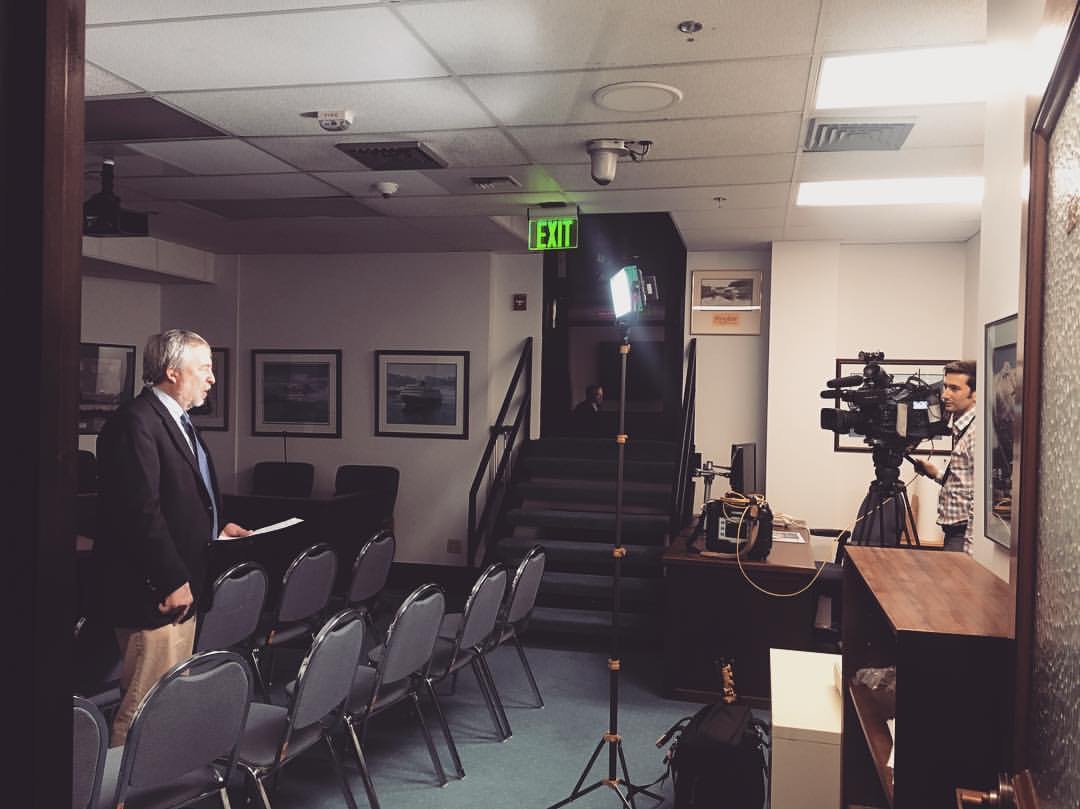
I wish I’d kept a journal of all the lessons I learned over my years working with Rich Mauer, the longtime Anchorage Daily News reporter and editor.
Rich died at 76 this past week. For much of the time I knew him, though, it seemed like he could outlast all of us.
As my editor at the Daily News in his mid-60s, Rich brought an energy to his job, and to his life, that many people half his age would covet. He played racketball compulsively, was a utility player for a local synagogue’s softball team, the 10 Plagues, and functioned on an iPhone and Mac as well as any digital native — except for his annoying insistence on editing with Apple’s antiquated Pages app.
You can read more about Rich’s life and career in the Daily News’ story about his passing. I wanted to offer a few anecdotes of my own as a way to honor Rich, who was one of the most important influences in my career — and to show how his spirit and sensibility will live on in Alaska journalism even after he’s gone.
I first really got to know Rich amid a big shuffle at the Daily News in 2015, a year or so after I was first hired there.
When I started, Rich, a stellar investigative reporter who’d covered many of Alaska’s big stories through the 1990s and 2000s, was still at it, spending legislative sessions in Juneau and reporting on weighty issues like criminal justice in Native communities.
But when the paper went through an ownership change, he became an editor working with a number of younger reporters — including me, as I took on what felt like a high-pressure job as the paper’s Capitol correspondent when the Legislature was in session.
Working with Rich was a gift.
In the big picture, he embodied some of the very best qualities in an editor — ones I try to live up to when I’m editing other reporters in my work today.
Rich was patient, willing to read draft after draft, and would take the time to not just tell me when my writing was off or wrong, but to offer his own suggestions of how to fix it. But he wouldn’t accept me taking shortcuts — and could draw on his own decades of experience and history in Alaska to explain why and how I was getting stuff wrong.
Rich also had a great sense of humor, and showed me how a good reporter could mix a dose of fun into the most serious beat. Among the pieces he helped shepherd into existence was one about a Democratic legislative aide who dyed his hair so people would stop mistaking him for a Republican state House member, plus a story about how “injudicious” photos on social media led the governor to revoke an appointment to a commission on judicial conduct.
At the same time, I recall a pithy Rich reminder about who is, and who isn’t, a fair target for ribbing by a newspaper. As a political reporter for the Daily News, I got a steady stream of feedback, messages and story ideas from readers — some that were substantive and constructive, others that were unkind and unhelpful. I don’t remember the exact details, but at one point, I pitched Rich on writing something about an especially unhinged missive I’d seen. His response: We don’t make fun of the insane.
Rich was known as a tough reporter who was unafraid to confront perpetrators or wrong-doers with questions about their actions — but he did it fairly. I’ll always remember a line from a Rich story I read in the archives that he’d written about the late Ben Stevens, a former Alaska Senate president who’d been investigated for political corruption: “At the door of their family home in South Anchorage on Wednesday, Stevens' wife, Elizabeth, reviewed a draft of this story and said Stevens would have no comment.” To be clear: Rich felt it important enough to make sure Ben Stevens had the chance to participate in the story that he showed up at the guy’s house with a draft in hand.
In one moment, when I expressed some anxiety about my own confrontation with the subject of a hard story, Rich responded with a baseball metaphor. The bases are loaded, Nat, and they’re the pitcher — you’re the batter. Which would you rather be?
Other Rich lessons:
• A reporter should never write that something is “unclear.” If something is unclear, it's usually because someone’s making it unclear, so assign responsibility: “So-and-so declined to explain why…”
• Even if you think you can read the plain language of a state law or regulation, it’s probably wise to double check your interpretation with whichever worker in state government deals with this stuff on a daily basis.
• The lede of a hard news story — its opening sentence — should never drag on longer than 40 words. (Check the archives of my stories, and those I edit by Northern Journal correspondent Max Graham; see how many ledes are longer than 40 words.)
I don’t think I knew how good I had it with Rich as a mentor, and in retrospect, I wish I’d been able to thank him more directly for all he taught me — though I do think it was clear to him how much fun I had in our years working together.
Those years ended in 2017, when Rich was part of a broad round of job cuts made by new Daily News owners who’d acquired the business out of bankruptcy and needed to reduce costs. I understood the financial imperatives, but questioned the decision to include Rich in the layoffs, knowing just how important he was to the functioning of the paper.
He landed on his feet — showing versatility, even in his late 60s, by getting a new gig covering the Capitol for TV news.
In our correspondence at the time, I shared with Rich my frustration about his departure from the paper, telling him that he was as “productive, experienced, hardworking and good at the job as anyone else in the newsroom.”
“You made my stories better and helped me and others hold power accountable,” I told him. I questioned whether I could serve the new ownership if they were willing to make decisions like this one — though I acknowledged that I would probably stick around if it turned out that the new regime would let reporters keep doing their best work.
His response, telling me to wait and see, says a lot about who Rich was.
“The most important loyalty is always to the readers and the public,” he told me. “We’re just dust.”