Alaska's candidates for governor weigh in on oil taxes, and how to cook fish
New from Northern Journal: a recurring survey of candidates for governor.
It's campaign season in Alaska.
Democratic former U.S. Rep. Mary Peltola made national news Monday when she said she's entering what's expected to be a hard-fought and expensive race for the Alaska U.S. Senate seat currently held by Republican Dan Sullivan.
Meanwhile two-term GOP Gov. Republican Mike Dunleavy is barred by state law for seeking re-election — and more than a dozen candidates have already announced bids to replace him.
Here at Northern Journal, we expect the governor's race to be one of Alaska's most interesting in years.
The winner will face a huge array of policy questions expected to remain unresolved after Dunleavy finishes eight years in office.
Educators accuse policymakers of chronic underfunding of schools in recent years, as lawmakers continually battle over how much to spend on state services compared to Alaska's annual oil wealth checks, known as Permanent Fund dividends. Urban areas of the state face huge increases in energy costs and contend with a homelessness and housing crisis; rural areas contend with eye-wateringly expensive food prices amid catastrophic crashes of salmon populations.
Candidates for governor are already laying out their visions of how to respond and gearing up their campaigns — but at this early stage of the race, they're often doing so at untelevised, out-of-the-way forums attended by insiders and special interest groups.
Here at Northern Journal, we saw an opportunity to cut through some of the noise and focus candidates' and voters' attention on key issues.
For the next 10 months, we plan to distribute a regular survey of the gubernatorial candidates, each with two questions — one on policy, and one that's more personal.
We see the survey as a chance to provide Alaskans with clear answers about where candidates stand on the issues that matter most to them — and as a chance for candidates to reach a wide audience of readers and voters directly. As with all other Northern Journal stories, we'll make the answers republishable by any Alaska-based outlet.
This week's policy question is about a proposal to boost taxes on oil company Hilcorp, which some lawmakers support as a way to raise revenue for state government. Then, we hear from candidates about their favorite way to cook fish.
Republicans Dave Bronson, Bernadette Wilson, Matt Heilala and Adam Crum did not respond to this week's survey; Northern Journal sent each candidate multiple emails, as well as text messages, reminding them to complete the survey.
If you have feedback about the survey, or want to suggest a question for the candidates, please drop Northern Journal publisher Nat Herz a line: nat[at]northernjournal.com. Thanks for reading.
If you value public interest journalism like this, please consider a voluntary paid membership to Northern Journal. If you're already a paid member, many thanks.
Question 1: Alaska lawmakers have struggled to keep the state's budget balanced in recent years. One option to raise revenue is Senate Bill 92, which would apply Alaska's corporate income tax to oil and gas "pass through entities" with more than $5 million in taxable income.
This legislation targets Hilcorp, a major oil and gas producer in Alaska which, because of its S-corp structure, doesn't currently pay corporate income tax like publicly traded companies that operate in the state — businesses like ConocoPhillips and ExxonMobil.
The Alaska Department of Revenue says SB 92, if enacted, would generate as much as $150 million for the state treasury. Would you support and sign a bill like SB 92 if elected, and why or why not?

Yes. Because, as (Wasilla Republican) Sen. (Rob) Yundt has observed, it’s a matter of fairness. When Hilcorp purchased BP’s assets, it removed $100 million in annual tax receipts from the state through a loophole. That law was never intended to help large, out-of-state companies; it was to foster the development of our own small businesses. It needs to be fixed.

No, imposing new taxes is not the way to create high-paying jobs for Alaskans.

I would not. There are two sides to a budget — income and expenditures. Both sides must be examined.

Alaska must ensure a healthy oil and gas industry that contributes fairly while protecting jobs, development, and revenues. With current oil prices and global uncertainty, our fiscal challenges are real.
SB 92 deserves careful review to ensure a fair, competitive tax system. In this regard, the current version of SB 92 contains provisions that give me some pause. While I respect legislators advancing and modifying these bills, as governor, I would evaluate legislation based on economic impact, long-term revenue stability, and keeping Alaska competitive for responsible energy development.
Oil development requires billions of private investment years before production begins. Future revenues depend on decisions today.

Targeting an S-Corp that doesn’t get the tax breaks C-Corps do, has been saving our bacon as a gas supplier, has put oil in TAPs, and has added billions to state coffers we otherwise wouldn’t have is a bad idea. I wouldn’t sign the bill.
I also oppose SB 92 because we’ve just 3 years to maximize opportunities with a federal administration keen on moving resource projects forward. Raising taxes signals to companies Alaska is not business-friendly, lacks fiscal discipline, and would chase industry away.
Growing/diversifying our economy via cheap energy and more lands in Alaskans’ hands will increase participants to ensure adequate revenue. Increasing the tax base, not increasing taxes, is the answer.
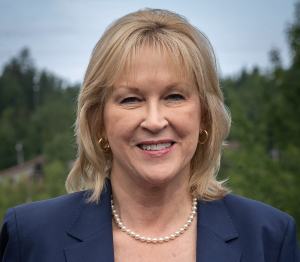
I don’t believe it’s appropriate for the lieutenant governor to get ahead of the governor on legislation that is still moving through the process. That said, SB 92 raises important questions about its broader economic impacts and needs careful review. We must ensure any revenue proposals to change Alaska’s tax system strengthen and support our state's economy rather than inadvertently cost jobs, discourage investment, or weaken Alaska’s long-term energy outlook.

Most revenue from the oil industry comes from production taxes and royalties. All producers pay production taxes and royalties. Hilcorp stopped BP’s decline and maintained production. Hilcorp likely pays more production taxes and royalties than any other — more than BP projected.
Under SB 92, projected revenue is $0 to $150 million. This uncertainty is problematic, because the new tax cost is $500,000.
We have 11,700 S-Corps in Alaska. Hilcorp was already an S-Corp. It is problematic to target Hilcorp with a tax that no other S-Corp pays.
There is division over SB 92. I do not support SB 92 as written. Before moving forward with a new revenue measure, we must find common ground that reflects Alaska’s diverse priorities.

I support SB 92.

Yes, but we could do much better if we had a Big Bargaining Stick (one of my campaign planks — a discussion for another time).
We should also charge companies a fair share fee for all of the out of state workers they hire (approximately 40% of oil and gas workers). These people take jobs that Alaskans could have and money from Alaska's resources and then live in other states where they don't pay taxes on the money and don't contribute a penny to our state's economy. I am not proposing a tax, but a "Fair Share Out of State Fee" to be paid by the companies. I will not support a tax of any kind on the people and local businesses of Alaska! Alaskans already pay more for state services than any other state in the nation!

I'd have to say no. The entire structure needs to be looked at. I am for the oil companies paying their fair share, and it should be equal across the board, percentagewise. But we're missing the bigger picture. The bill talks about pipelines.
The proposed gas pipeline will never pencil out effectively, and makes little sense. To liquefy gas on Alaska's warmer southern coast, as opposed to the North Slope, makes no sense. However, a billion-dollar extension of the railroad to the slope makes very good sense. Before we begin looking at new taxes, we need to look at the production of oil/gas/helium (byproduct of liquefication and in short supply world-wide) and coal. ALL are fossil fuels, but only oil is taken seriously.
Question 2: What's your favorite way to cook Alaska fish, and why? Bonus points: share a photo of yourself fishing or preparing your fish dish referenced in your answer to question two. (Publisher's note: There was no length limit on these responses, so proceed at your own risk — though there's also the potential to be rewarded with meticulously outlined recipes for pike, salmon and halibut!)
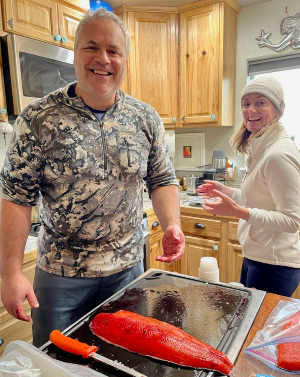
A very important question! Combine olive oil, horseradish, soy sauce, crushed garlic, and salt and pepper. Liberally brush sauce over salmon and cook on the BBQ. Brush sauce once again on salmon just before it's done cooking. Pro tip- sprinkle feta cheese on top. Enjoy!
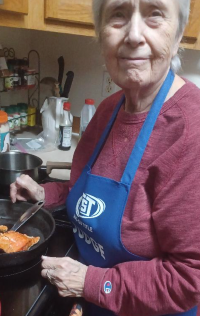
Grilled or fried at home.
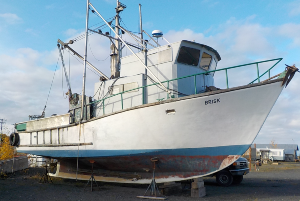
Put the filets in the smoke house for three days before cooking in the oven with lemon pepper and onions.
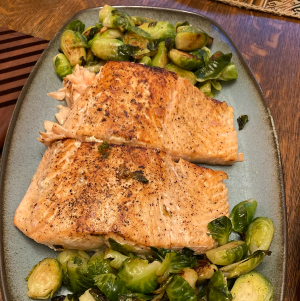
I am terrible chef, but am married to a brilliant one - Sarah Sledge. My favorite way is the next way she prepares halibut, salmon, or any Alaskan seafood. I have attached a photo prepared by Sarah…. Delicious!! Copper River king with roasted Brussels sprouts.
Bruce Walden: Baked, usually, or smoked.
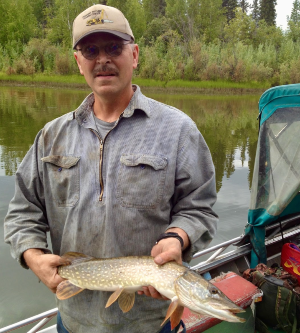
1. Fillet and skin a 12+ pound pike — the bigger, the better. Be sure to remove the Y bones. You can also use salmon if you don’t have pike.
2. Start heating your oil.
3. Cut pike into chunks.
4. Measure out about 2 cups of Krusteaz pancake mix in a bowl.
5. Add about a teaspoon of garlic salt, to taste.
6. Mix in enough beer to make a batter.
7. Drink what’s left over in the can/bottle.
8. Toss pike chunks in the batter.
9. When oil is hot, fry chunks in batches until golden brown. Serve with homemade tartar sauce.
Notes: So delicious, there won’t be any leftovers. Some of my friends from Northway taught me how to cut the Y bones out. Game changer.
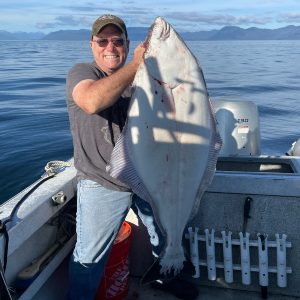
I'm no fancy chef but everyone who knows anything about cooking fish knows that the best fish recipes always start with fresh wild Alaskan fish.
That having been said, how am I supposed to decide which recipe is my favorite?
Here are four of my favorites, and there are many more! You decide which one is best. Oh yes, and a locally grown salad mix of any kind is a welcome addition to all of these dishes. (Don't get me started on the Alaskan variety of ingredients we could include.)
My preparation instructions here will be brief and only for the first meal. If you want more details or instructions for the other three meals, you can reach out to me through my website or stop by for dinner. Okay, four meals coming up!
1. Deep fried halibut with homemade tartar sauce and Alaska's Matanuska Valley baked jojos potatoes. Yes, you can use other kinds of potatoes, but why would you want to?
2. Smoked black cod and rice with dried seaweed salmon egg blend.
3. Skillet fried king salmon steaks and sautéed Tlingit & Haida potatoes, onions and mushrooms.
* As the only biologist candidate, I vow to do what is needed to preserve, protect and increase our king salmon runs!
4. Smoked and fresh packed blend salmon spread with Sailor Boy pilot bread, crackers, chips or make a sandwich for the road.
1. For your Jojos:
Cut the potatoes into jojo pieces, roll them in seasoned (your choice) flour and place them on an oiled (again your choice) cookie sheet. Stick them in the oven at 350-400 and cook them the way you like. While they are cooking, prep and cook your fish.
2. For your wild Alaskan halibut:
Use Alaskan Flour Company's Great Alaska Pancake Mix. If you don't have it, Krusteaz pancake mix works very well but has a much different flavor.
Add liquid to the mix for the thickness of crust you like on your fish. More liquid = thinner crust, less = thicker. After making enough pancake mix for your fish set it aside.
Into another bowl, place Kikkoman Panko bread crumbs, or any brand of potato flakes, or make your own bread crumbs by seasoning and oven drying some Great Harvest Bread and crushing it up before hand.
Now, cut your fish into the size pieces you want to eat. Pat them dry. Next, dip each of the pieces of fish into the pancake mix and then roll it in the crumbs or flakes. Place each piece of dipped and rolled fish on a tray or plate. When all of the fish has been prepped, heat your favorite frying oil in a decent size pot or deep fryer to 350-400.
Fry your fish until golden brown. Salt to taste and enjoy!
Oh yes, the tartar sauce. Chop up sweet onions, dill pickles and garlic. Add mayo and mix it all together. I apologize for the brief tartar recipe. My wife makes it. If you want her detailed instructions contact me or come on over! Oh, and don't forget to take the jojos out when they are done. 😋
Matt Claman: Grilled Alaska black cod with miso, soy sauce, white wine, garlic, and sesame oil glaze.
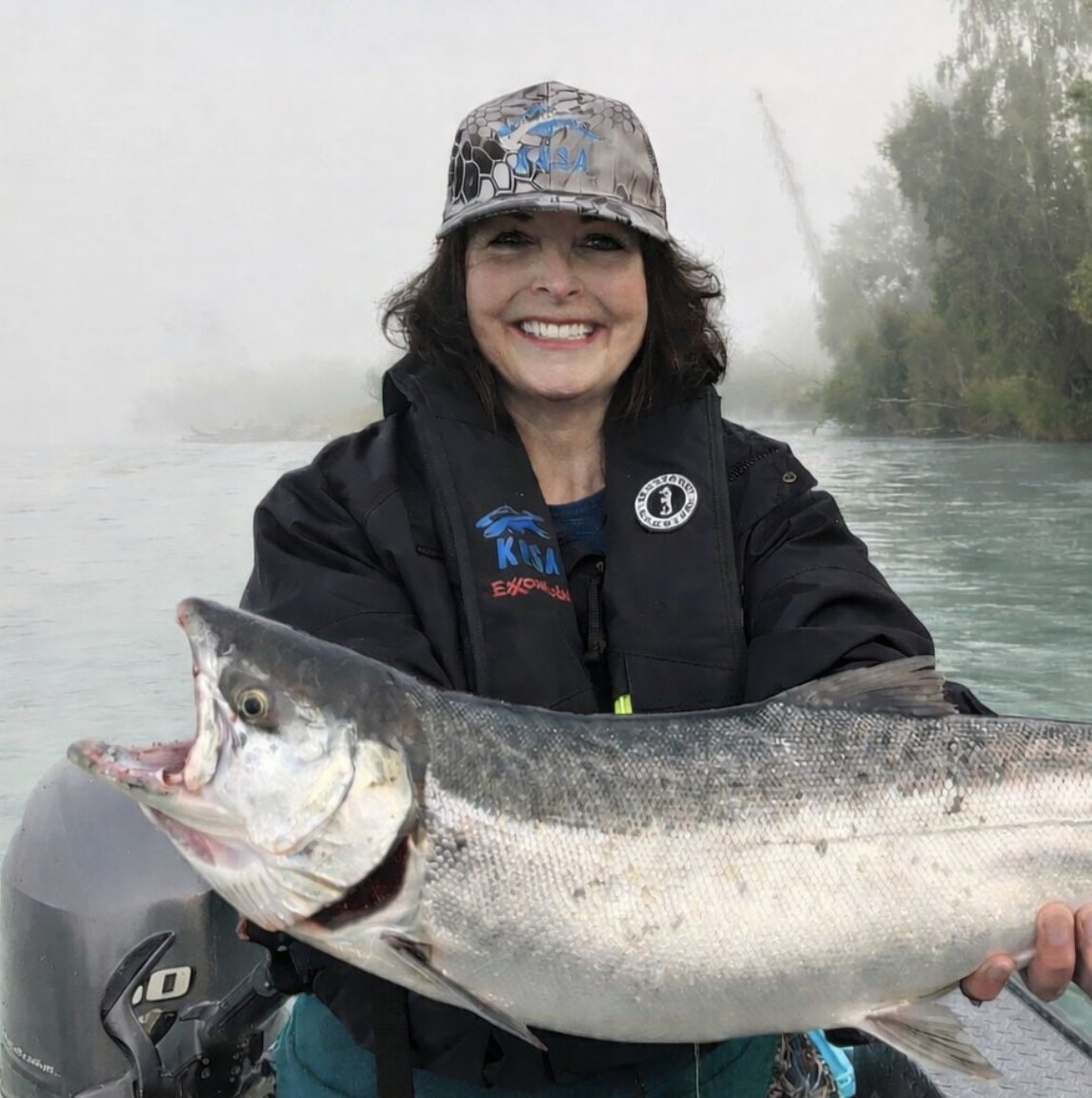
I love fresh grilled salmon with onion and garlic, and I’ll never turn down my brother’s delicious smoked salmon. But on this chilly January day, my favorite halibut recipe baked in a hot oven makes my mouth water just thinking about it.
Shelley’s Halibut Olympia Extraordinaire
• 2 pounds halibut, cut into 6-8 pieces
• Salt to sprinkle
• 2 cups white wine
• 1/4 cup butter
• 1 medium white onion, chopped
• 1/2 cup sour cream
• 1/2 cup mayonnaise
• 1/4 cup grated parmesan cheese, plus 3 tablespoons for sprinkling over fish
• 1 tablespoon finely chopped fresh dill
• Pepper to lightly sprinkle
• 1 cup crushed Ritz crackers
2.5 hours in advance of meal: salt halibut and cover with wine in a bowl. Thirty minutes before serving, preheat oven to 400°F. Melt butter, stir in chopped onion, and pour into 9 x 13 inch pan. Mix sour cream, mayonnaise, 1/4 cup grated parmesan cheese, and dill. Lightly pepper sauce. Remove fish from bowl. Pat dry with paper towels. Place fish in pan and spread with sauce. Mix 3 tablespoons grated parmesan cheese with crushed crackers. Sprinkle cracker mixture over sauce. Bake 20 minutes. Enjoy!
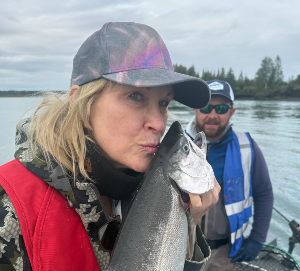
My favorite way to cook fish is over a campfire, just sautéed in butter with salt.