Alaska's oil renaissance has arrived at the doorstep of an Iñupiaq village
'Do you want your kids to see a drilling rig right outside your window?' asked one local leader in Nuiqsut.
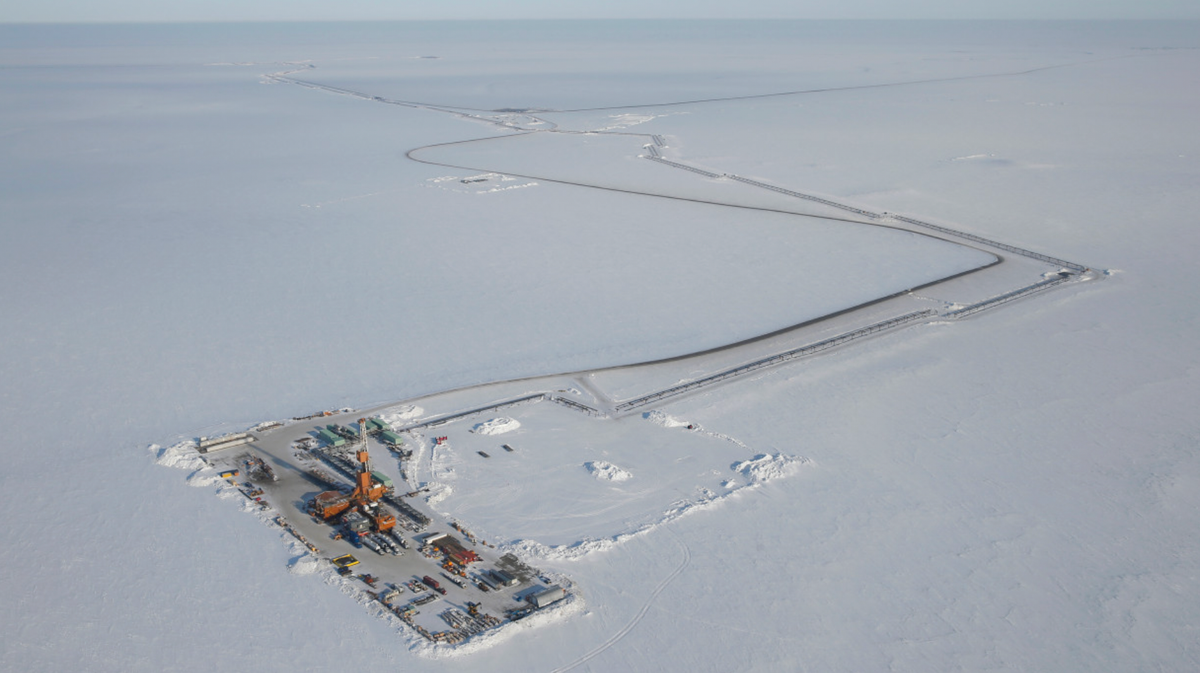
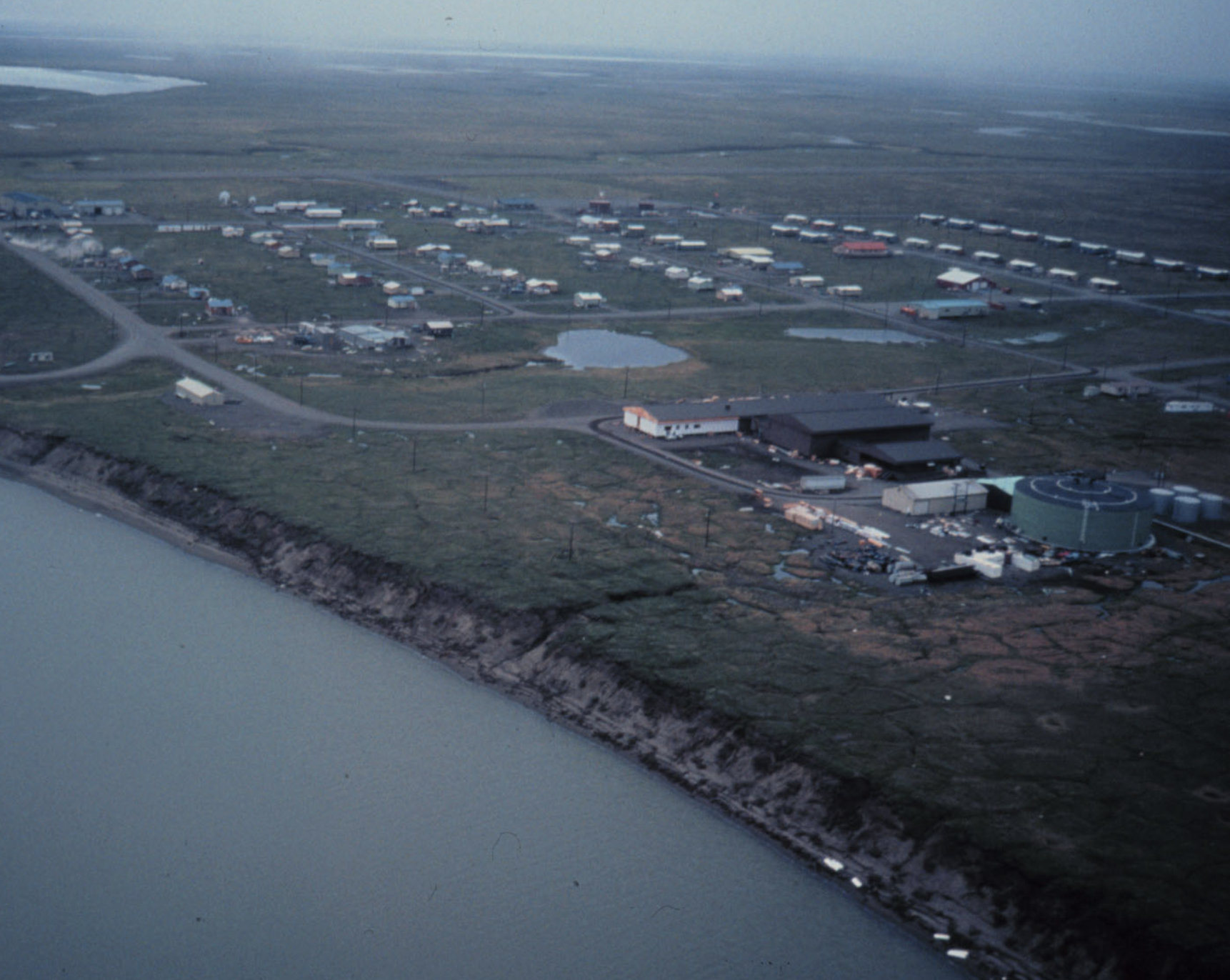
The Iñupiaq village of Nuiqsut has contended for decades with the westward expansion of oil development on Alaska’s North Slope.
Oil rigs have cropped up along the horizon, and industry roads now cut across the tundra just beyond the village.
The industry’s growth has been lucrative for Nuiqsut’s Indigenous-owned village corporation, Kuukpik, which owns land that’s coveted by multinational oil companies. But it also has provoked tensions among local leaders and some subsistence hunters and fishermen, who have objected to encroaching development.
Now, a proposal from one of the North Slope’s most prolific oil producers is driving a new conflict.
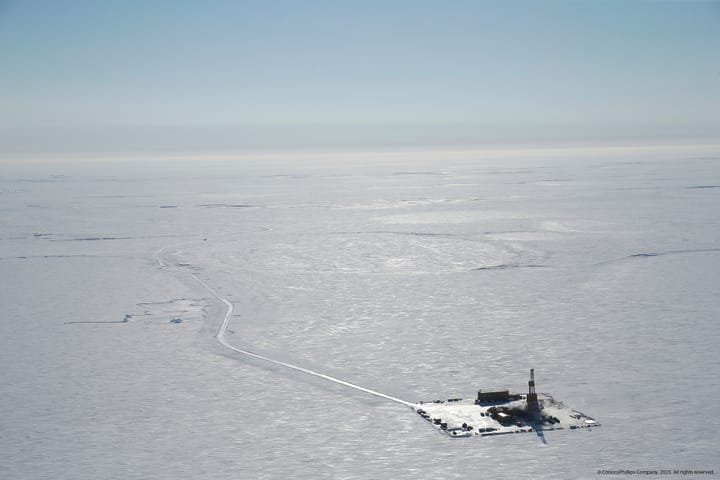
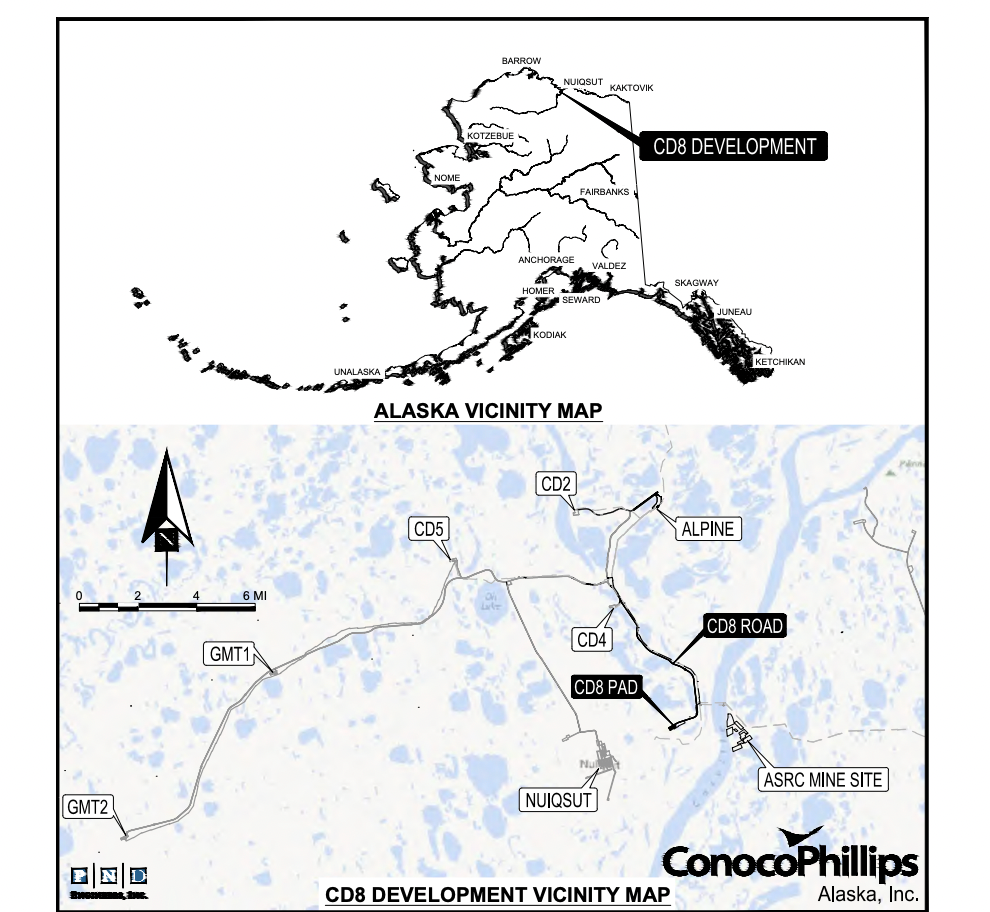
ConocoPhillips wants to drill wells and pump oil just two miles from the village, within clear view and potentially earshot of Nuiqsut’s center. The nearest existing drill site sits about five miles away.
Local leaders — even some who have historically supported and profited from oil production — say ConocoPhillips’ proposal is raising fundamental questions about the village’s relationship with the industry.
“There will be no way to ignore it, no way to pretend that Nuiqsut has not finally been overtaken by the oil fields,” George Sielak, Kuukpik Corp.’s president, said in an unusually pointed 17-page letter to federal regulators in October.
Since ConocoPhillips proposed the project, called CD-8, last year, it has garnered little attention outside Nuiqsut. But it continues to drive intense discussions between industry officials and tribal and corporate officials in the village of 500 people.
An oil ‘renaissance’ at a village’s doorstep
ConocoPhillips is a multinational petroleum company, headquartered in Houston. It’s a dominant player on the North Slope, producing about 170,000 barrels of oil a day there, and it is already planning to spend some $9 billion to build Willow, a huge new development west of Nuiqsut.
CD-8 would be the latest expansion of an existing ConocoPhillips field, called Alpine.
The project would involve building a new, 15-acre gravel pad on the tundra. From the pad, the company would drill wells to tap millions of barrels of oil in a geologic layer, the Nanushuk, that was overlooked by petroleum companies for decades.
Major discoveries in the Nanushuk in the past 10 years have led to an influx of investment and construction across Alaska’s oil patch, including both Willow and another huge field currently being built near Nuiqsut.
Beyond the CD-8 project, where ConocoPhillips would produce oil that’s already been discovered, the company is also planning extensive exploratory work to find new deposits in a nearby area this winter.
The North Slope oil “renaissance,” as some observers have labeled it, is poised to reverse the longstanding decline of crude flowing through the trans-Alaska pipeline.
The industry’s revival in the region could add to local and state coffers, and create new revenue streams for the North Slope’s Indigenous-owned corporations.
But the simmering tensions over CD-8 show how the rejuvenated industry still must navigate complex dynamics with the Alaskans who live closest to it, many of whom still depend on hunting and fishing for food.
ConocoPhillips is “working collaboratively and cooperatively” with regulators and stakeholders to analyze its proposal and alternatives, company spokesperson Dennis Nuss said in an email.
The company “remains committed to ongoing engagement with local and regional stakeholders to ensure their input is considered and questions are addressed,” he said.
The CD-8 project is far smaller than ConocoPhillips’ new Willow development, which spurred fierce national debate before the Biden administration approved it in 2023.
But the new proposal looms just as large for Nuiqsut residents.
“It’s a big deal,” Sielak said in a recent interview at Kuukpik’s Anchorage office. “It’s on our land, and it’s not in the right place.”
A ‘significant’ amount of oil
In permitting documents, ConocoPhillips says CD-8 could produce as much as 90 million barrels from up to 40 wells. At its peak, the project is estimated to produce some 32,000 barrels, valued at roughly $2 million at current prices, each day.
The estimated volume at CD-8 is only about 15% of what the company expects to produce at Willow, which is expected to start pumping oil in 2029.
But it’s still “a significant amount of oil,” said Mark Myers, a former state natural resources commissioner and former head of the U.S. Geological Survey. The crude is also “high quality,” he added, because it’s relatively light and easier to produce at high rates.
CD-8 is one of several new developments in the region targeting the sandstone and other rocks of the Nanushuk layer, about a mile underground.
It’s “necessary” to access oil that ConocoPhillips discovered in 2018 and that can’t be reached from the company’s existing infrastructure, according to Nuss, the company spokesperson.
The proposed drill site is near the boundary between ConocoPhillips’ oil leases and separate leases owned by an Australian multinational petroleum company, Santos.
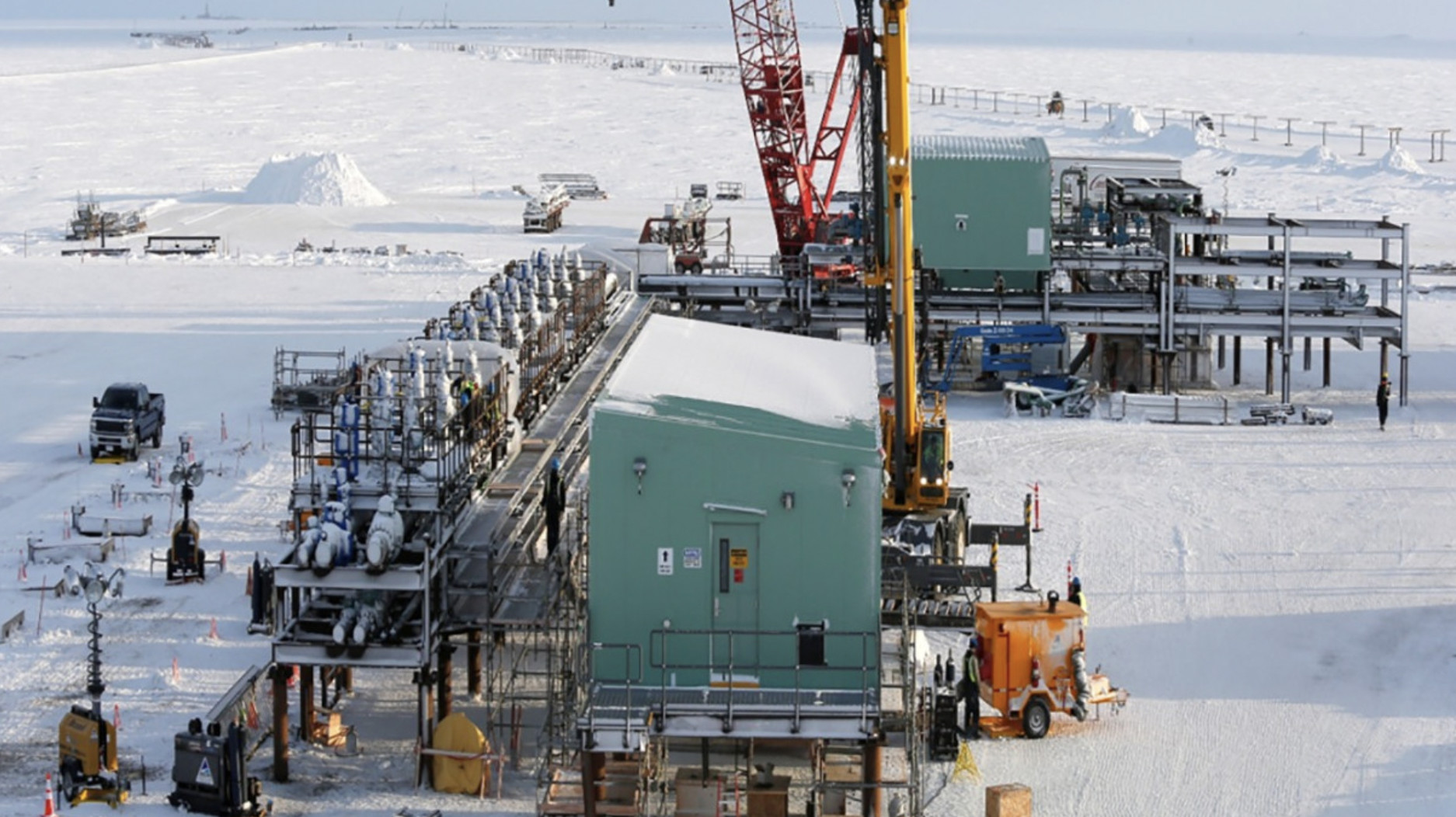
Santos is building its own huge oil field called Pikka, which is expected to start producing from the same Nanushuk formation later this year.
The Pikka oil reservoir was initially identified by Texas wildcatter Bill Armstrong in 2013, in what was the first Nanushuk discovery.
Since Armstrong’s success, a string of additional discoveries in the Nanushuk have shown it to be a “very, very prolific” formation, Myers said.
“This is part of the larger play,” he said of the CD-8 proposal.
Some experts estimate that the Nanushuk, which extends well beyond CD-8 and Pikka, contains billions of barrels of untapped oil.
‘New and different questions’
Oil pumped from CD-8 would generate profits for the state of Alaska and the Indigenous-owned corporation for the whole North Slope, Arctic Slope Regional Corp.
Those two entities jointly own the area’s underground mineral rights and would receive what’s known as a royalty share of the value of oil ConocoPhillips produces.
Kuukpik, Nuiqsut’s village corporation, is also poised to benefit because it owns the surface of the land where ConocoPhillips is proposing to build its 15-acre drilling pad.
Kuukpik has long done lucrative business with ConocoPhillips, leasing land to the oil giant and performing contract work to generate profits for its some 700 Indigenous shareholders. Annual dividends to those shareholders have exceeded $30,000 in some years.
Since ConocoPhillips started to develop the area more than two decades ago, Kuukpik’s leaders have become known as savvy negotiators seeking to strike a balance between resource extraction, protecting the environment and preserving subsistence traditions.
In past years, they have fought some aspects of industry proposals and prompted companies to modify their development plans — in some cases by limiting construction or adding components, like a boat launch, to benefit the village. They’ve also endorsed some projects outright.
But CD-8, if built as proposed, would be different from any previous development near Nuiqsut, Sielak said in his October letter to the U.S. Army Corps of Engineers. It would raise “new and different questions — questions that go to the very core of what daily life will be like in Nuiqsut,” he added.
Sielak and other local officials worry about noise and light pollution and other environmental and health effects of drilling so close to the village.
The pad would sit near a river channel where many community members hunt and fish, and within a half-mile of an 80-acre Native allotment — a piece of private property owned by a local family — that’s used for subsistence.
“You’ve got to ask yourself, thinking about your grandkids: Do you want your kids to see a drilling rig right outside your window?” said Sielak, who lives in Nuiqsut but was in Anchorage this month to meet with ConocoPhillips.
Elected leaders of Nuiqsut’s tribal government did not respond to a request for comment. They have said publicly that they’re opposed to the project, given its proximity to the village.
While Kuukpik’s leaders have concerns about ConocoPhillips’ initial plans for CD-8, they say they are waiting to take a formal position until the oil company weighs all of its options and produces a more complete proposal.
For now, Kuukpik is pushing ConocoPhillips to consider several alternatives to its preliminary proposal — each involving drilling in a different location, farther from Nuiqsut.
But ConocoPhillips’ ability to drill at different sites may be complicated by the boundaries of the company’s leases. Three of the four alternatives suggested by Kuukpik in its letter to regulators could involve drilling on nearby land leased not by ConocoPhillips but by Santos — and in recent years, the two companies have publicly feuded over access to North Slope infrastructure.
A Santos spokesperson did not respond to questions about Kuukpik’s suggestion that ConocoPhillips and Santos work together to mitigate impacts on Nuiqsut.
Nuss, the ConocoPhillips spokesperson, would not say whether his company would consider collaborating with Santos on CD-8.
Kuukpik has been discussing CD-8 with both ConocoPhillips and Santos, said Andy Mack, the Native corporation’s Anchorage-based chief executive and a former state natural resources commissioner.
“It will be interesting to see whether Conoco is actually flexible in their approach,” said Mack. “If you go back 25 years ago and look at the plans and the statements that were made then, nobody imagined that they would build a drill site two miles from the community.”
Public interest reporting like this takes time and money. Northern Journal's primary revenue source is contributions from readers. If you're already a member, thank you. If not, please consider a voluntary subscription by clicking the button above.