Commission again sets Pacific halibut harvest at rock-bottom levels amid U.S.-Canada tensions
A Trump appointee threatened sanctions on Canadian halibut exports if the country’s negotiators didn’t accept a cut to the British Columbia catch, according to multiple sources.
In partnership with the Anchorage Daily News and The Seattle Times, Northern Journal has chronicled the long, steep decline in Pacific halibut. Reporter Hal Bernton filed this dispatch.
The International Pacific Halibut Commission set the 2026 harvest at a historic low during an annual meeting that drew a Trump Administration political appointee to lead tense U.S. negotiations with Canada over shares of a shrunken fishery.
The four-day gathering last week in Bellevue, Washington came during a time of tumultuous relations between the two nations.
President Donald Trump’s tariff policy and blustering talk of making Canada part of the United States have spurred widespread anger among Canadians. January has been particularly volatile, as Canadian Prime Minister Mark Carney, at an economic forum in Davos, Switzerland, attacked “coercion” by great powers, while Trump, in a subsequent speech, asserted that “Canada lives because of the United States.”
At the Bellevue halibut meeting, Drew Lawler, a political appointee to the National Oceanic and Atmospheric Administration, served as the non-voting head of the U.S.delegation.
In private talks sandwiched between public parts of the meeting, the U.S. delegation threatened economic sanctions, and successfully pressured Canadians to trim the British Columbia share of the halibut harvest, according to sources with knowledge of these discussions.
The commission is charged by a more than century-old treaty with conserving Pacific halibut. There are three voting representatives from the United States, and three from Canada.
The halibut fishery has been in a deep prolonged downturn that has buffeted sport, commercial and subsistence fishers in Alaska, British Columbia, Oregon, Washington and Northern California. Since the early 2000s, both the average size and overall population of halibut have fallen precipitously, according to scientists.
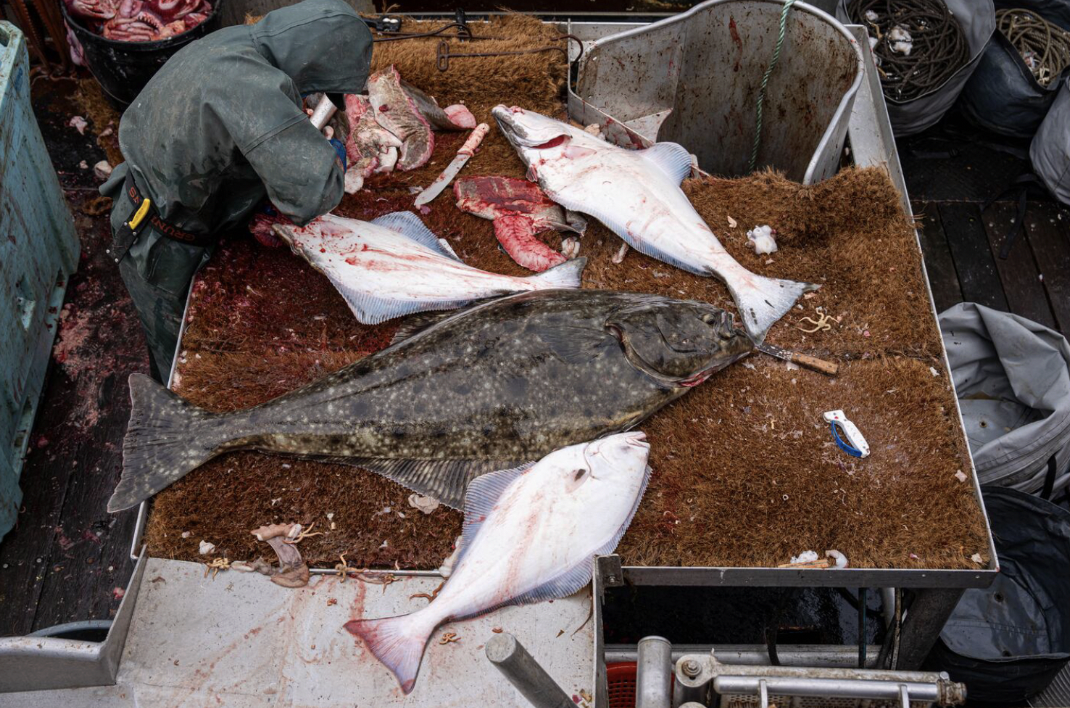
The annual meeting drew dozens of people, including commercial fishermen, charter boat skippers, seafood processing company officials and tribal representatives. .
On the meeting’s final day, the commissioners set an overall take limit of 29.3 million pounds of halibut for U.S. and Canadian commercial, recreational and subsistence fishers.
The 19.3 million-pound commercial harvest will be the lowest in more than 100 years, down slightly from last year’s already rock-bottom level due to the small cut to the Canadian allocation. The overall commercial catch is more than 70% below the levels of the early 2000s,and is likely to keep prices high for the fishing fleets — and also for consumers, who this past year often found halibut sold for more than $25 a pound at seafood counters.
‘Livelihoods were threatened’
The scarcity of halibut has stoked longstanding disagreements between the U.S. and Canada over how to divvy up the harvest..
U.S. participants at the annual meeting argued that Canada has consistently received significantly more fish than is justified by annual surveys of the halibut populations in the waters off British Columbia. These surveys have found up to 13% of the fish dwell in that area, while the Canadians generally have received some 18% of the coast-wide quota.
For years, Canadians have successfully argued at annual meetings that the division of the harvest should not be dictated by such surveys, in part due to concerns about their accuracy. They have called for conservation cuts to be shared by both nations.
This year, the Canadians retreated from their long-held position.
During the private meetings with the U.S. delegation led by Lawler, they agreed to trim their nation’s 2026 take of Pacific halibut by 7.2% — even though the U.S. quota stayed at last year’s level.
“After some challenging discussions where livelihoods were threatened, I did what I felt was best for the Canadian stakeholders and the halibut resource,” Canadian commissioner Peter DeGreef, a commercial fisherman, said during the public portion of the meeting. “Now we're taking the cut in Canada knowing that the halibut stock in Canada will ultimately reap the benefits and the rewards. I wish that other areas would have done the same.”
Reached later by phone, DeGreef declined to comment on statements made by the U.S. delegation in the private negotiations.
According to sources, Lawler threatened that the U.S. could invoke tariffs or use a provision of a federal conservation law to restrict British Columbia halibut exports to American markets.
Lawler, who serves as principal deputy assistant secretary for international fisheries at NOAA, also noted that the Trump administration has withdrawn from numerous international agreements, the sources said.
In an interview before the closed-door meetings, Lawler maintained that he’s supportive of the treaty that established the halibut commission.
After the negotiations, he declined an interview request.
“Each of us got a little something, which is generally how fishing negotiations go,” Lawler said in a statement.
Lawler’s leadership in the negotiations earned praise from U.S. fishers who have long pushed for reductions in the Canadian share of the halibut.
“It was a huge benefit to have him here,” said Buck Laukitis, a veteran halibut fisherman from Homer, Alaska.
An uncertain path to recovery
The harvest limits are intended to keep fishing pressures below a level that would slow the the recovery of the halibut stocks, and they cover a range of fishing operation
The recreational allocations this year tally 3.38 million pounds.They are vital to charter boats, including more than 450 in Alaska that reported taking paying locals and tourists on halibut trips in 2024.
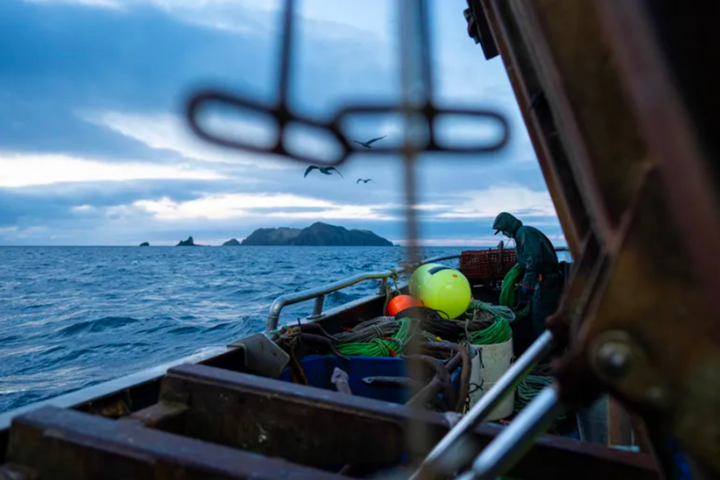
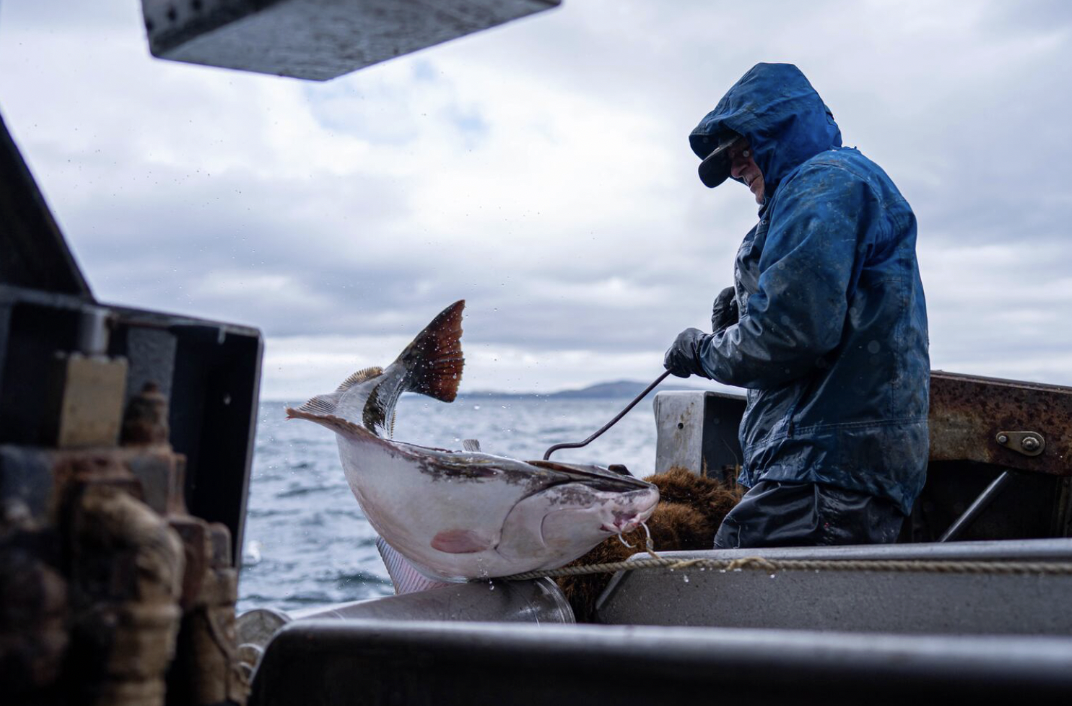
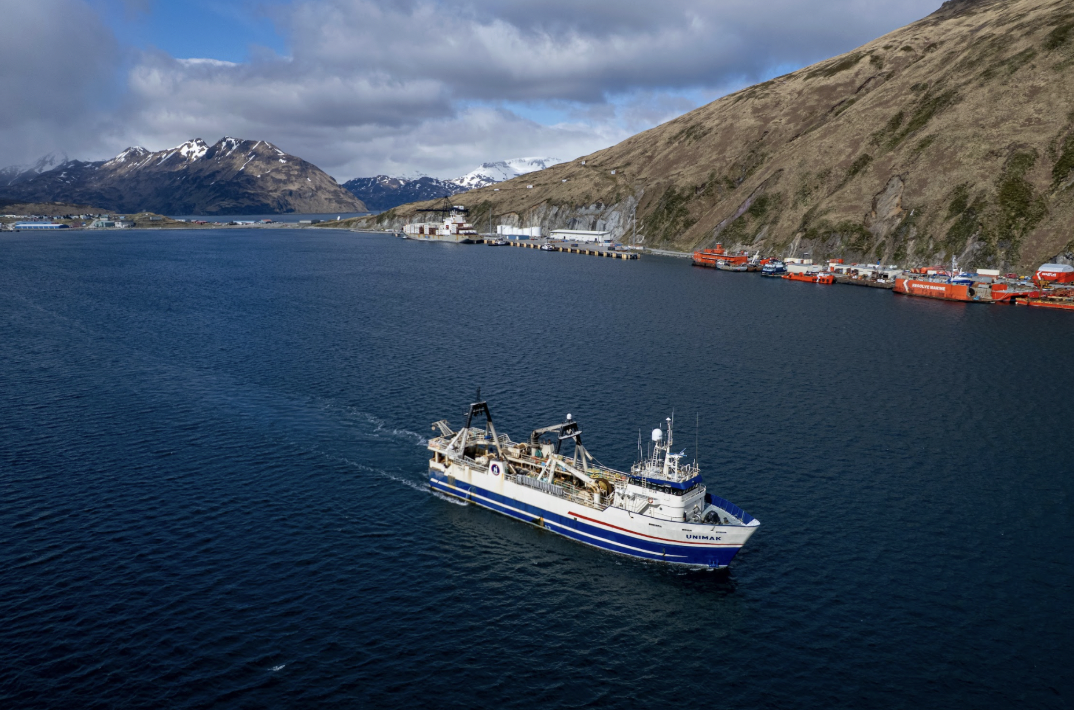
Most of the halibut, though, are caught in commercial harvests by fishing crews that set longlines of baited hooks along the ocean floor. More than 1,000 commercial vessels made deliveries to processing plants in the United States and Canada in 2024.
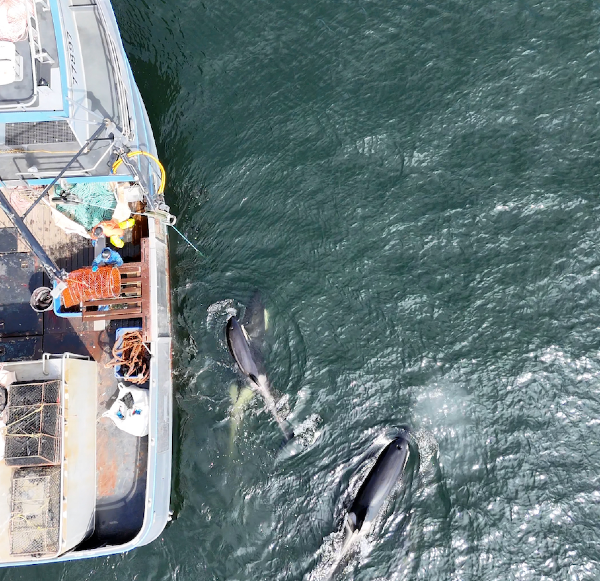
Other commercial fleets also may bring up halibut while targeting other species, and must then throw them back. Bottom trawl vessels working off Alaska net most of this bycatch, typically small, young halibut. Some — but far from all — survive their trip to the surface. Bering Sea trawlers killed some 3.28 million pounds of halibut last year, according to federal reports that track the discards.
Halibut can live for decades. They can grow to weights of several hundred pounds or more, though most of those caught weigh in the tens of pounds.. A mature female may release from 500,000 to more than 5 million eggs in the deep ocean.
Every so often, for reasons researchers don’t fully understand, environmental conditions favor the survival of a particular year’s hatch.
In the late 20th century, some of these year classes were large enough to boost halibut populations to record levels.
But over the past 20 years, survival rates of young halibut have largely been poor. There also has been a dramatic reduction in the average weight of each mature female halibut — a downsizing that some researchers say has been exacerbated by fishing pressures, while others largely blame it on poor environmental conditions for growth.
The estimated collective tonnage of spawning females is a key indicator of stock health. The 2024 estimates were down nearly 80% from the late 1990s, and increased slightly last year.
The commission has charged its staff scientists with determining a “depleted” point, at which the halibut might not recover. Initial modeling found that to be significantly below current levels.
“We can't put our finger on why these things are currently low,” said Ian Stewart, a commission scientist, during a presentation at last week’s meeting. “It could well be that we are just in a state of low productivity moving forward, and it's unknown at what point we may, or may not, move out of that.”