First he scoured the Pacific for Amelia Earhart’s missing plane. Now he wants to search Alaska’s seafloor for minerals.
The Trump administration could open federal waters off Alaska to mineral leasing, but the effort faces broad opposition.
Tony Romeo is on the hunt for minerals, but he’s far from a typical prospector.
Based in South Carolina, Romeo doesn’t spend summers in the mountains with a rock pick, and he’s not interested in combing creek beds for gold.
His focus, rather, is miles beneath the surface of the ocean, where a new and highly speculative industry is racing to find and scoop up vast deposits of metals on the seafloor.
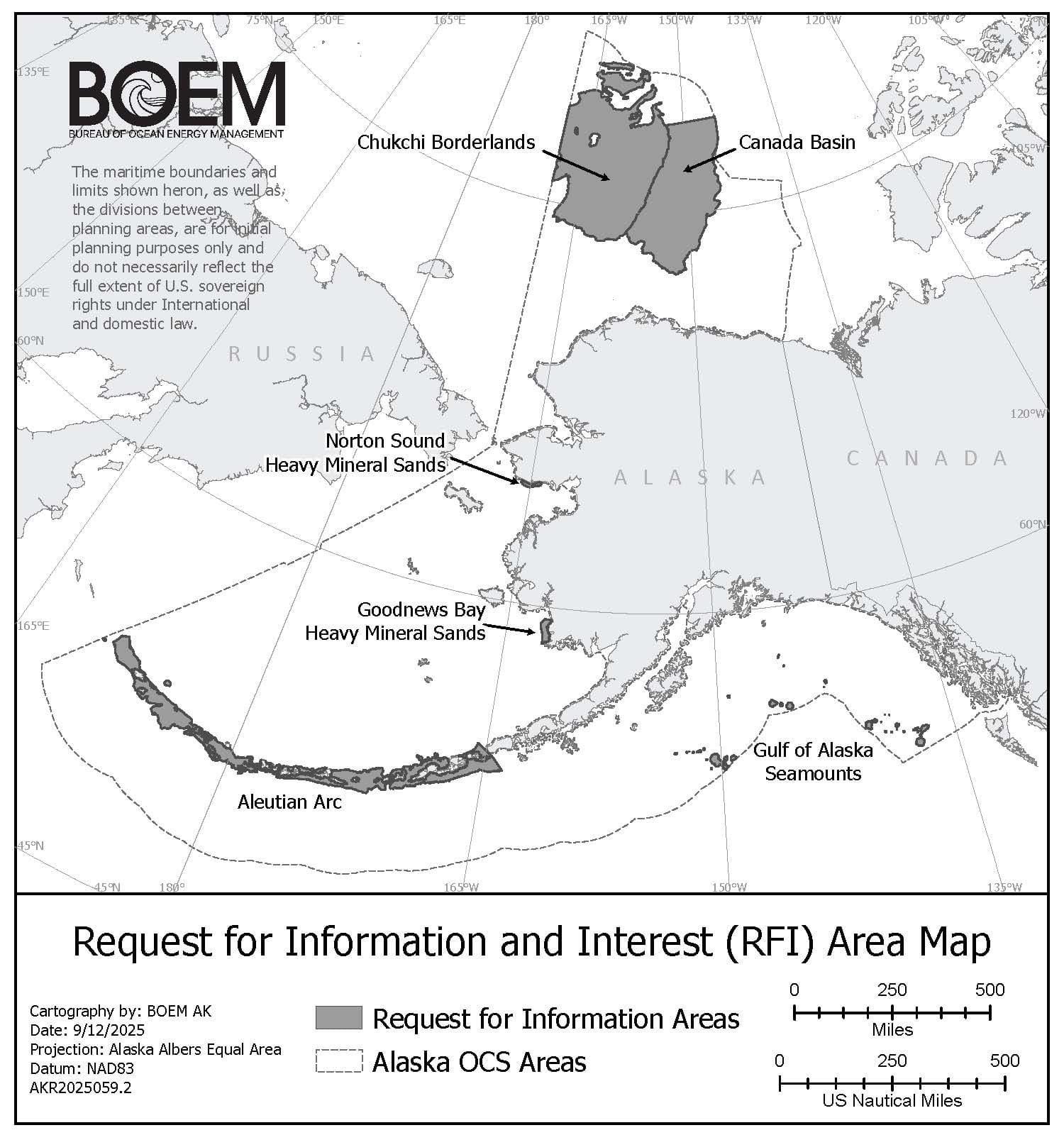
Romeo is chief executive of Deep Sea Rare Minerals, a company that recently expressed interest in mineral leasing offshore of Alaska, after the Trump administration announced earlier this year that it was considering opening federal waters near the state to miners.
The idea to mine the deep is still in its infancy, especially in Alaska: Much of the state’s seafloor remains unmapped, meaning its marine mineral resources are not well known. And the administration so far has received relatively sparse interest: Only a few companies have publicly signaled support for deep-sea mineral leasing off Alaska.
Still, the possibility has sparked discussions around the state — generating excitement among explorers like Romeo but also pushback from conservation groups, Indigenous leaders and commercial fishing groups, who say the industry could harm sensitive marine ecosystems and fisheries.
Federal regulators received more than 90,000 responses to the idea during a public comment period that ended April 1. Of the more than 2,500 comments that the U.S. Bureau of Ocean Energy Management posted online, an overwhelming majority were opposed, according to a Northern Journal review.
“Arctic offshore seabed mining would occur within core marine mammal subsistence use areas and presents unique, unmitigable risks to Iñupiat subsistence, food security, and cultural continuity,” the Iñupiat Community of the Arctic Slope, the regional tribal government for Alaska’s North Slope, said in a comment. The industry, it added, offers “speculative benefits while exposing Arctic communities to irreversible harm."
Supporters, meanwhile, include a handful of companies connected to the industry as well as Nome’s city government. They say tapping into Alaska’s marine minerals could reduce U.S. dependence on foreign countries for important metals, boost national security and stimulate the state’s economy.
A new kind of prospector
A former U.S. Air Force officer and commercial real estate investor, Romeo felt called during the pandemic to take up more adventurous pursuits, he said in a recent interview.
As a pilot, Romeo was fascinated by the enduring mystery of Amelia Earhart’s plane, which disappeared over the Pacific Ocean in 1937 when she was attempting to fly around the world. So, in May 2023, Romeo bought a submarine-shaped deep-sea drone equipped with sonar. He had two things in mind: “Finding Amelia's plane, and then also getting into the deep-sea mining space.”
The plane search came first. After spending millions of dollars and scouring more than 5,000 square miles of seabed, Romeo came up empty-handed — though not without a promising sonar image eerily shaped like a plane that made global headlines. (It turned out to be some rocks.)
Last year, Romeo shifted fully to the business of looking for minerals.
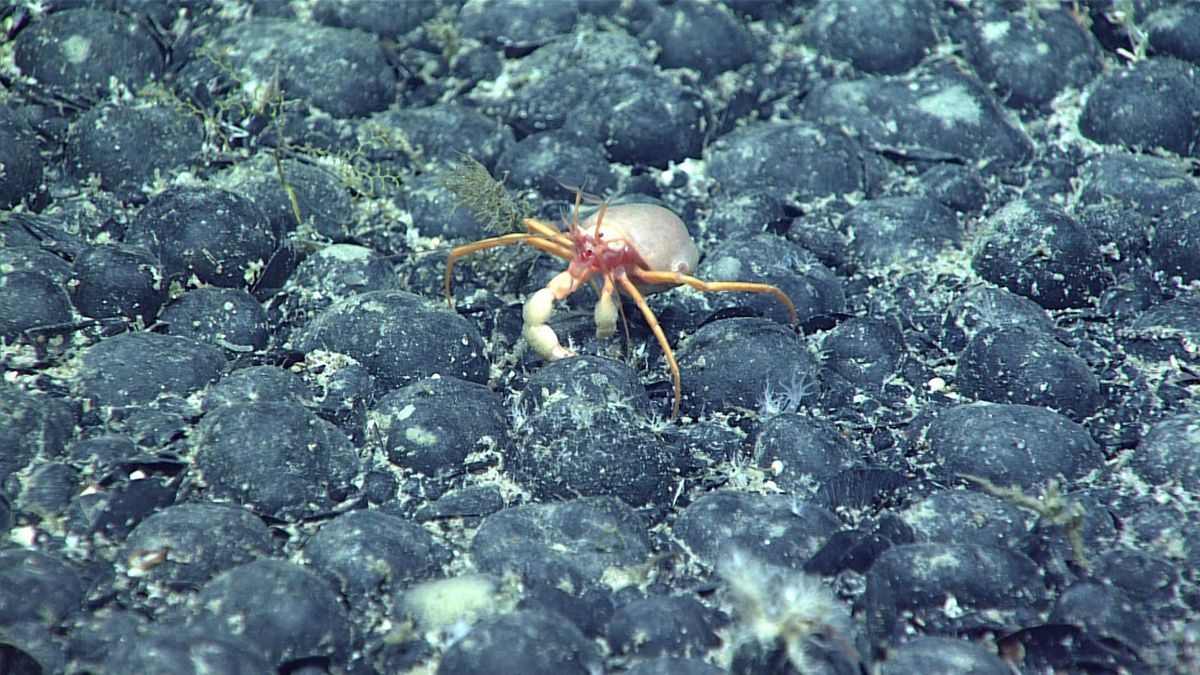
Like a number of other ocean mining startups, Deep Sea Rare Minerals is now searching for ancient, baseball-sized rocks with high concentrations of metals — nickel, copper, cobalt — used in batteries and renewable energy. In some parts of the Pacific, these metal-rich nuggets, known as nodules, are strewn about the seafloor in dense clusters, two or three miles deep.
They haven't been found off the coast of Alaska, but they might be there, along with a few other kinds of underwater mineral deposits, according a 2022 review by federal scientists. Some 62% of the federally-managed seafloor around the state still hasn’t been mapped.
“Let's at least find out what we have there,” said Romeo. “That's the question mark, I think, for Alaska: Is there an abundance of nodules? If there is, I think you'll see a whole ecosystem and industry develop in Alaska, which would be great.”
Romeo’s company is privately held and still seeking tens of millions of dollars in funding. It’s mainly focused on the preliminary steps of mapping and exploration, but it’s also designing mining equipment that it hopes one day to use if it finds enough nodules and can raise the money to extract them.
Deep Sea Rare Minerals is also wants to look for minerals near Guam and in the Clarion-Clipperton Zone, a region of international waters in the Central Pacific that’s become a hotbed for the new industry.
“It's not going to happen in Alaska anytime soon.”
Even in the waters outside Alaska where the industry has concentrated its attention, mining companies face major obstacles, including high costs, technical challenges and environmental opposition.
Despite substantial investment, there's no commercial production of deep-sea minerals anywhere in the world, according to John Wiltshire, a deep-sea mining expert and former professor at the University of Hawaiʻi.
The industry, as of now, is “nonexistent,” he said.
Wiltshire expects that to change fairly soon; the first production globally could start within five years, he said. But it’s likely further off in Alaska, he added.
“The remoteness, the environmental opposition, the fact that some of the minerals are of lower grade — all of these things, in my mind, would contribute to making this whole thing a more difficult proposition in Alaska than it would be in some other places,” Wiltshire said. “It's not going to happen in Alaska anytime soon.”
Even on land, Alaska is a notoriously difficult place for resource development, with high labor and transportation costs and environmental conditions that can be technically challenging to engineer around. Operating offshore only magnifies the costs and challenges, experts say.
Plus, the nascent industry is already drawing intense scrutiny from Alaska-focused conservation groups and Indigenous organizations, including some typically pro-development corporations like Calista Corp. in Western Alaska and Arctic Slope Regional Corp. on the North Slope.
Opponents worry that mining the seabed would harm habitat for fish, marine mammals and other wildlife and could threaten the state’s huge commercial fishing industry and its Indigenous subsistence traditions.
The areas where the Trump administration has said it could open leasing — in parts of the Gulf of Alaska, the Aleutians, the Bering Sea and the Arctic Ocean — overlap with important marine habitats where there are already some protections, said Becca Robbins Gisclair, senior director of Arctic and northern waters at the Ocean Conservancy.
A key concern is the “direct destruction" of the seabed, Gisclair said in an interview. That "really cascades throughout the ecosystem," she added.
Romeo, for his part, said his team has worked to design a system that minimizes impacts — one with “environmental considerations in every part of it.”
He distinguished the nodules that his company is targeting from other mineral deposits called ferromanganese crusts and massive sulfides, which could require more intrusive mining methods.
“It's not tractors on the seafloor,” Romeo said, referring to his company’s proposed method. “It’s floating, and it's got these tines, these kind of rake-like things in the front of it.”
It “scoops underneath and pops” nodules into a collector, then pipes them up to a ship on the surface, Romeo said.
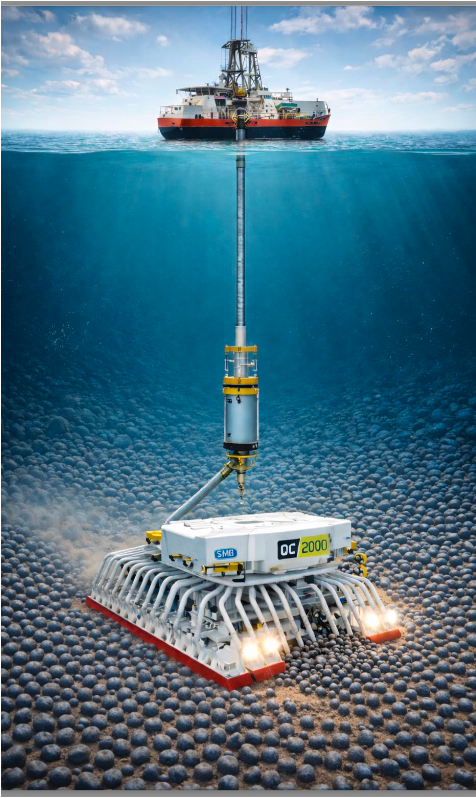
Still, he acknowledged that the plans are conceptual. Deep Sea Rare Minerals is still years away from actual deep-sea mining in Alaska, he said — and that’s only if it’s ultimately authorized by the federal government.
“We're building a mining vessel from scratch, right?” he said. “There's only a couple in the world that have ever been built, and they're all novel.”
Reporting like this takes time and money. Northern Journal's primary revenue source is contributions from readers. If you're already a member, thank you. If not, we'd be grateful if you'd consider a voluntary subscription.