In court, Pebble developer says 27 salmon stand in the massive mine’s way
"I'll kill them all right now, with my bare hands," one mine booster said in a recent video posted online.
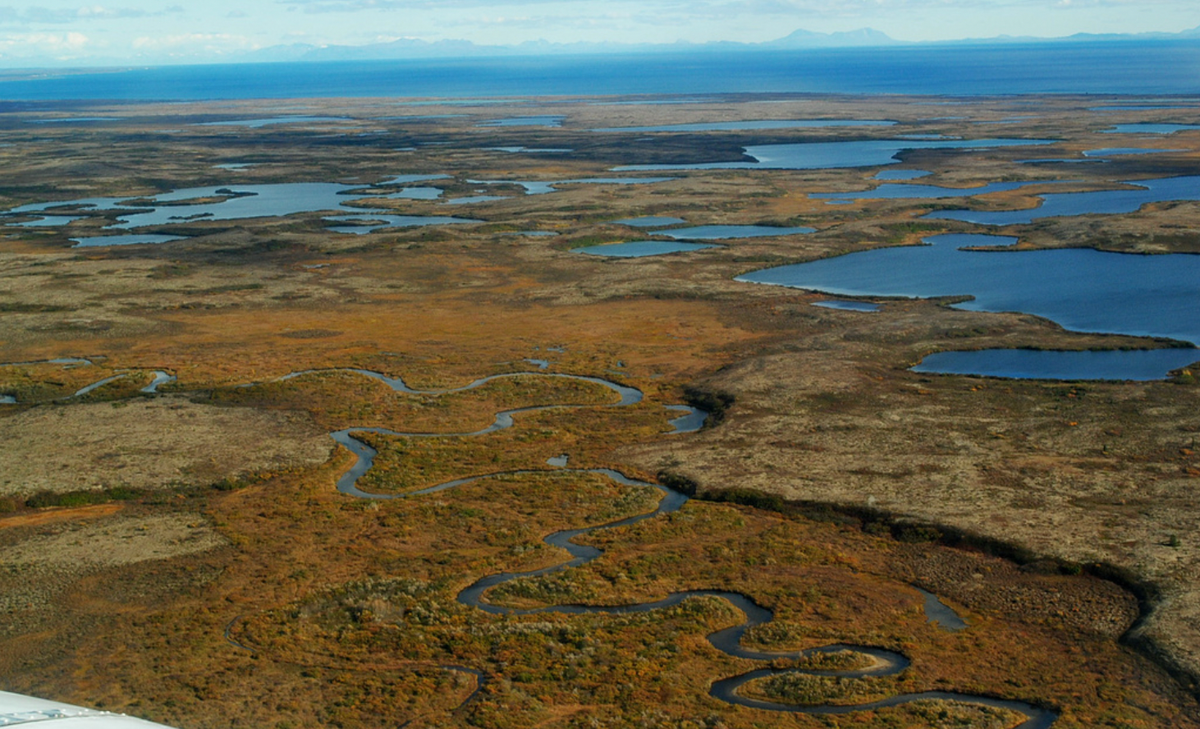
No mining proposal in recent Alaska history has generated more concern for the state’s salmon runs than the Pebble project.
The huge copper and gold deposit extends into multiple salmon-bearing watersheds, and sits upstream from Alaska’s most lucrative salmon fishery.
But now, in a new court filing, Pebble’s developer says just a tiny number of salmon are blocking the mine’s construction — 27 fish, to be exact, and all one species.
Federal regulators, who halted the project in 2023, are “preserving” 27 coho salmon “at the cost of $800 billion” in minerals, lawyers for Pebble Limited Partnership wrote in a recent brief filed in Alaska’s federal district court.
The remarkably specific fish figure aligns with the number of spawning salmon counted years ago in a stream directly within the proposed mine site.
But Pebble’s opponents say it’s a gross mischaracterization: They’ve long worried that mining could harm the prolific Bristol Bay salmon runs downstream.
“I don't think it's a valid number,” said Daniel Cheyette, an executive at Bristol Bay’s Indigenous-owned regional corporation, which is opposed to the mine.
“It's well documented in the administrative record that the mine is going to have very specific impacts to the mine site itself — and lots of impacts to the habitat below the mine site,” Cheyette added.
Pebble's lawyers acknowledge that salmon at various life stages have been observed in streams near the mineral deposit. But they cite the specific number of spawning coho eight times across the 66 pages of their recent legal brief.
The figure has taken on a life of its own online, where it sparked outrage among Pebble advocates and stockholders who see those fish as an obstacle to huge profits.
“27 SALMON DUDE WTFFFFFFF,” one mine booster recently posted on X. She added, in a YouTube video: “Tell me where they are. I'll kill them all right now, with my bare hands.”
The 27-fish-versus-800-billion-dollars narrative comes as part of the latest attempt by Pebble’s owner, Vancouver-based Northern Dynasty Minerals, to overturn a 2023 decision by the federal government that effectively quashed the development.
And it’s further evidence that Pebble is committed to a long-term effort to save the embattled project, which would tap into one of the world’s largest copper, gold and molybdenum deposits.
Pebble lacks key approvals, and its efforts to obtain them have been tied up in litigation and bureaucratic processes for years. But its owners continue to spend millions of dollars each year on legal fees and administrative expenses.
The project is still attracting investment because of its enormous size — and because global demand for copper is rising, according to David Hammond, a Colorado-based mineral economist with decades of industry experience.
“These investors, the ones that really provide the money, have to have a very long-term horizon on their investment strategy. And by long term, I don't mean five years, I mean two decades,” Hammond said.
“Their feeling is, this is going to eventually go into production,” he added.
Pebble expects to spend some $14 million this fiscal year, primarily on litigation, according to a recent corporate disclosure with Canadian securities regulators.
Pebble has fueled debate across the Bristol Bay region and the state for years.
Supporters, including the Dunleavy administration and two local Indigenous-owned corporations, say building the mine would boost the rural region’s economy and create much-needed jobs.
But opponents, including a broad coalition of commercial fishermen, conservation groups and Alaska Native organizations, say the mine’s benefits are not worth the risk it poses to Bristol Bay’s salmon runs.
Pebble’s recent legal brief was filed by a Colorado-based lawyer at a high-powered international firm. It responds to a move by the Trump administration earlier this year to defend the Biden-era project veto.
 Max Graham
In a statement shared with Northern Journal, Pebble’s chief executive, John Shively, said the company reiterates its view that the U.S. Environmental Protection Agency's actions against the project contradicted an earlier federal environmental review, “which clearly states that the project can be done without harm to the salmon fishery in Bristol Bay.”
Pebble’s boosters have long argued that the mine’s impacts would be minimal and that it could coexist with a fishery that generates hundreds of millions of dollars a year. They note that many Bristol Bay salmon spawn in watersheds other than those where the mine is located.
But mine skeptics note that the project is expected to result in the loss of more than eight miles of anadromous fish streams and 91 miles of streams that support anadromous fish habitat. Federal regulators also say mining could affect downstream ecosystems through changes in flow — and opponents fear a failure at Pebble’s proposed waste disposal site could cause an environmental disaster.
Pebble’s lawyers, in their recent filing, point to a federal finding six years ago that the mine likely would not have a measurable impact on the Bristol Bay fishery, and they say the streams at the mine site “are especially low in salmon.”
“Only 27 have been observed spawning, in only one reach, and from only one species,” the lawyers wrote. Those fish “naturally might disappear in any given year anyway,” the brief said.
A Pebble spokesperson could not immediately confirm the source of the 27-salmon figure, though it corresponds with data from Pebble’s fish counts conducted nearly two decades ago.
Those data were published in a 2020 federal environmental review of the proposed mine. The document also says that surveys found juvenile salmon in streams within the mine's proposed footprint, and that those streams support rearing habitat not just for coho but also king salmon.
The Trump administration’s lawyers, in their court brief earlier this spring, said that Pebble's fish surveys were limited, and likely undercounts.