When will the deep freeze end? Alaska holds its breath.
A long-running weather pattern shows no sign of relenting. “Cranky’s a good way to describe it,” says one mayor whose village hit minus 50.
For nearly three weeks, residents of a huge swath of Alaska have been waking up to sub-zero temperatures — the type of chill that freezes pipes, drains car batteries and numbs fingers and toes.
Most Alaskans, from Fairbanks to Anchorage to even Juneau, can handle a few days of sub-zero temperatures without complaint.
But even if the depths of the current cold snap aren’t record-setting, its length is starting to wear people down, particularly as forecasters say that relief isn’t expected for at least another week.
“Usually we get 50, 60 below for maybe a week or two every winter. Maybe some winters, we’ll go all winter without having a minus 60, but we’ll have maybe a week of minus 50. But having it around minus 50, minus 40 for weeks on end is the unusual thing,” Daniel Helmer, the mayor of the Interior Alaska village of Eagle, said in a phone interview. “People are definitely starting to get a little bit tired of it — cranky’s probably a good way to describe it.”
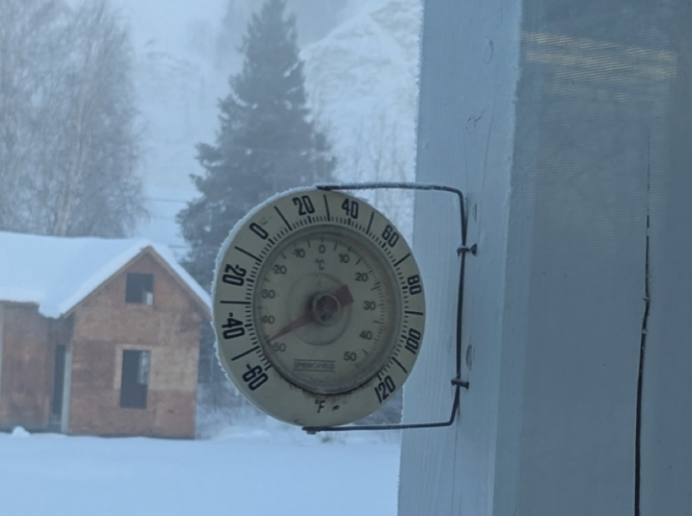
Eagle, on the Yukon River, is traditionally one of Alaska’s coldest places in winter, and Helmer provided a photo of his porch thermometer at minus 50 to prove it. It was not the coldest day, but “the day I remembered to take a picture of it,” he said.
The most frigid temperatures recorded amid the ongoing deep freeze, in fact, are not in Eagle but in the nearby hamlet of Chicken. Local observers posted a minus 62 F reading this week with an understated editorial addition: “clear and cold.”
I’d describe my own attitude toward our December weather as pulled between the crankiness of Helmer’s constituents’ and the modesty of the Chicken observers.
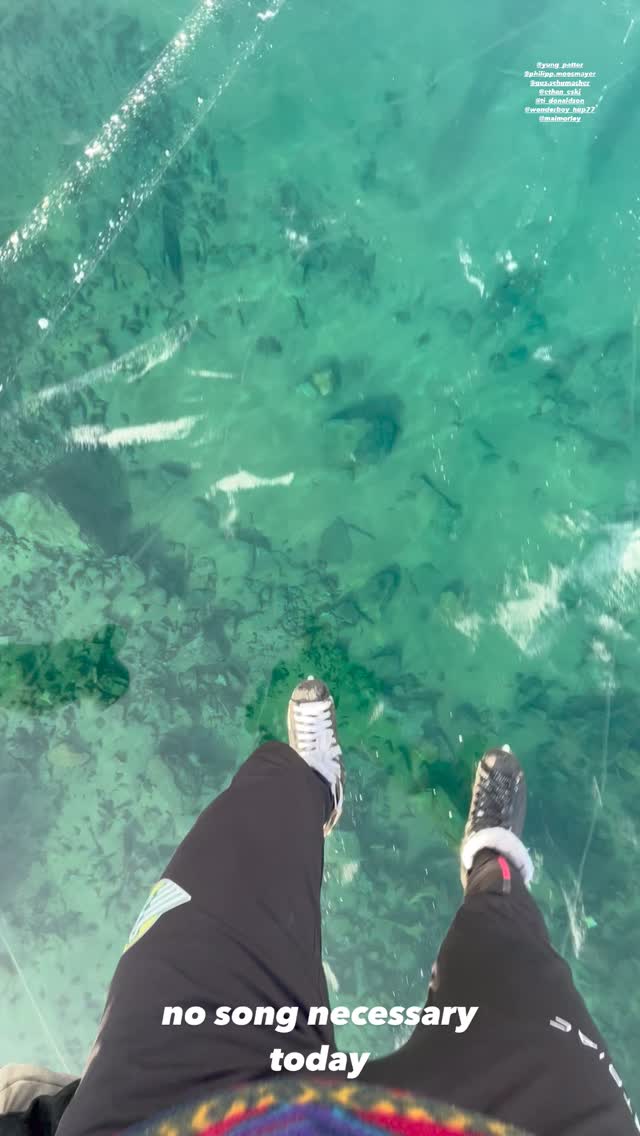
I’ve spent some glorious days outdoors in the past few weeks. But I’ve also experienced some moments of acute discomfort — namely, an excruciating, near-frozen toes episode while skating on Portage Lake south of Anchorage, plus what felt like a near-death experience when I hit a huge ice patch on some city ski trails and almost went skittering into the trees at high speed.
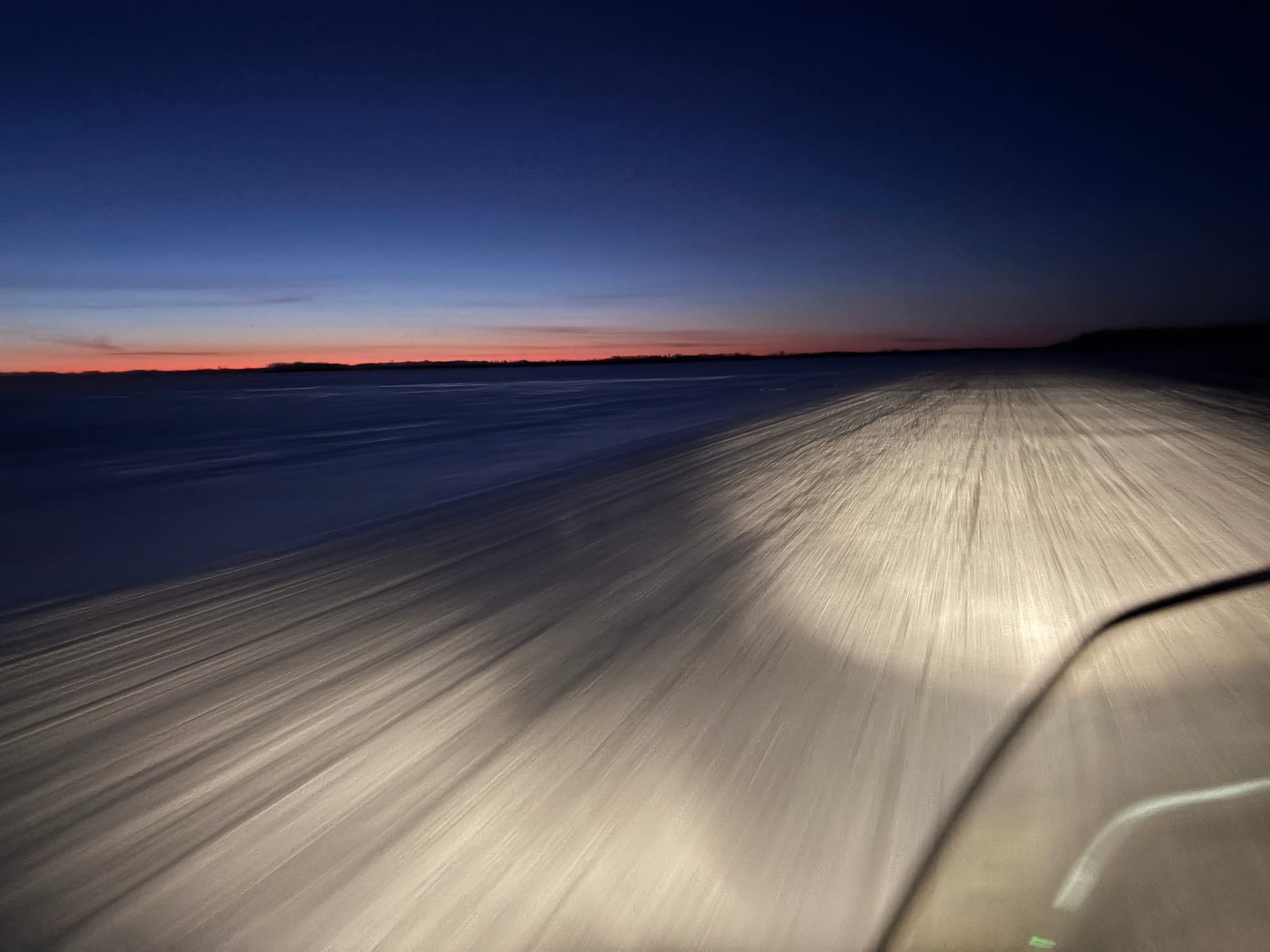
The question that’s been on my mind, and one that seems to be on the minds of many Alaskans: When will it end? And when will we get some snow? As of Tuesday, Anchorage’s total precipitation for the past month was the lowest it’s seen in three decades, and nearly every day in December has recorded below-average temperatures.
That data comes from Rick Thoman, an expert at the Fairbanks-based Alaska Center for Climate Assessment and Preparedness. Thoman’s known nationally as a sort of Alaska climate and weather sage.
In a phone call this week, Thoman said the enduring cold stems from a big area of high pressure above the Bering Sea that’s keeping storms out of Alaska and really “blocking everything up.”
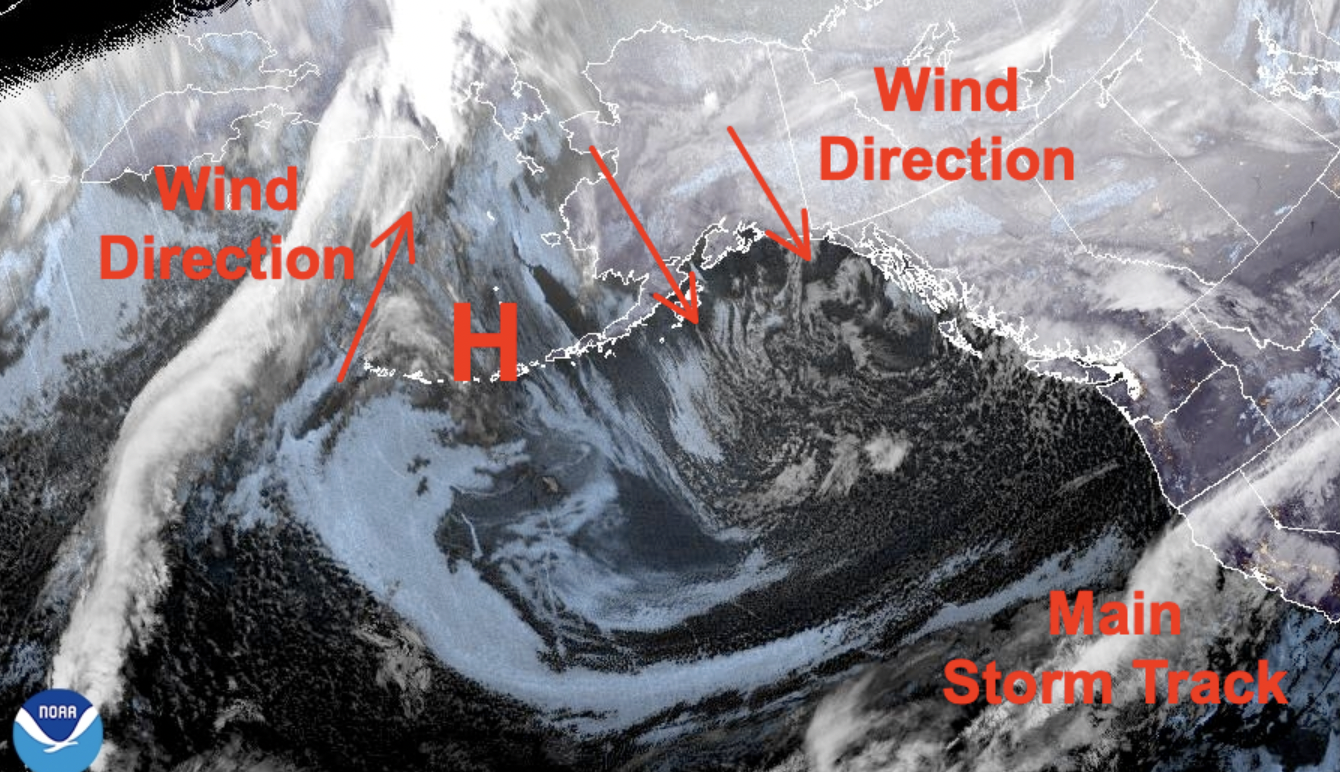
In forecasting what’s next, Thoman said, “the farther out we go, the less confidence we have.” But, he said, predictions not just for the next week but the week after continue to have all of Alaska “favoring significantly below normal temperatures.”
“Eventually, this giant high in the Bering Sea is going to break down, because they always do,” he added. “It’s going to change sooner or later. But I would say at this point, we don’t know when that will be — and it’s entirely possible that this basic pattern holds on into early January.”
Thoman is a longtime Fairbanks resident and former dog musher, and I asked him how cold it was. Currently, minus 38, he said.
I persisted: Was it starting to get old? If your house is frozen up, obviously it is, he said. But, personally, it hasn’t been bothersome, he added.
“Because we’re not at the level, yet, where things mechanical are not working,” he said. “Yes, it’s cold, but we can dress for the cold. Cars are still working, that kind of thing.”
Across the Canadian border in Whitehorse, in the Yukon Territory, things are more dire: Officials say extreme cold has pushed the region’s power grid to its limit and are warning of possible rolling blackouts.
In Eagle, though, Helmer, the mayor, said it’s mostly business as usual. People are spending more time indoors, and residents have pitched in to help households that used up more firewood than they planned. But others are still packing down trails that connect the village to neighbors along the Yukon River.
I tried to ask if Helmer had a message for people in Anchorage who are tiring of temperatures that barely get above zero; he started laughing at me before I could finish the question.
He wasn’t laughing “derisively,” he said.
“My wife is from California, so I’m used to people who can’t take — who haven’t been in something much colder than what you're talking about,” he said. “Tongue in cheek, I would say to the people in Anchorage: Maybe get up north to real Alaska.”
The advice was fair, if not especially practical, because unlike Helmer, I don’t own beaver fur-lined mittens. I wanted to offer readers a little bit more practical advice, so I called up Ari Endestad.
I have a long-running side gig covering cross-country skiing, and Endestad is an elite competitor from Fairbanks who now trains with Anchorage’s Alaska Pacific University team and has stacked up a string of podium finishes this winter.
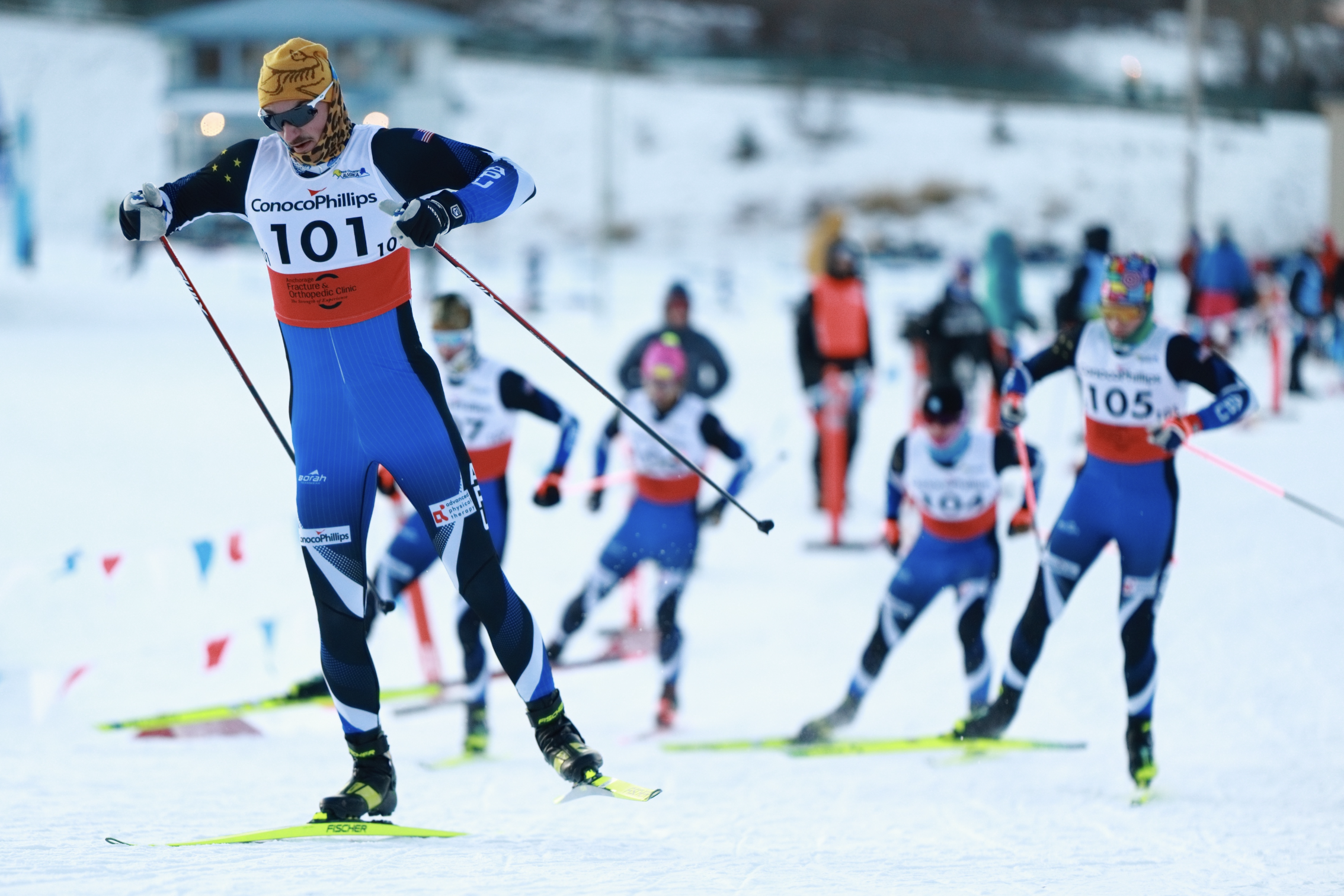
He’s also one of those guys who seems to make the most of marginal snow and weather conditions, whether he’s ice skating on frozen lakes or even on iced-over local trails, as he did during a meltdown last winter.

Endestad’s tips: For training in frigid temperatures, he’ll stack a buff on top of a hat and wear a cold weather mask. On his cheeks, he’ll sport anti-freeze face tape. (The stuff is available online, or at Anchorage’s Alaska Mountaineering & Hiking store for $4.99 a package.)
The result, he said: You look kind of like a “storm trooper going to Hoth” — the Star Wars ice planet. But “you’re pretty much invincible,” he added.
“As long as you bundle up and have that mask and the tape on your cheeks, you kinda can be fine to negative 20,” he said.
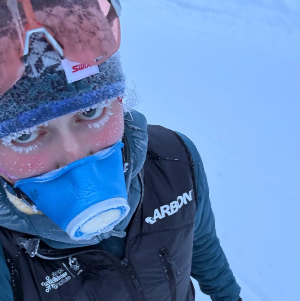
I had to ask, though: was even a self-described born-and-raised “Fairbanks boy” ready for a change in the weather pattern?
Endestad was speaking from his home city, where he’d just arrived for the holidays to temperatures of minus 15. His answer made me feel a little better about being a soft resident of Anchorage, where I was getting annoyed by temperatures that were some 20 degrees warmer.
“I’m like, ‘Man, can we just get some nice warm temps here?’ Even if I was in Anchorage, it would be the same,” he said. “I think everyone’s ready for a little bit of a break.”
Northern Journal's primary revenue source is contributions from readers. If you're already a member, thank you; if not, please consider a voluntary subscription by clicking the button above.