Alaska politicians sport beards and bear-hunting bona fides to claim authenticity. But those tropes originated Outside.
The ‘Real Alaskan’ is cheap repackaging of what one historian describes as hunter-heroes, Kaitlin Jade Armstrong writes in an opinion piece.
Northern Journal is merging with the Anchorage Press! Read our announcement and other information here, and support us with a subscription here.
I was aimlessly scrolling through Instagram when I learned that Jonathan Kreiss-Tomkins, or JKT, had entered the governor’s race.
My interest was piqued — not so much by the announcement as the photo attached to it. Framed by a majestic Sitka mountainscape, JKT sports a blue flannel button up — classic Alaska campaign-wear. I took a screenshot, zoomed in, and squinted. Did he always have that beard?
I’d be hard pressed to believe JKT didn’t grow it for the campaign. The timing is at least suspicious. Since entering the race, the long clean-shaven policy nerd has transformed into a robustly-bearded powerlifter. In a campaign video, he’s seen deadlifting a huge rack of weights to “save schools” and “protect our fisheries.”
It’s not enough that JKT was born and raised in Sitka and has spent much of his adult life serving in the state Legislature. In order to be truly worthy of a shot at governor, he must now audition for the title of “Real Alaskan.”

He’s far from the only one.
Every campaign season, like clockwork, candidates across the political spectrum jockey to position themselves as “Real Alaskans.” (Or, in the case of U.S. House hopeful Bill Hill, “the Real Alaska.”)
Over a banjo-string track, a man’s warm, bassy voice booms through my Instagram feed, declaring that incumbent U.S. Sen. Dan Sullivan will “fight for Alaskans.”
Meanwhile, the senator’s detractors take shots at his Alaskan bona fides with the derisive nickname “Ohio Dan.”
My mailbox is stuffed with images of congressional hopefuls in Copper River Fleece vests and frontier-esque flannel.
Every candidate wants to prove they’re the most “Real Alaskan,” and therefore most fit for your vote.
But what does it mean to be a “Real Alaskan?” While that’s a hot topic of debate, a 2008 journal article argues that the term is “deeply coded” as white, rural and masculine.
In this paradigm — the one that often dominates public discourse — Real Alaskans hunt, fish and work blue collar jobs. They fight, shoot and defend us from Washington, D.C. lobbyists. They forgo suits for Grundens, bolo ties and of course, flannel. They’re tough, hardy, no-nonsense and raring to stand up to the Washington bureaucrats who think they’re better than us.
Here’s where it gets absurd: The tropes that make up the Real Alaskan ethos didn’t originate here at all. Their forerunner is a much older archetype that dates back over 200 years, to when Kentucky was America’s far-West frontier.
In my podcast The Alaska Myth, I argue that the Real Alaskan is cheap repackaging of what historian Richard Slotkin refers to as hunter-heroes — think Davy Crockett and Daniel Boone. As the frontier moved west, so did the stereotype, eventually donning Carhartts and Xtratuffs to birth the modern image of the “Real Alaskan.”
What’s interesting about those memorable images of Western “heroes”, with their guns and coonskin caps, is that they were always political in nature. Boone and Crockett weren’t just frontier icons. They were also politicians who sought to woo rural constituents with their sharpshooting frontier cred.
This 19th Century political innovation remains deeply embedded here in Alaska, in the politics of the “Last Frontier.” Regardless of your party affiliation or identity, performing Real Alaskan-ness has become a prerequisite for entering any high profile race in this state. This is how our feeds become clogged with videos using folksy language about “Alaskans being whipsawed from one generation to the next” or how “in Alaska, we’ve always done things our own way.”
Real talk: I want to know what runs through the mind of a campaign communications staffer when their candidate’s lead in the polls starts to narrow. And whether it’s some version of “Well, we can always make a video about that time the senator took out a Kodiak bear.”
Regardless of political affiliation or personal background, no candidate is immune to this posturing.
Solely by virtue of their identity, any Alaska Native candidate is arguably far more of a “Real Alaskan” than their self-styled settler competitors. And yet they too tend to earnestly perform the tropes associated with the white, rural and masculine-coded “Real Alaskan.”
Bill Hill’s website reminds voters he’s not just Dena’ina Athabaskan but also a lifelong Alaskan, with a resume that includes commercial fishing and chopping wood. Whether these credentials — the basis of an aligned super PAC’s claim that Hill is the “real Alaska” — will translate into votes is more dubious.
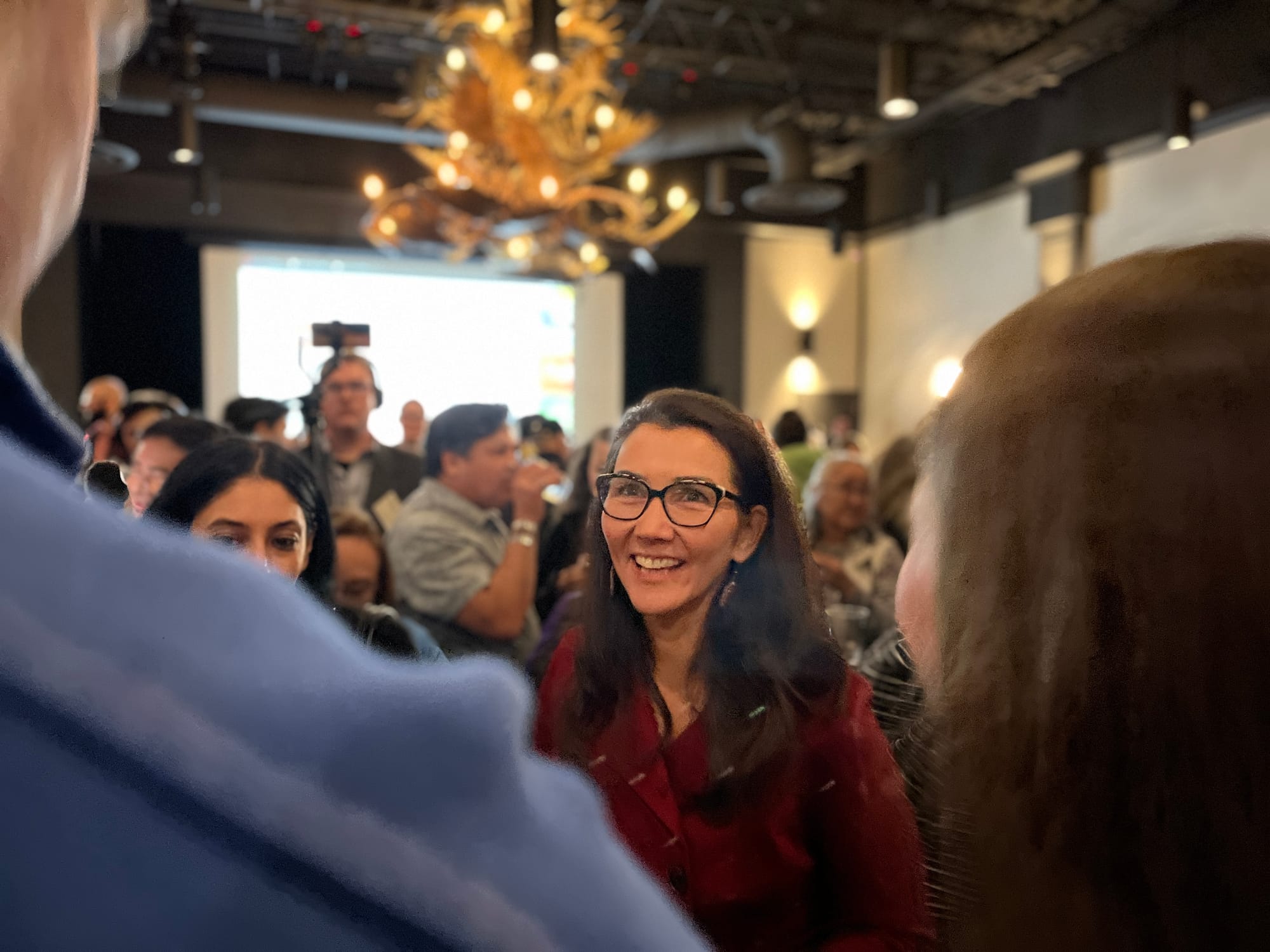
On her campaign website, Mary Peltola’s “my story” page puzzlingly makes no mention of her Yup’ik identity — though it does feature images of her in a smokehouse and wearing a traditional kuspuk. It is, however, permeated with colorful, frontier-coded language, from quoting Ted Stevens’ “to hell with politics” to expressing her vision of a congressional delegation that’s “strong and tough.”
It’s not just this year’s campaigns, either. The impulse to prove that one is indeed a “Real Alaskan” has produced some of the cringiest campaigning in recent memory.
If you want to make any Alaskan shudder with secondhand embarrassment, you need only utter two words: Bear Doctor. Despite the backlash the now-infamous video received, former U.S. Senate hopeful Dr. Al Gross was simply drawing from the same toolkit candidates use every campaign season.
To be fair, these representations are often true to the lifestyles that many of these candidates lead. This year’s field is full of contenders who represent various shades of the distinct lifestyles that make up this state: fisherman, mushers and pilots, to name a few.
But I can’t help but be cynical about the requirement to campaign as a Real Alaskan, knowing that it’s rooted in the idea of the frontier.
At the end of the 19th Century, the concept was thought so close to death that historians were eulogizing it. And it’s very much a product of its time. Frontier logic posits that there are endless resources to be exploited, and a glittering economic future awaits those who exploit the right ones. When frontier imagery and frontier logic alike have a chokehold on our politics, they endlessly offer the same tired 19th Century solutions — like developing any resource we can think of — to our 21st Century ills. Just ask the state legislators who are currently debating the gas pipeline that elected leaders have been propping up for the better part of the last 50 years.
I know my view is a minority one. I was reminded of that when I casually ribbed JKT’s frontier glow up at a recent dinner party. A friend of mine — an outdoorsy transplant who leans progressive — said he’d noticed, and he was a fan. “I’m more likely to vote for a man who’s put some work into himself,” he said approvingly.
Ultimately, candidates lean on this tried and true formula because when candidates can pull it off, it works. Don Young, the longtime bolo-tie wearing Alaska Congressman originally from California, so successfully channeled the frontier spirit that candidates across the political spectrum tout him as an aspirational figure.
As to which candidates’ Real Alaskan antics will win over the electorate this time?
Only the primaries will tell.
Kaitlin Jade Armstrong is a writer and sound artist in Anchorage.