Ch’atanaltsegh: A weird and wonderful parade marks return of a Dena’ina place name in Anchorage
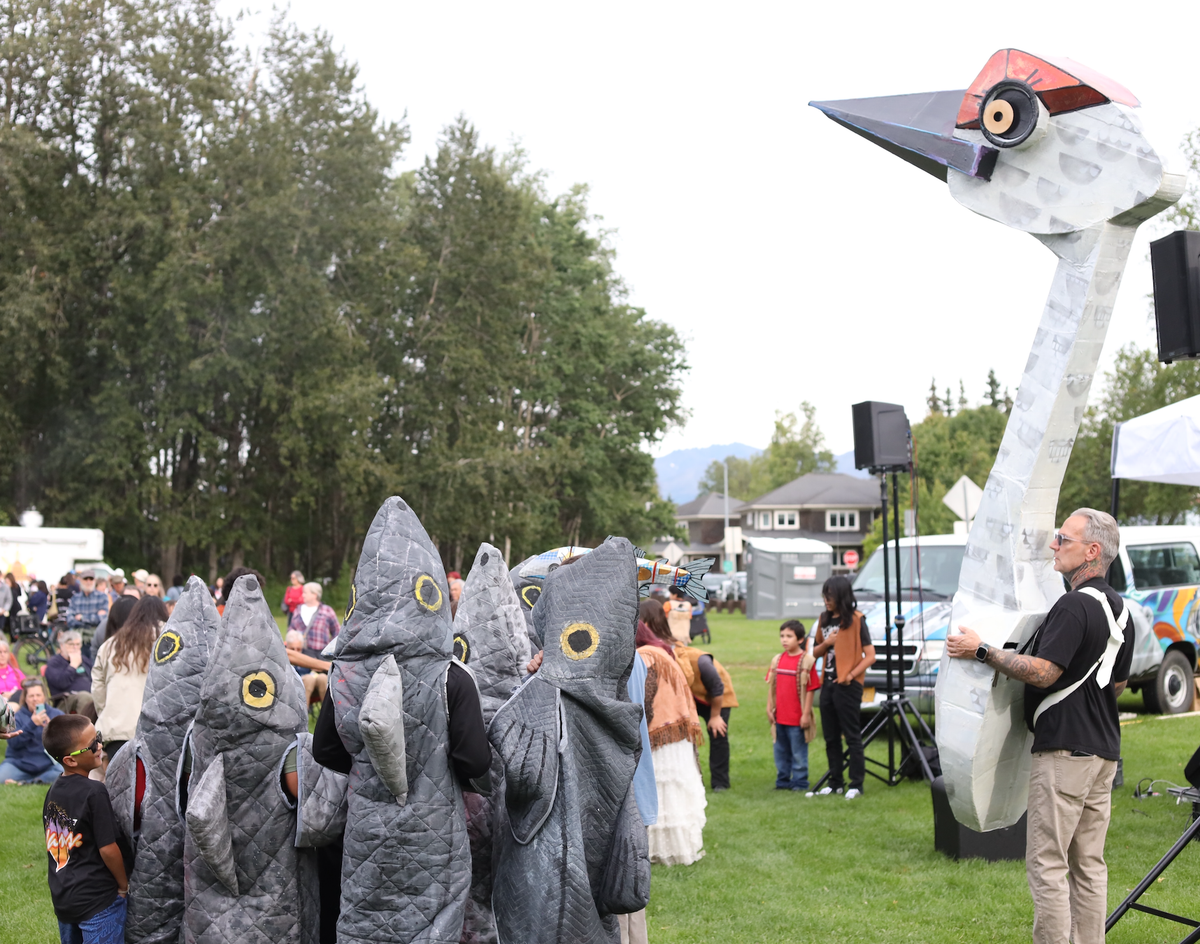
Larger-than-life salmon and sandhill cranes joined Indigenous dancers near Fish Creek, just west of downtown.
Northern Journal has merged with the Anchorage Press! Read our announcement and other information here, and support us with a subscription here.
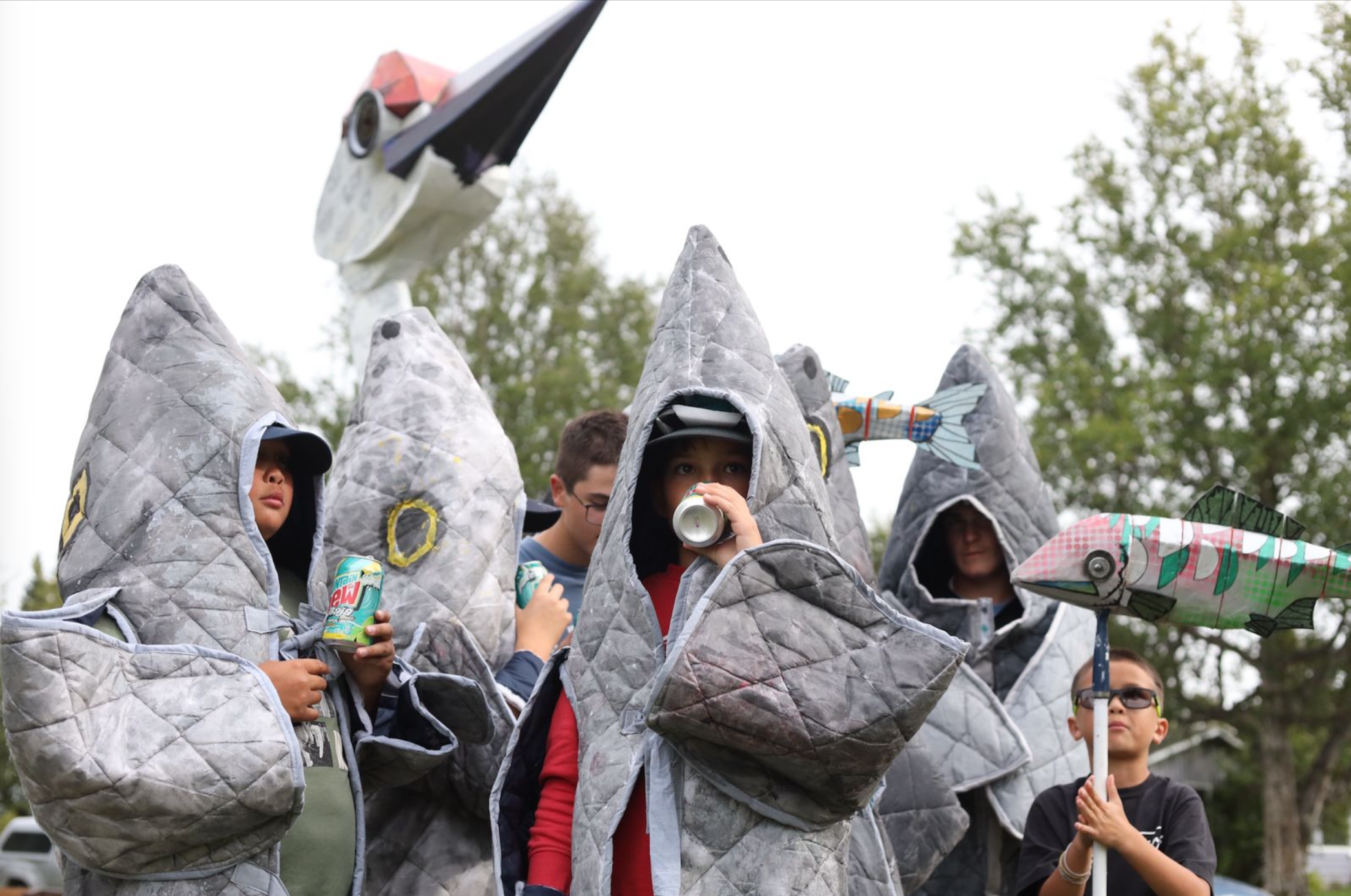
Just after work Thursday, a school of salmon gathered at West Anchorage’s Lyn Ary Park.
They were guzzling cans of Mountain Dew. Or, at least, the teenage boys wearing the costumes were.
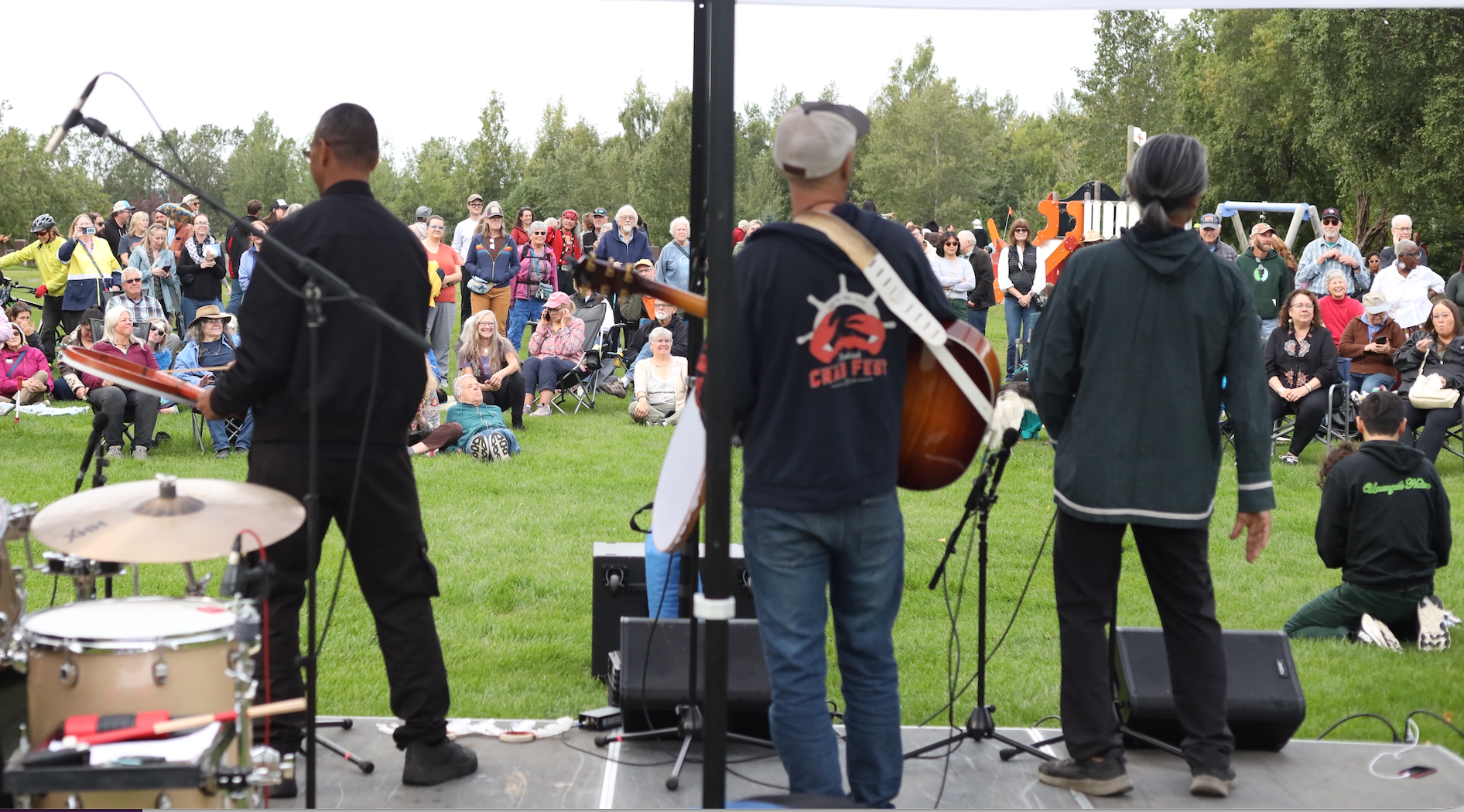
The strange salmonid assemblage was part of a motley crew of more than 200 people who attended the latest in a series of events to celebrate original place names created by the Anchorage area’s Indigenous Dena’ina people.
More than two dozen monuments already decorate other cherished sites around the city.
But Thursday’s party to commemorate the latest addition — a new plaza and sign at the mouth of Fish Creek, just west of downtown — was unlike any other, featuring a parade of larger-than-life animals, Indigenous and western dance groups, food trucks, moose-shaped cookies and a concert by the Inuit-soul band Pamyua.
When the plaza and sign are finished in 2028, residents and tourists alike will know the deep mud and thick grass of Fish Creek by a different name: Ch’atanaltsegh, or “yellow water comes out” in the Dena’ina language. It’s part of a larger effort to increase Dena’ina visibility within the city — which hasn’t always been robust.
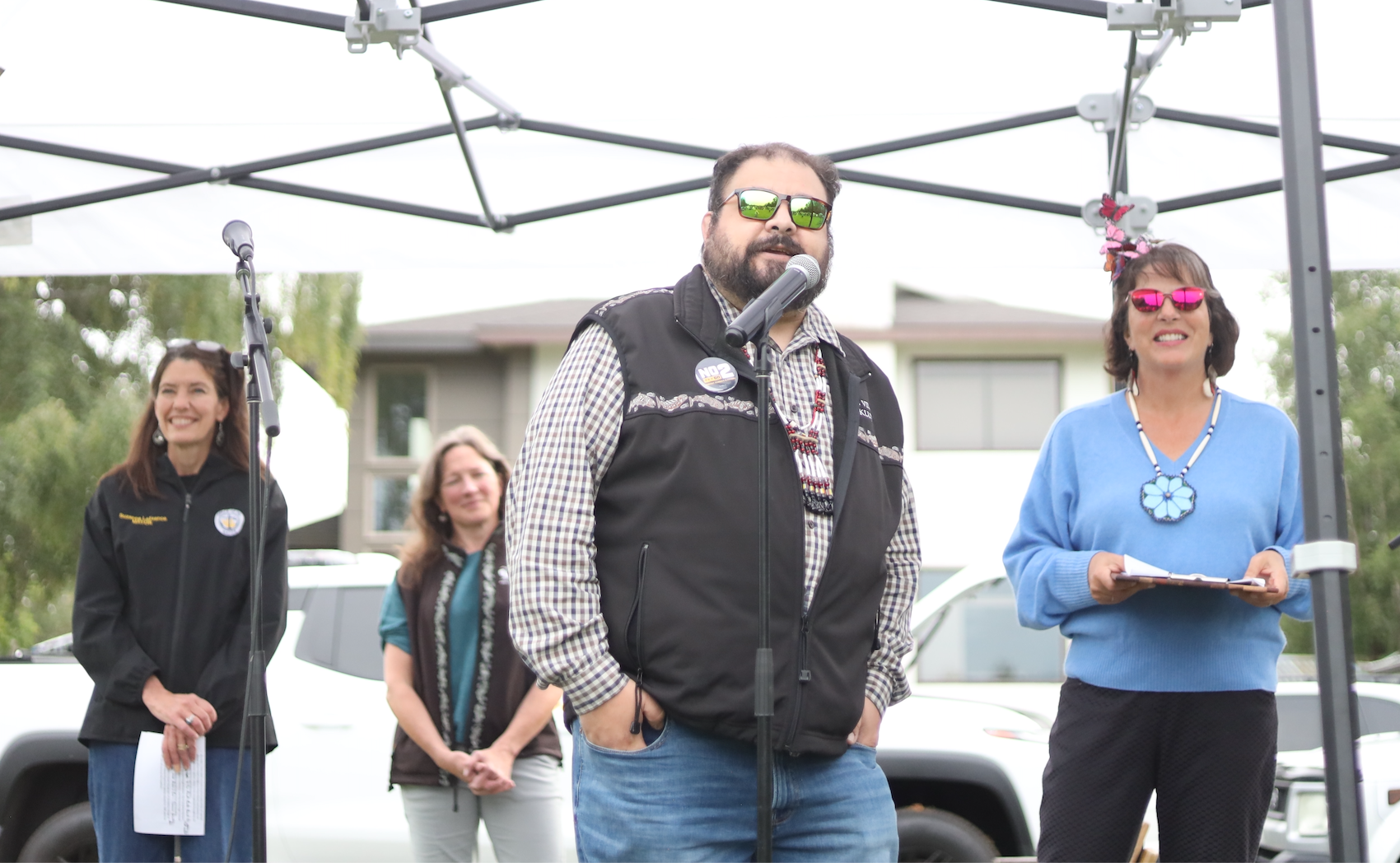
“I used to say there were more totem poles in Anchorage than meaningful representations of Dena’ina people,” said Aaron Leggett, president of the local Eklutna tribal government, referring to the wooden monuments carved by Indigenous people in Southeast Alaska — hundreds of miles away. He added: “Clearly, that’s not the case any more.”
The Ch’atanaltsegh monument will be one of 32 markers in a grant-funded initiative that’s been running for several years and is coordinated by the Anchorage Park Foundation, a local nonprofit.
The unifying theme of the markers is a decorative metal firebag — a traditional Dena’ina object used to carry the materials needed to start a fire — designed by local Indigenous artist Melissa Shaginoff.
“We are subtly changing the look of Anchorage to have a more Indigenous sense of place,” said Beth Nordlund, the park foundation’s executive director.
As she walked along Anchorage’s Coastal Trail during Thursday’s celebration — flanked by the parade of human-sized salmon and a man operating an even larger sandhill crane costume — Nordlund said the event was intended to create “joyful noise.”
“We wanted it to be a big deal,” she said.
The animal costumes came through a partnership with the Anchorage Museum, funded with $6,000 from the park foundation.
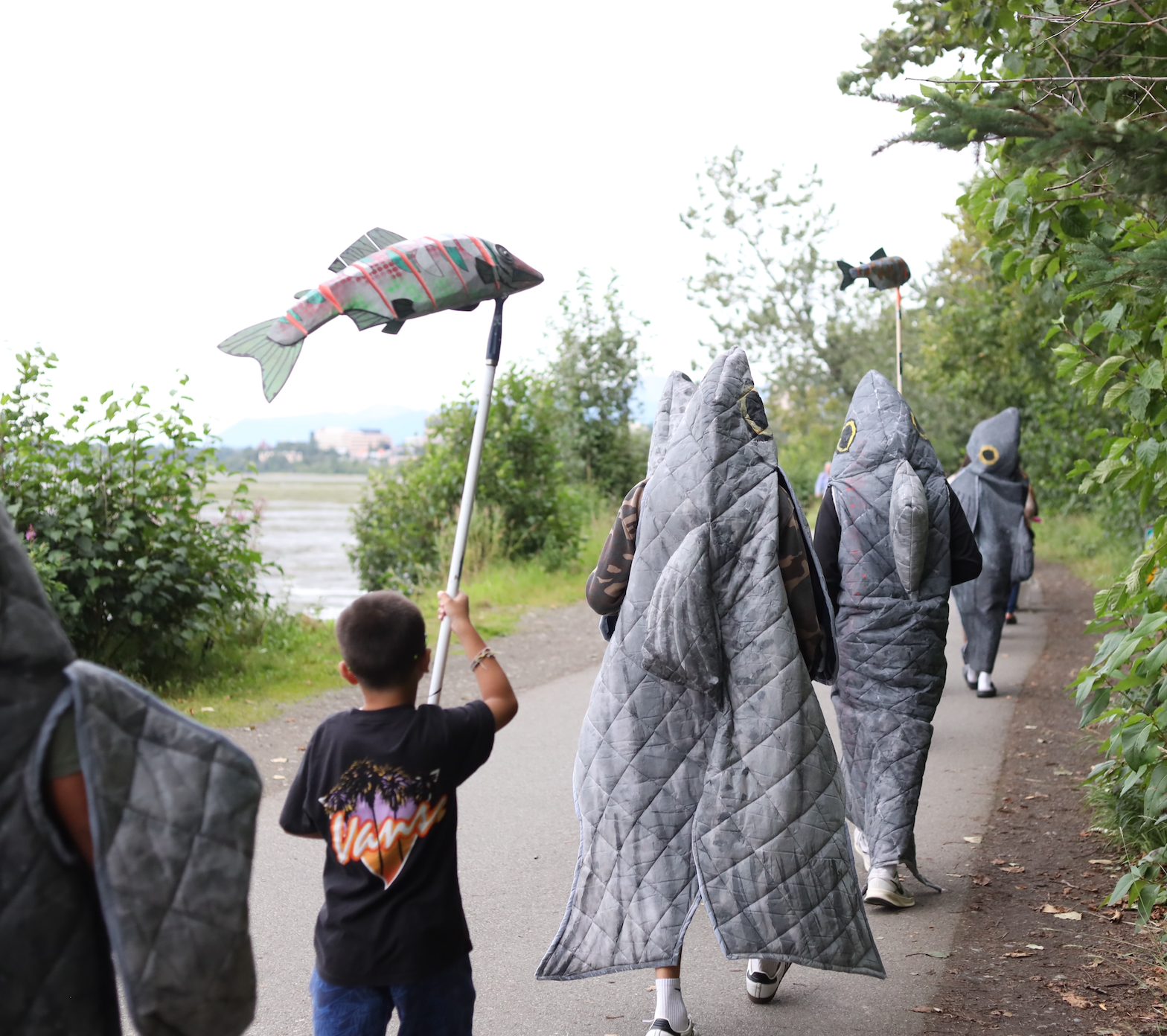
Artist Jamie Hirano designed the salmon suits, then held community workshops where residents were invited to help make them — no experience required.
“I think I counted 25 people that came, ages 2 to over 50,” Hirano said.
Thursday’s ceremony drew an array of dignitaries. City Assembly members and Mayor Suzanne LaFrance attended, as did board members of Anchorage’s electric utility, state representatives and Indigenous leaders.
At the head of the parade were the Friendship Dancers, a local Indigenous collective whose members have ties to Eklutna, the village of Tyonek across Cook Inlet and the village of Nondalton, which sits 200 miles west over the mountains from Anchorage.
The dance group performed some songs that leader Jessie K’Deli’en Coleman described as wordless “tonations,” which allowed others in the parade to join in even without knowledge of the Dena’ina language.
“It was good to see so many people try,” Coleman said.
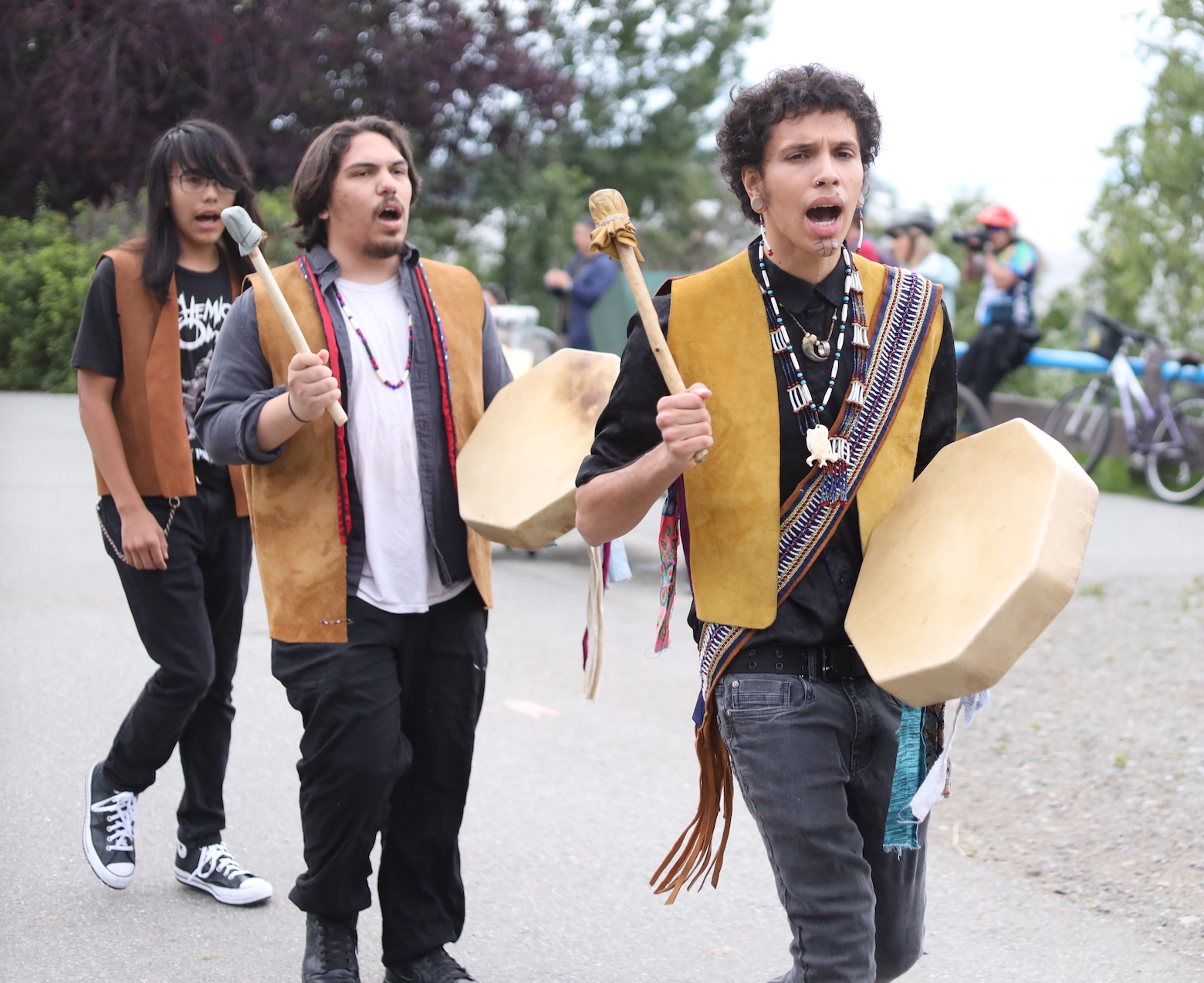
Another reason for those wordless songs is that “so much of the language is gone,” Coleman said — one of several references made Thursday to the loss and struggle that the Dena’ina people have experienced since colonization.
In another reference, Leggett, Eklutna’s president, took a light jab at Nordlund as she thanked the local electric utility, Chugach Electric Association, for providing power for the event. Stepping to the microphone, Leggett quickly reminded the crowd that some of the utility’s power comes from his community’s ancestral lands — from a hydroelectric project the Tribe has criticized for diverting water away from the salmon-bearing Eklutna River.
But there has also been progress.
In 2021, the city Assembly approved the establishment of government-to-government relations with Eklutna's tribal government, and they have since held regular meetings.
Shaginoff has been coordinating community classes on the Dena’ina and Ahtna languages.
Then there are also the monuments and dedicated place names. While Anchorage’s recognition of its own Indigenous history long lagged behind other communities in Alaska, Leggett said, it’s now catching up.
Markers have been placed in the Eklutna village, plus at high-traffic Anchorage sites like Westchester Lagoon, Glen Alps and Potter Marsh. The naming effort also plans to install another plaza at Ship Creek, just north of downtown.
Gaps still remain in restoring names, especially on Anchorage’s big military base, Leggett said, but “we’re pretty well along” now.
“I’d say over 80% of the known Dena’ina names are captured on some sort of signage,” Leggett said. He added: “I think it really puts Anchorage on the map.”