‘Harm against our family’: Alaska’s Indigenous leaders call for solidarity with Greenlanders amid Trump’s threats
“We are essentially the same people."
In Washington, D.C., politicians are debating U.S. annexation of Greenland based on abstract ideas like “defense,” “security,” and “critical minerals.”
In Alaska, the issue is personal.
The state’s ties with Greenland go back centuries, to when the ancestors of the island’s Indigenous residents migrated east from Western Alaska.
Today, many Alaskans count Greenlanders as friends, colleagues or kin who speak a closely related language and participate in similar cultural traditions — and some Alaskans are now calling for solidarity against the actions threatened by their own president.
“We are witnessing, on a world stage, harm against our family,” said Ayyu Qassataq, an Anchorage-based Iñupiaq and Yup’ik advocate.
It is “disturbing on a visceral level,” she added.
Alaska’s connections to Greenland extend beyond cultural relations.
Alaskan scientists work alongside Greenlanders, studying oceans, glaciers, and climate change, and policymakers from both places have sat beside each other at international forums like the Arctic Council. The president’s rhetoric, some critics say, could strain those relationships, along with U.S. geopolitical alliances.
But Trump’s comments are provoking particularly intense feelings of anxiety and concern among some of Alaska’s Indigenous communities.
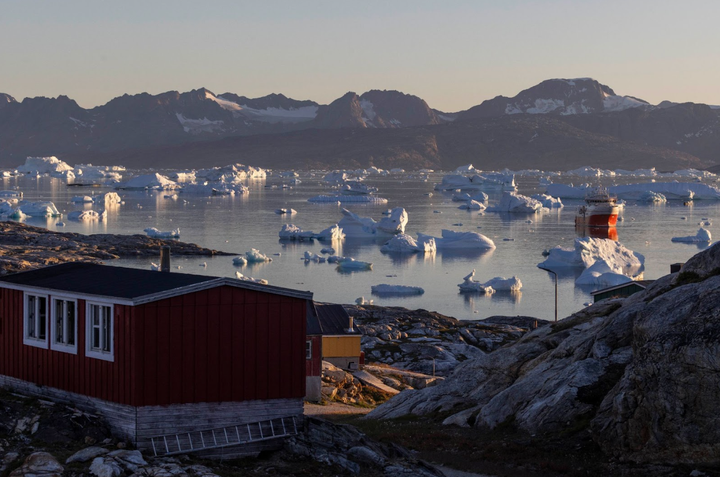
Greenland, an autonomous country within the Kingdom of Denmark, is home to some 57,000 people, most of whom are Inuit and whose ancestors came from Alaska about 1,000 years ago.
Today, Greenlanders and Alaska’s Iñupiat speak languages with the same roots and carry on many of the same traditions in music, art and food. Both peoples are Inuit — a broader group that encompasses Indigenous residents of multiple Arctic regions.
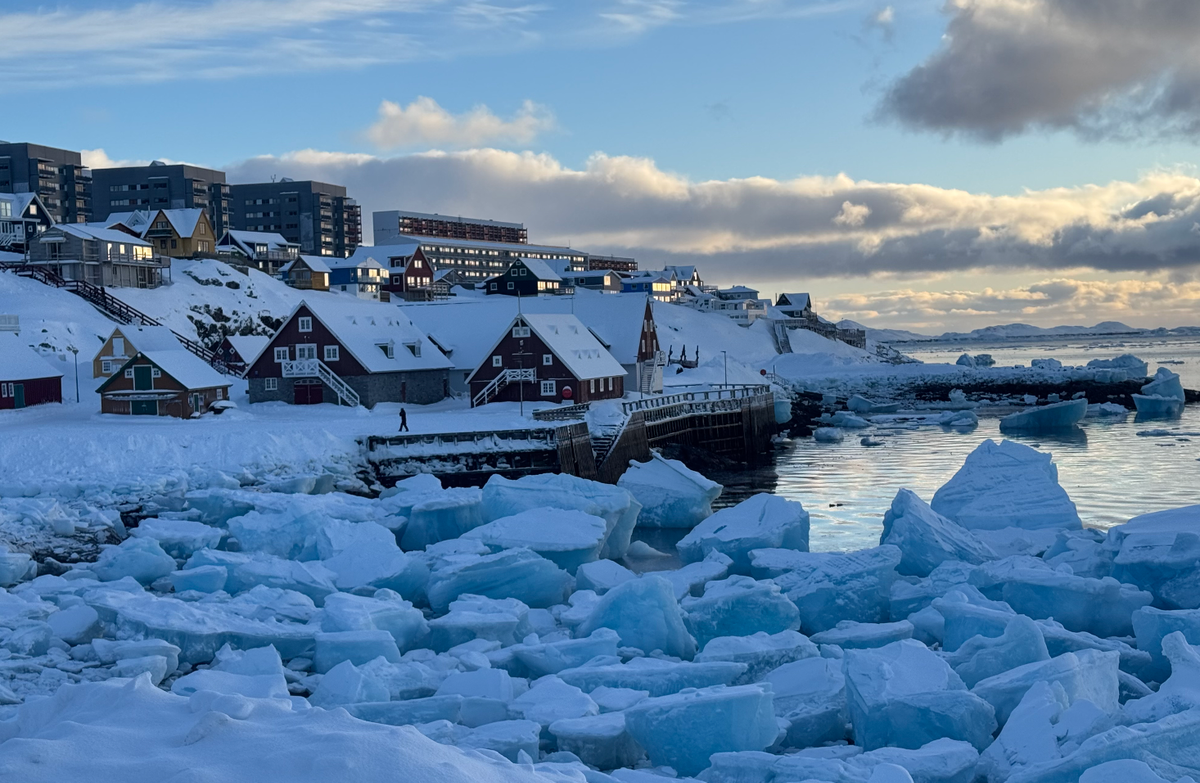
“We are essentially the same people that just speak different dialects of the same language,” said Tim Argetsinger, who’s Iñupiaq from Northwest Alaska and currently lives in Nuuk, Greenland’s capital.
Argetsinger told Northern Journal that some Greenlanders are selling their homes and moving off the island because they’re afraid and uncertain about their future.
“The sense of fear and anxiety is very palpable,” he said.
As Trump’s threats have escalated in the past week, Inuit leaders in Alaska have made increasingly passionate pleas of support for Greenlanders, who overwhelmingly oppose American annexation.
Alaska’s branch of the Inuit Circumpolar Council — a transnational body representing Indigenous people in Alaska, Russia, Canada and Greenland — released a rare political statement this week. It affirmed the council’s “support and solidarity” with Greenlanders and called on the U.S. to “respect and uphold international law and rules-based order that honors diplomacy and Inuit rights.”
“We stand united with our Greenlandic relatives,” said Marie Greene, an Iñupiaq elder from the Northwest Alaska village of Deering who’s the president of ICC’s Alaska arm.
Others, like Qassataq, have shared videos on social media expressing support alongside Inuit from Alaska and Canada.
Qassataq, who runs a consulting business, Qulliq Munaqtuġuut, that promotes Indigenous self-determination and well-being, has traveled to Greenland multiple times over the past year to work on Inuit healing and advocacy efforts and to teach courses on Inuit culture at Ilisimatusarfik, Greenland's university.
Like many Alaskans, she has good friends there and has been in close contact with them over the past week, she said.
Greenlanders are “having very real conversations” not only about the island’s political future but also their personal safety, in light of Trump’s militaristic rhetoric, Qassataq said.
“Because we care so much for them, we feel deeply what they’re experiencing and what their fears are,” she said. “Though we are separated by hundreds of years, false borders and different colonial influences, they are our family.”
Qassataq and other Alaskans said in recent interviews that they grew up hearing about Greenland from relatives and Inuit leaders.
Cordelia Qiġñaaq Kellie, who’s Iñupiaq and lives in Anchorage, said the topic of Greenland would come up frequently in conversations well before Trump’s threats, indicating the long-standing connections between Alaskans and Greenlanders.
“Oftentimes, if I mention Greenland, friends and community members will respond with, ‘Oh, when I was in Greenland...,’ beyond those I was aware had ever been there,” she said. “Sometimes people joke that we need to go to Greenland to learn our language because it’s so similar.”
Along with a few other Alaskans, Kellie went to Nuuk last year as part of an Inuit Circumpolar Council policy workshop for young Inuit leaders. She has kept up her friendships with some of the Greenlanders that she met there. One recently visited Anchorage. She’s been checking in on others.
“It was like Inuit summer camp,” Kellie said of the workshop.
In Nuuk, she experienced being in a “majority-Inuit society” for the first time, she said.
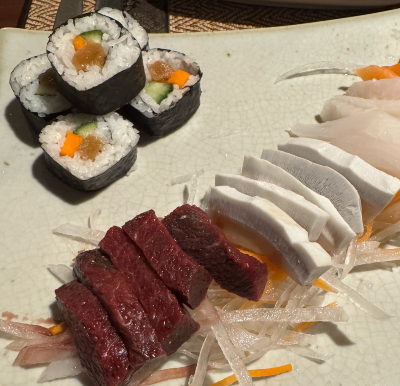
“Oftentimes, we can think of Alaskan Inuit rural hubs in a cloistered context,” she said. “But imagine if the United States had been replaced with all Inuit people.”
“You go to a sushi restaurant, and they have beluga sushi,” Kellie added. It tastes “just like beluga from home.”
Reporting like this takes time and money. Northern Journal's primary revenue source is contributions from readers. If you're already a member, thank you. If not, we'd be grateful if you'd consider a voluntary subscription.