
Meet the Spanish company at the heart of Alaska’s oil industry revival
Repsol is emerging as one of the state’s most bullish oil companies.

Josu Jon Imaz, a former member of European Parliament, runs Spain’s largest oil company.
Recently, though, his focus has drifted thousands of miles from Madrid, to the far north.
Imaz’s company, Repsol, is one of several oil and gas businesses racing to drill in Alaska’s Arctic — where, after a decades-long decline in production, the industry is undergoing a stunning revival amid a push by the Trump administration to open new areas to development.
 Max Graham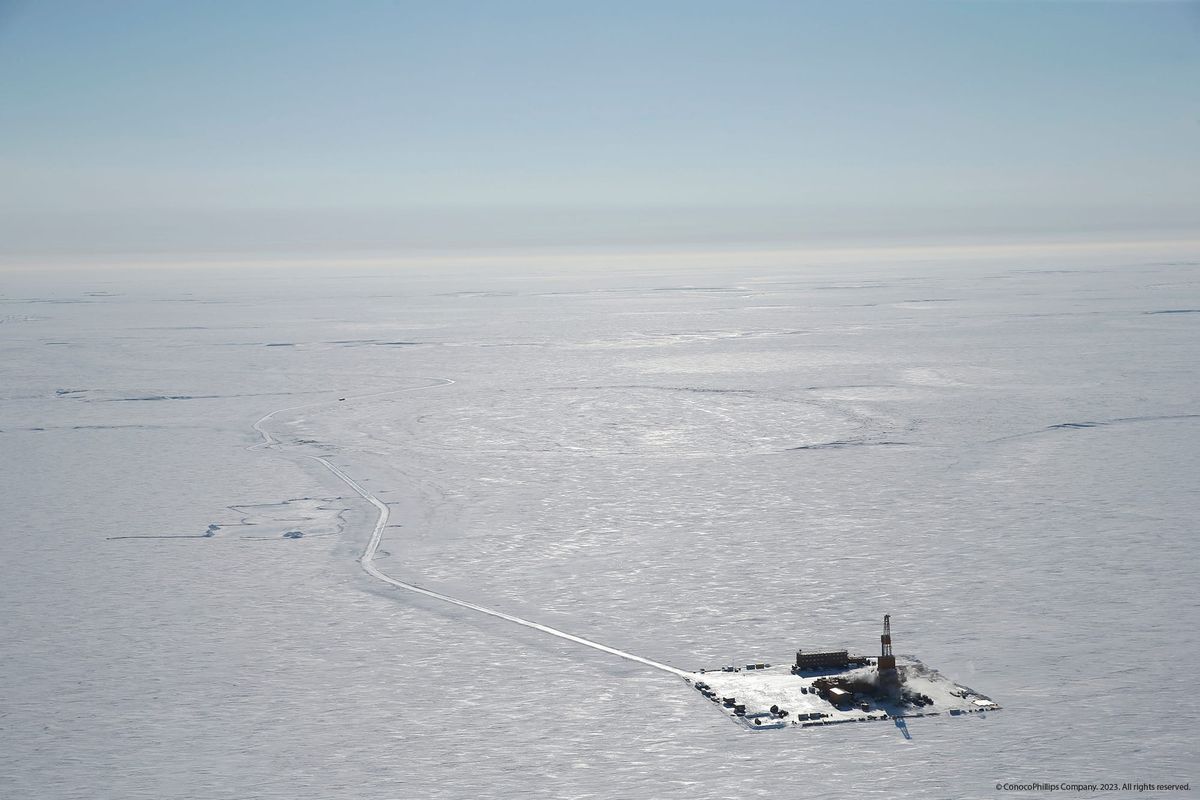
American oil firms like ConocoPhillips and Hilcorp operate larger fields in the state and have tended to get more attention.
But Repsol is quickly emerging as one of industry’s most zealous players on the North Slope, where the company and its partners have snatched up hundreds of thousands of acres of oil and gas leases since last fall and recently began production at a multi-billion-dollar new field, Pikka.
“It's an area that could change, in some way, the history of Repsol,” Imaz said in a May interview with Northern Journal on the sidelines of an energy conference in Anchorage.
In a series of speeches this spring, Imaz described Alaska as a “company-maker” for Repsol. The company has spent less money in the state than other players, but it's significantly smaller than U.S. giants like ExxonMobil and ConocoPhillips — so each dollar it spends represents a comparatively larger gamble.
The Spanish company has been investing in oil development in Alaska for nearly two decades. But it often has taken a passive approach, as a part-owner of projects where other companies were responsible for the day-to-day work of drilling and construction.
Now, Repsol is stepping into a more active role, and quickly expanding its reach across the North Slope.
Oil started flowing last month at the huge Pikka project, co-owned and operated by Australian company Santos. And Repsol has plans to search for more oil and expand production on nearby land.
 Margaret Carmel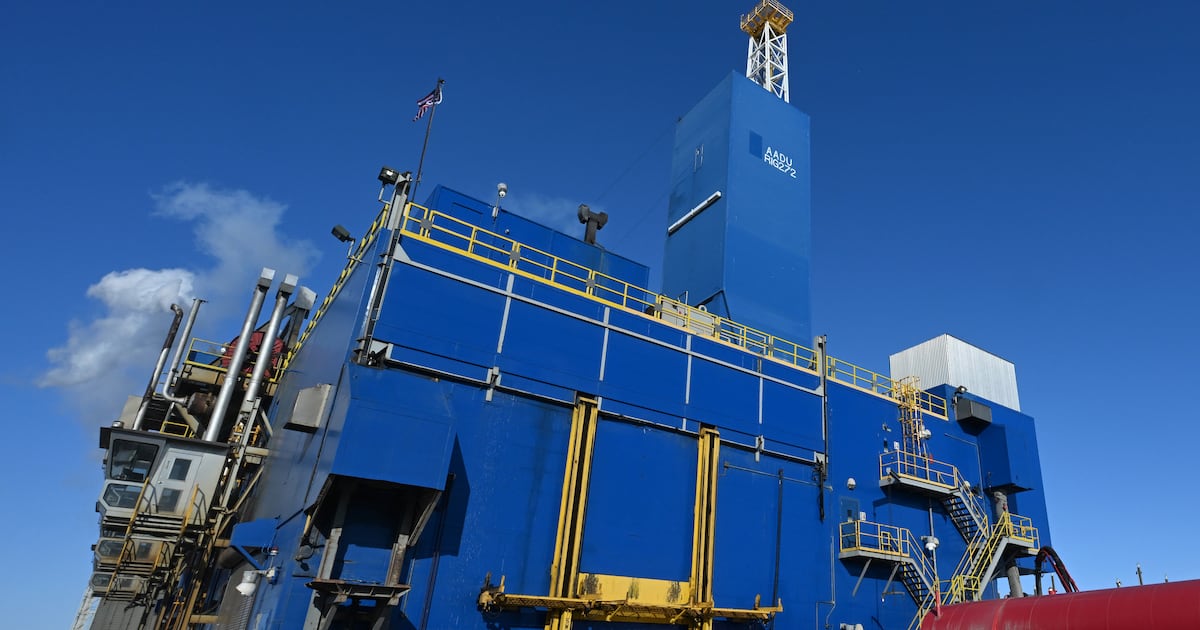
The company expects to invest $1.5 billion on the North Slope over the next three or four years, Imaz said at the May conference. That could add up to nearly 15% of its planned global investments through 2028.
Imaz, a trained chemist who’s been Repsol’s chief executive for more than a decade, declined to provide a detailed breakdown of how the money would be divided between different projects. But he said some of it would fund further development at Pikka, and some would go toward exploration — including on new federal leases that Repsol acquired this spring in partnership with Shell.
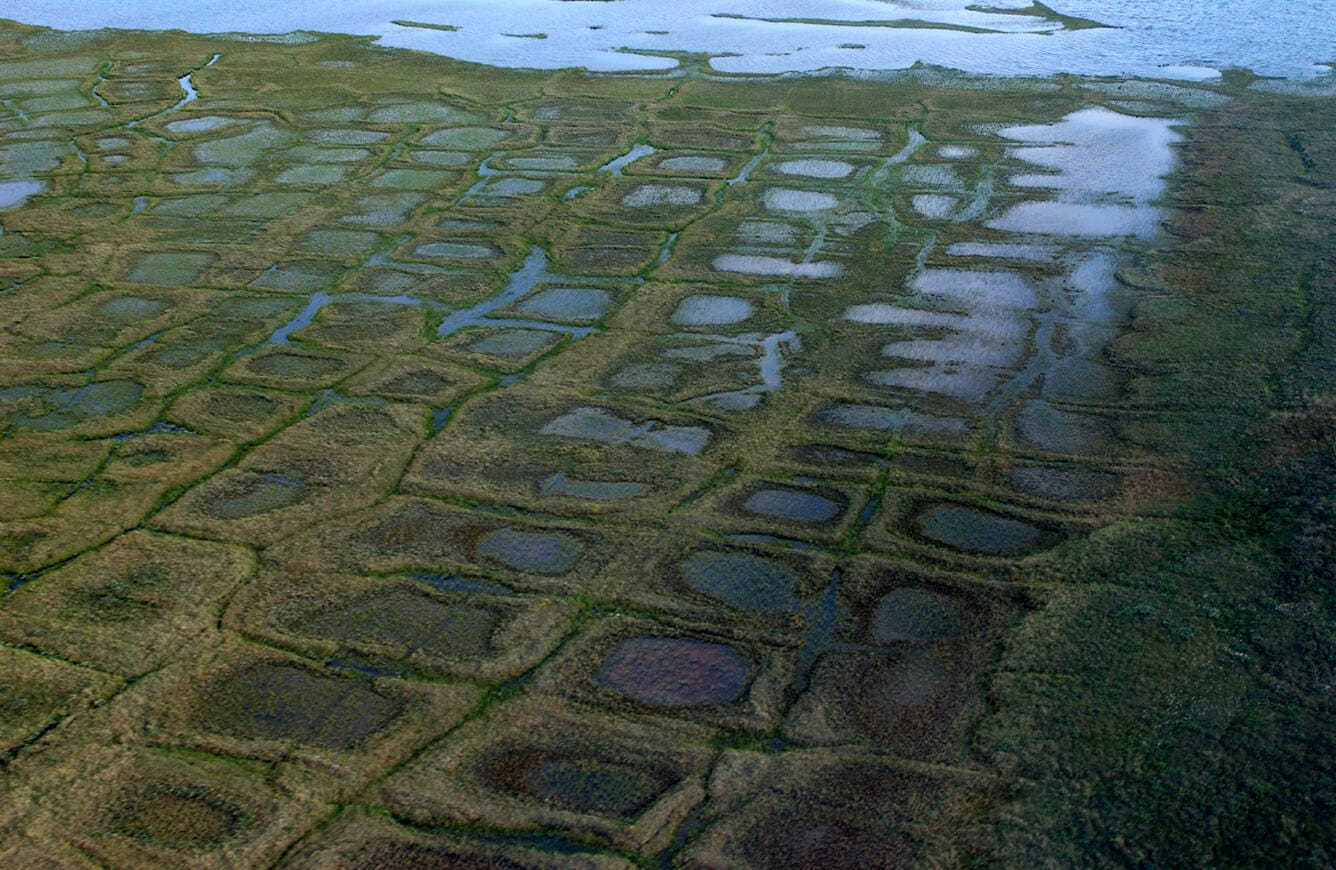
Those federal leases are in the National Petroleum Reserve–Alaska, an Indiana-sized, largely roadless area of tundra and wetlands. The reserve comprises much of the western North Slope and is home to caribou, polar bears and migratory birds — and conservation groups are currently suing to slow development there.
Repsol and Shell have not finalized their plans for the reserve, according to Imaz. But next winter “could be a target” for exploratory drilling, he said.
“Exploration is a complex game,” Imaz added. “We are now organizing the team.”
Clad in a sleek Hugo Boss puffy jacket during last month’s conference, Imaz acknowledged that Alaska is not his “natural environment.”
But he pointed out that Madrid, where Repsol is based, gets snow in the mountains nearby. And he said that traveling to Anchorage isn’t as hard as it may seem, even though his company doesn’t have its own plane.
It’s just two commercial flights away — “not rocket science,” Imaz added. “You can do that without a private jet.”
Repsol is smaller than some of the other big oil companies doing business in Alaska. But it’s by no means small: With its stock valued at some $30 billion, the company operates in more than 20 countries, including the U.S., Venezuela, Norway and Indonesia; its business ranges from early-stage oil and gas exploration to the distribution of lubricants used in cars.
On the North Slope, Repsol could spur development by filling a niche that some analysts have called a “missing middle.” That label applies to a once-absent group of mid-sized companies that are more nimble and can make quicker decisions than the largest producers, but still have the financial horsepower to pay for big projects, according to Mark Oberstoetter, an analyst at the global research firm Wood Mackenzie.
Other companies in that middle category include Santos and APA Corp., a Houston-based company commonly known by the name of a subsidiary, Apache, that’s been drilling for oil and gas on state land east of Repsol’s interests, Oberstoetter said.
Like Repsol, APA is expanding its footprint in Alaska: The company just announced a $70 million acquisition of Savant, a smaller business that owns the Badami oil field, which produces about 1,500 barrels per day on the eastern North Slope.
Repsol entered Alaska in 2007, when it took a 20% stake in offshore oil and gas leases in the Beaufort Sea, alongside global oil giants Shell and Eni.
But it didn’t really make waves in the state until a little more than a decade ago, when North Slope oil production had fallen to about one-fourth of its 1980s peak.
In 2013, Repsol and partner Bill Armstrong, a Colorado-based wildcatter, made a seminal discovery: Other companies had drilled right through a shallow rock formation called the Nanushuk that held billions of barrels of oil but had never been noticed.
Their find sparked a new era of investment in the Arctic, culminating this spring in the largest federal lease sale onshore in Alaska in 20 years.
Repsol and Shell were the top bidders in that recent sale, spending more than $90 million to acquire 241,000 acres of leases. Repsol also, on its own, picked up 78,000 acres just outside the federal reserve in a separate state lease sale last fall.
Meanwhile, Repsol and Santos aim to reach a final construction decision next year on the second phase of development at Pikka, Imaz said.
That expansion project could bump production from 80,000 to 120,000 barrels a day — a sizable amount for Repsol, which currently produces the equivalent of some 550,000 barrels of oil each day across all of its operations. The companies also are working to develop a nearby prospect called Quokka that could boost production further.
Repsol's push to find new oil and gas deposits and to boost production in Alaska aligns with a global trend in the industry.
Five years ago, interest in renewable energy was surging, and future demand for fossil fuels looked uncertain, so big oil companies slashed spending on exploration and focused instead on short-term investments, Oberstoetter said.
After scaling back on developing new fields, many companies are now facing a decline in production in 10 or 20 years, he added.
But after Donald Trump’s re-election and a global turn back toward fossil fuels, the industry now forecasts long-term demand to stay high. So companies like Repsol, Oberstoetter said, have been investing more in exploration and are betting on Alaska oil deposits to stave off the expected production decline.
"They kind of need them within their global portfolio as other mature fields start to decline," Oberstoetter said.
Still, Repsol is "years away" from producing oil from the leases it recently acquired, given the high cost and challenging logistics of development in the Arctic, Oberstoetter added.
The company could also face opposition from environmental groups, which are fighting the industry’s expansion on the North Slope — particularly in the federal petroleum reserve, where Repsol acquired leases this spring with Shell.
"Of course, we’re really worried about things," said Andy Moderow, senior policy director at Alaska Wilderness League, a group that has sued over Arctic oil development.
But, Moderow added, there's also a lot of "bluster" coming from the industry and the Trump administration that may not translate into new roads and drilling pads.
"It’s way too soon to know whether all this talk will impact lands and water in Alaska," Moderow said.
Correction: An earlier version of this article misstated the current production volume at the Badami oil field, which is about 1,500 barrels per day. The figure originally stated, 40,000 barrels per day, is its production capacity.
This article also initially cited a source that overstated the Pikka project’s role in Repsol’s global portfolio. The oil field makes up about 7% of the company’s global production, not 16%.
If you value journalism like this, please consider a voluntary paid membership to Northern Journal. If you're already a paid member, many thanks.