A Northern Journal spring update, and a Q&A with Matt Schultz
Catching up on the Northern Journal trail.
Good morning!
It's been a little while since I shared a Northern Journal update, and I wanted to catch you all up. This post also follows up on my coverage of Alaska's U.S. House race this week with a full transcript of my interview with Democratic candidate and Anchorage pastor Matt Schultz; if you want to skip straight to that, just scroll down.
Back to the updates, first: Last weekend was the yearly Alaska Press Club conference.
To be honest, I go back and forth on the value of journalists gathering together; sometimes I think that reporters need to spend more time not with each other, but with regular people.
But particularly after a year of tough news for the industry, last weekend's conference was a much-needed morale boost, where we could spend time celebrating each other's work. One of my favorite sessions was a student journalism showcase, where I learned that the school in the Kuskokwim River village of Akiachak has its own paper, the Husky News. Themes for last month's edition: "ptarmigan, dog mushing, wood cutting and manaryarluta." Plus, an update on the local moose population, and a senior profile with a question about the subject's "favorite fragrance to use in school." (Answer: this Versace one.)
At Press Club's annual journalism contest, stories published by Northern Journal claimed a few awards — including first place in the business reporting category for Max Graham's piece on the Alaska mining industry's deep ties to Vancouver.
Other than that, I've been enjoying settling back in at home in Anchorage and focusing on Alaska reporting after a busy winter of travel. Max and I are starting to plot out some summer plans, both for reporting trips and other pursuits.
You may have noticed that we've been featuring a little more political journalism at Northern Journal in recent weeks. That's not been a huge focus for us in the recent past, but this is a big election year, with nearly 20 candidates running for governor; a U.S. Senate battle royale between Republican Dan Sullivan and Mary Peltola; and a U.S. House race that's starting to get interesting. We'll continue to report political stories where we see opportunities to add to the discourse.
I'm curious to know how those stories are landing with you, though, and if you feel like the shift in focus is justified or distracting. If you have thoughts, or more general feedback about our work and our focus recently, please drop me a line: nat[at]northernjournal[dot]com.
Below is the transcript of my interview with Schultz, the Democratic U.S. House candidate. Earlier this week, I profiled his race, which now includes two well-funded challengers to GOP Rep. Nick Begich III — Schultz and independent Bill Hill — seeking to claim the anti-incumbent mantle. I'm publishing my full Q&A with Schultz for folks curious to hear from him in more depth; I'll publish my interview with Hill tomorrow.
A quick reminder: Max and I can only keep working with your support. Two-thirds of Northern Journal's income comes $100 at a time, from contributions from individual readers. If you're already a supporter, thank you. If not, we'd be grateful if you'd consider a paid membership.
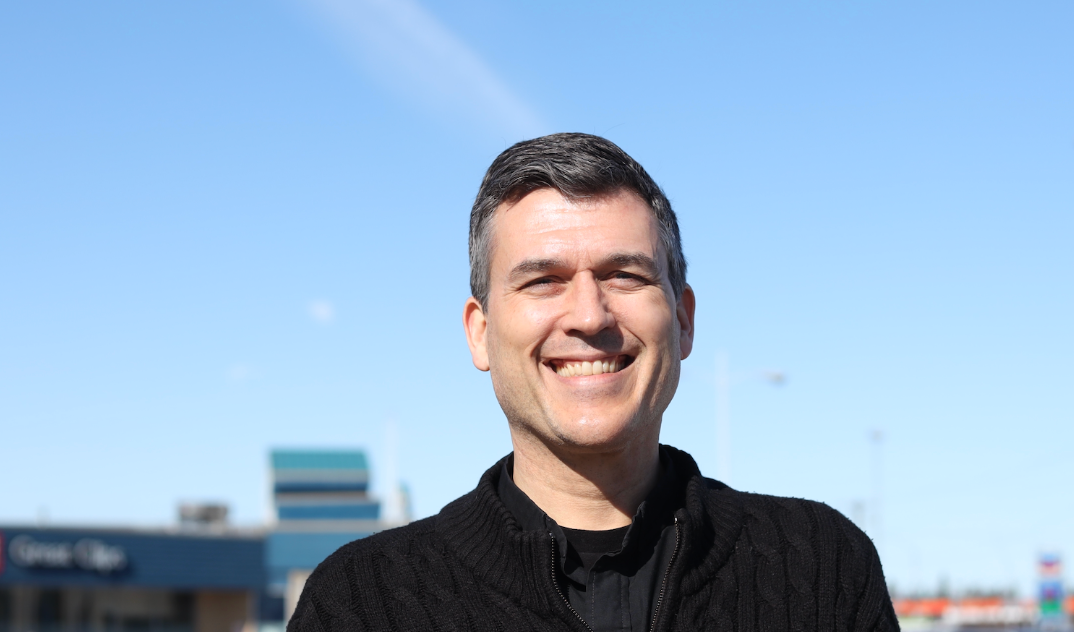
This interview has been lightly edited for clarity, and slightly condensed.
Nathaniel Herz: Where'd you grow up?
Matt Schultz: I grew up in upstate New York, in a tiny little cow town with cornfields and woods as my playground. It's called Stephentown, New York — mostly dairy places. I didn't milk cows often, but, you know, you don't have to do it much to really recognize how hard it is to make that your life. It was a beautiful, beautiful place.
Nathaniel Herz: So your career path was…
Matt Schultz: Ministry, yeah, which is a 24/7 job. I will say it's quite difficult, but the most rewarding job I could imagine.
Nathaniel Herz: It's beautiful. How did you end up in Alaska and when?
Matt Schultz: 1997, I came because we had a job opportunity. But more than that, my wife had already been up here for short-term work that she was doing through ministry. She's also an ordained pastor, and we both were looking for something bigger and bolder and adventurous and more beautiful. When the opportunity came up, we thought it was temporary, like a lot of people do — ‘yeah, let's put in our three years, and that'll be that’ — we actually did four years and left to go to school.
As soon as we crossed the border, driving back into the Yukon, we said, ‘Oh no, we have to go back. We have to go back to Alaska somehow.’ And so, after school was over, we worked a couple jobs until we found our way back in 2013.
Nathaniel Herz: So, do you have a degree in divinity?
Matt Schultz: Yeah, I have a double master's from Princeton Theological Seminary — a master of divinity, which is your typical ministry degree, plus a master in youth ministry, which is heavily weighted in educational theory and theological development, particularly with adolescents. Princeton seminary is associated with university there. They began together and they divided. But they're loosely affiliated. So we could take classes, share libraries, things like that.
Nathaniel Herz: And your congregation is Presbyterian?
Matt Schultz: Correct. Now, there are different flavors of Presbyterian. There's one that is rather conservative, and then the (Presbyterian Church USA), which I would say, based on the statistics, is pretty moderate.
Nathaniel Herz: How long have you been the pastor at your church?
Matt Schultz: Since 2013. Which, I'll say in the church world, that's a really good run. A lot of people come and go within three or four years.
Nathaniel Herz: And you didn’t run for any other public offices during that time?
Matt Schultz: No. But our church is very engaged in public advocacy, and that's harmonious with the whole denomination nationwide — worldwide, really. We see the importance of giving a hungry person a sandwich at the door. But also addressing the policies that caused thousands of people to be hungry in the first place. For example, we were involved in helping to raise the minimum wage, because that helps more people avoid that hunger in the first place. We feel that Nick Begich made a terrible mistake supporting the cutting of (food stamps) for lots of reasons. But the most immediate one being there are so many more hungry people at our door now, every single Sunday morning. We feed who we can. But we can't make up the difference for what Nick Begich cut.
Nathaniel Herz: What made you decide to run for Congress?
Matt Schultz: I want to serve the people of Alaska. Not only are they being deeply, deeply harmed by Nick Begich and his policy choices. But also I see a beautiful, amazing future. It's so close, it's within our grasp if we make a few proper changes at various levels. And I felt that my best avenue to make those things happen were via this office.
And also, so many people in my congregation and my family came up to me after the most recent presidential election, literally in tears, saying, ‘How come no one is protecting us? How come no one is doing anything to protect us?’ And as as a pastor and as a parent, that's when you raise your hand and say, ‘I will.’
Nathaniel Herz: Who is in the Matt Schultz coalition?
Matt Schultz: Lots of folks within the Democratic Party. (Political consultant) Jim Lottsfeldt wrote something really nice in the newspaper recently. Certainly, Reverend Elizabeth Schultz, my wife, is a very big supporter.
My family was the first people that we had in there. What I'm seeing on a broader base is people who have a deep patriotism and a deep commitment to understanding that we're all in this together, that we are a community, not just a group of individuals scrambling to make cash, right? We're supposed to be a community that takes care of one another and keeps an eye on, ‘Can our current graduates get jobs? Can our younger people get an education? Can our older people be cared for?’ Because we're all supposed to be intertwined and helping one another lift up. Those are the people that show up at my events, and who write me letters and make phone calls all the time. They're not saying, ‘Oh, I’m this political party,’ or, ‘I’m this economic bracket,’ or this, that or the other. They say, ‘I see what we're supposed to be, and I see how Donald Trump and Nick Begich represent the opposite.’
Nathaniel Herz: It seems like you have a lot of support from the Democratic Party and folks who are in that universe. But they’re a smallish fraction of the Alaska electorate. Who are the other constituencies that you're trying to appeal to?
Matt Schultz: Oh, I’m trying to appeal to all Alaskans, because I want to represent all Alaskans. And I do get reached out to by a lot of Republicans who say, ‘I've got the R by my name, but I vote based on the person's character. I vote based on the policies that I want to see enacted.’ So many of them say two main things. One, ‘We see that we had voted in the past for Trump or Nick Begich. We sent them to do a job to shrink government spending, and they've ballooned it. To reduce foreign wars; they've multiplied them. To make the government more efficient. They've made it less efficient.’
So many of them saying, ‘We have these values as Republicans and independents that have been betrayed by the people currently in office. So, we want to go a different direction.’ That's one of the things they say. The other thing they say is, ‘There's an ethical fabric to our nation that is now stained and torn, based on the fact that we have Epstein files getting buried. And that we have a person in the Oval Office who is so fragile and fickle that he's picking fights with the Pope of all people. And open your newspaper tomorrow, you'll see a brand new ethical violation by every level of his administration.’
So, people who are Republicans, people of faith, people of ethical character, saying, ‘This does not represent us. We want to vote for someone who has a moral and ethical foundation.’ And I believe I've got the record to demonstrate that.
Nathaniel Herz: What's your response to folks who are looking at your past advocacy around stuff like transgender rights, Black Lives Matter, No Kings and saying, ‘That’s too liberal of a background to get elected in Alaska as a statewide candidate’?
Matt Schultz: I would encourage them to look at the nationwide and statewide statistics and see how my positions line up. I tend to be in the majority on all of those issues, and the things that I stand for tend to be either a clear majority or real close to it. If it's in the minority, it's like, you know, 48 to 49%.
I think people like to slap labels on people. That's an example of that, just because it's easier than actually doing the homework of reading what I actually said, what I actually stand for, and what the rest of our community stands for. More importantly than that, I think it's really important to always have a candidate that — you know, it would be irresponsible to go to the voting booth and vote for someone who doesn't have a record behind them, because then you don't know what they're going to stand for, right?
Nathaniel Herz: Do you feel like that’s the case a little bit with Bill Hill?
Matt Schultz: I don't know what other voters think. I will say that I don't see a record of advocacy on political positions in his history. So, perhaps he has one that I just haven't seen. But I have not been able to find that kind of history.
My positions and my ethics are an open book for at least a decade here in-state. You have a track record. Not only the things I've written in the newspaper and the times I've spoken at public events and the times I've advocated and even helped to author public policy. But also, you can go on YouTube and see my sermons for the last decade. And a lot of times I'm addressing public issues. Not as a candidate, of course, but I will say things in those sermons, such as, ‘Everybody deserves human rights.’
So, if you're going to bring up the issue of any minority group, odds are I'm on record saying they're human beings and they deserve due process, which, again: That's not an extremist position. That's just an ethically sound and constitutionally sound position.
Nathaniel Herz: Do you have any guns?
Matt Schultz: No. Why, do you want some?
Nathaniel Herz: I have a very small one. You don't have any guns?
Matt Schultz: No, I don't.
Nathaniel Herz: I saw on your website, though, you’re a supporter of the Second Amendment.
Matt Schultz: Yeah, there's lots of things I support people's freedom to do or to have. That doesn't mean I do or have them all. You know, people have every right to fly a helicopter.
Nathaniel Herz: Where on your campaign, so far, have you been off the road system?
Matt Schultz: I have not been, yet. That's in the plans for coming up. I mean, it's expensive to get there, and it's time consuming, and thus far, it’s early in the race. But going ahead, that is one of our priorities, for sure.
At the heart of the question is who and what and where we value. And off the road system is of the utmost importance and highly, highly beloved and central to what we hope to be representing.
Nathaniel Herz: Have you spent other time off the road system?
Matt Schultz: I travel around in the ministry. We're part of what's called the Presbytery of Yukon. That's around the entire state, minus Southeast.
But yeah, in fact, my wife's going to be in Anaktuvuk Pass coming up real soon. We've both been to Utqiagvik a few times. She has lots of work in St. Lawrence Island. I should mention she's the district supervisor. So, we have these longstanding relationships with people from all over the state, many on the road system and many, many, many off the road system, as well. Lots of folks who represent communities that are primary Alaska Native communities and worshipping communities, as well. And all of those with the same denominational background of — we mostly just want to mind our own business. But then we recognize when a governmental policy is causing our neighbor harm, it's our duty to stand up and try to correct that.
Nathaniel Herz: Cordova’s off the road system, and you were just there for the Democratic Party convention.
Matt Schultz: Thank you — it's so recent in my memory.
Nathaniel Herz: How did you feel when you saw Bill Hill get in the race?
Matt Schultz: I'm fine with it. This is how democracy works, you know? I knew before he declared — some folks had reached out and said, ‘This is happening.’ I knew others would join in. It would be silly to think I would be unopposed, right? It's not at all a surprise, not a problem. It's why we have primaries; it's why we have campaigns. It's why we have the race, so that the voters have a choice.
Nathaniel Herz: Do you think it's important that, before the general, there ends up being one consensus non-Nick Begich candidate on the ballot? Or not necessarily?
Matt Schultz: I've heard people argue various ways. I think that ranked choice voting takes a lot of the danger away there. And I also think it's really important that voters have a clear and distinct choice between candidates. And so, if it's Nick Begich and another candidate who's very similar to Nick Begich, then, no — I think there needs to be someone in there to represent a distinct direction. To say, ‘Nick wants this. I want these different things.’ And so you have
Nathaniel Herz: Is Bill Hill similar to Nick Begich?
Matt Schultz: Well, as I said, I'm not 100% sure what Bill Hill is going to stand for. That'll be a question for Bill.
Nathaniel Herz: I’ve heard that some of the folks in the Bill Hill camp have been pushing for you to withdraw even before the primary. Is that a dynamic you’ve picked up on?
Matt Schultz: I've heard people at (Hill’s consultant) Ship Creek (Group) express their fear of my campaign. And it's an expression of that. I know when I was a basketball player, and I saw a bigger player get on the court, I would be like, ‘You sure you want to play? Do you want to quit, because you're much taller than me?’ So I think of course, they're going to try absolutely everything they can to make their job easier, and my presence makes their job, probably, impossible.
Nathaniel Herz: Have you and Bill talked?
Matt Schultz: Yes, I'd like to go officially on record as saying I think he's a friendly and nice guy.
He and I are going to both be speaking at a candidates forum in a couple of weeks. We're going to get together for coffee a couple days before, just to say, ‘How can we make sure that this is not framed as the two of us duking it out? But rather, how can we present to the voters of Alaska, not only two different points of view, but two people who know how to behave like adults and know how to treat people with whom we disagree with kindness and civility?’ And so we can have this whole time where we each articulate our distinct viewpoints, but not have it become the mudslinging nonsense that we see in Trump's tweets every day.