Trawl allies fire back as Alaska candidates' anti-industry rhetoric heats up
Gubernatorial hopefuls are blasting Alaska's trawlers for catching salmon. Now industry allies have launched a radio ad campaign.
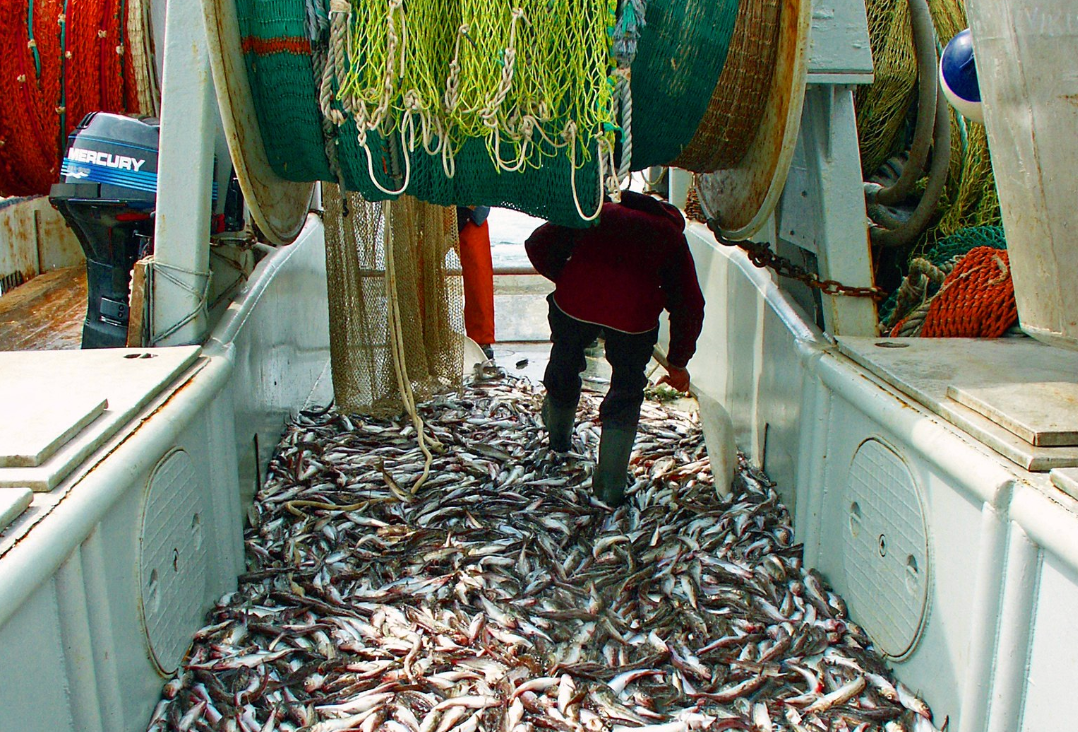
As Alaska’s race for governor heats up, Democrats and Republicans have increasingly targeted the state’s big trawl fisheries with criticism — and are swearing off campaign money from owners of the factory vessels that unintentionally harvest salmon as “bycatch.”
Now, the industry’s allies are pushing back.
A mysterious, pro-industry group recently launched a new five-figure radio advertising campaign on urban Alaska airwaves — targeting what it describes as “bycatch BS” and politicians telling “trawl tales.”
The group, Alaskans Deserve Better, has not publicly indicated who’s behind the radio blitz.
But legally required disclosures filed with the Federal Communications Commission show that the funders apparently have substantial cash at their disposal, with more than $10,000 in ad time reserved over the first two weeks of the campaign. A veteran Anchorage Republican political consultant, Art Hackney, is working with them, according to the disclosures.
The new radio campaign underscores how the fight over trawling has become one of the central issues animating Alaska politics in recent years.
Trawlers drag open-mouthed nets through the water to harvest whitefish like pollock for both U.S. and foreign consumers. Some of the vessels have onboard factories, which process fish that ultimately is used in fish sticks, fried fillet sandwiches and surimi, the protein paste in imitation crab, among other products.
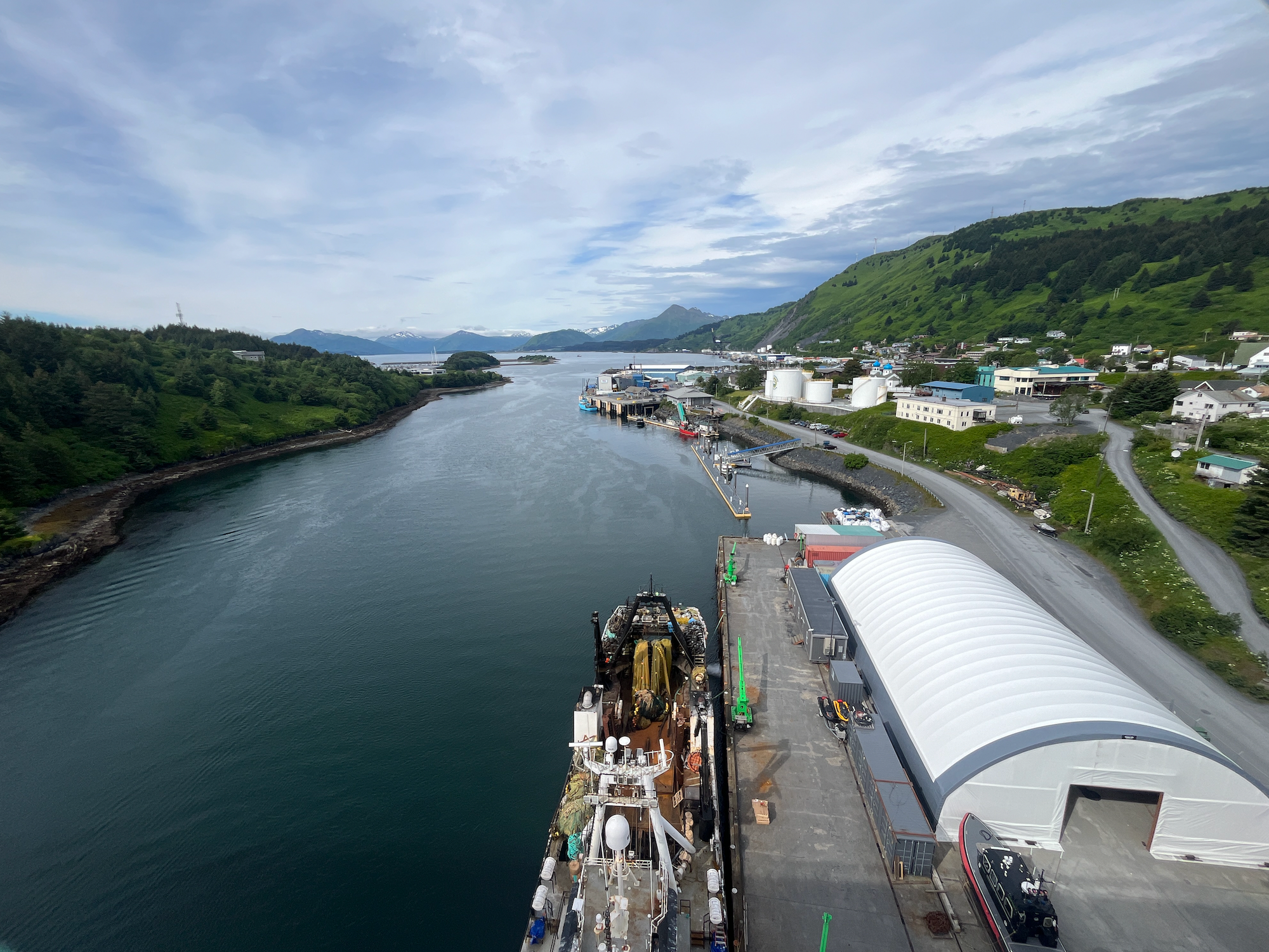
Many of the largest trawlers are homeported in Seattle, but the industry operates in both the Bering Sea and the Gulf of Alaska. Smaller vessels without onboard factories deliver their catch to processing plants on the Alaska coast, where the industry says it sustains thousands of jobs and pays tens of millions of dollars annually in taxes.

The trawlers, in past years, have unintentionally harvested as many as hundreds of thousands of chum salmon and tens of thousands of king salmon from the Bering Sea.
In 2022, underdog Democrat Mary Peltola won a seat in the U.S. House campaigning, in part, on an anti-bycatch platform.
This year, though, it’s not just Democrats weighing in — especially in this year’s gubernatorial election, in which more than 15 candidates are vying to succeed term-limited GOP Gov. Mike Dunleavy.
Republicans appear to have sensed their own political opening, and are levying unusually strident criticism against one of the natural resource industries that are, typically, closely aligned with the party’s agenda.
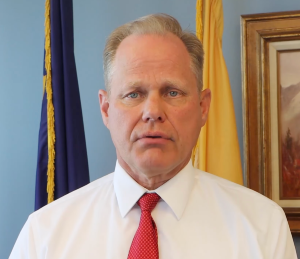
Multiple leading GOP candidates — including former state Sen. Shelley Hughes, former attorney general Treg Taylor, former Anchorage mayor Dave Bronson and conservative activist Bernadette Wilson — have pledged not to accept campaign contributions from trawl officials. Many also say they will nominate like-minded representatives to the federal council that manages the Bering Sea trawl fleet.
“I do know there is a leftist element to this,” said Bronson, a conservative Republican who’s been an outspoken trawl critic on the gubernatorial campaign trail. But even leftists, he acknowledged, “might be right once in a while.”
“If we treated our forests the way we treat the bottom of our oceans, everyone would have shut this down decades ago,” he said.
Politicians, conservation groups and tribal leaders have been protesting bycatch in recent years amid sharp declines in the number of salmon returning to spawn in Western Alaska rivers — a crash that, in turn, has devastated the subsistence traditions, culture and economy of many of the region’s Indigenous villages.
 Nathaniel Herz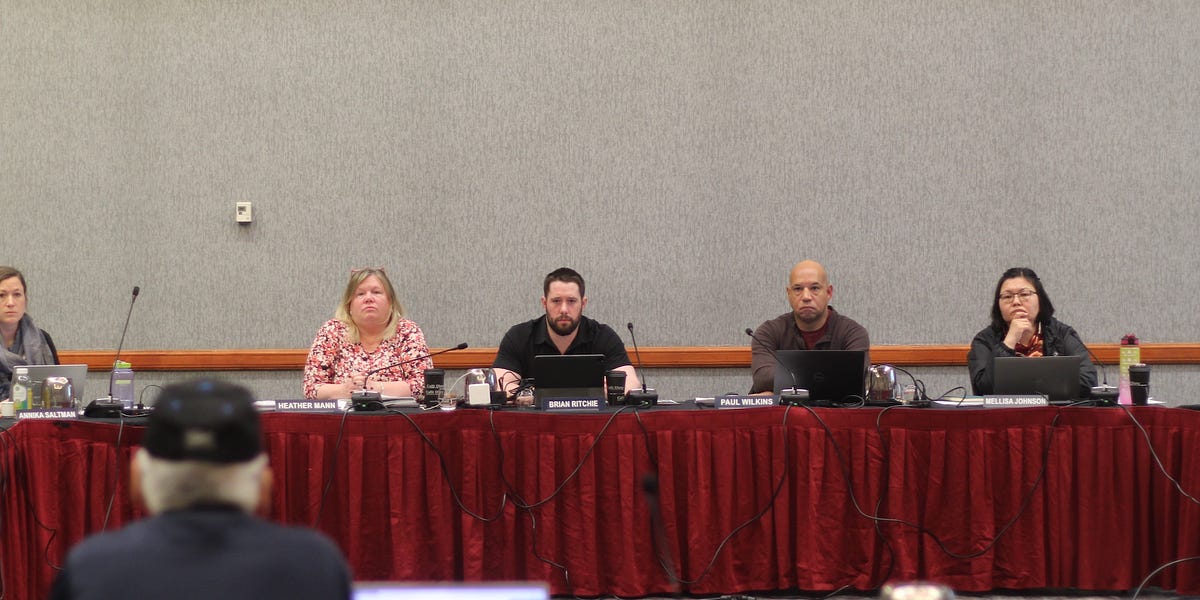
In response to the advocacy, federal managers recently passed new limits on chum salmon bycatch in the Bering Sea that trawlers say could cut into their profits.
Industry boosters point to genetic sampling showing that only a fraction of the salmon caught by trawlers as bycatch would otherwise end up spawning in Alaska rivers like the Yukon and Kuskokwim; many enter the ocean from Asian and Canadian river systems. Federal research also indicates that recent chum salmon declines, in particular, appear to be driven by global warming.
Bycatch critics, meanwhile, say it’s unfair for trawlers to take even a small number of Alaska-bound salmon when subsistence harvesters, like those on the Yukon River, are barred from harvesting a single king to feed their families. They also say that the dragging of trawl nets along the ocean floor damages habitat.
Nathaniel Herz
Hackney, the political consultant who reserved the pro-trawl advertising time for Alaskans Deserve Better, did not respond to requests for comment.
Andrea Keikkala, head of a trawler trade group called United Catcher Boats, said she did not know who commissioned the advertising campaign. But her group nonetheless posted audio from the ads on social media, saying they address misconceptions amid a “growing push to simplify a complex issue.”
Keikkala pointed to how Taylor, the former attorney general, was attacked on social media after a photo of him talking to a seafood industry executive was posted in an anti-trawl Facebook group.
“It's highly politicized when a candidate can't even talk to someone without having their picture taken and being demonized for a conversation,” Keikkala said in a phone interview. “We should not set policy on Facebook. For some of the candidates, it seems like 100% of their knowledge of trawl is coming from there.”
A spokesperson for Taylor said the candidate was unavailable for an interview but pointed to a section of Taylor’s website that includes a pledge not to accept trawl money and a call to “end practices that destroy our ocean seabeds.”
On Facebook, meanwhile, a group called STOP Alaska Trawler Bycatch, is highlighting candidates’ positions for its 55,000 members.
The group’s moderator, David Bayes, said he thinks the new radio ads are a direct result of candidates turning down their money. If industry representatives can't give money directly to campaigns, Bayes added, they “have to spend it somewhere.”
“Now that that door is closed, we're going to see radio ads and Facebook ads,” he said.
Bayes said he’s catalogued nine gubernatorial candidates — Democrats, Republicans and independents — who’d expressed at least “something” anti-trawl in writing.
Those include Wilson, the conservative activist, who says she won’t nominate representatives to the federal fishery management council if they have conflicts of interest. Adam Crum, a Republican and a former state revenue commissioner, says policymakers should have a “swift and firm” response when bycatch “threatens the health of our fisheries."
Democratic former state Rep. Jonathan Kreiss-Tomkins has pledged to “rein in bottom trawl bycatch,” while Democratic former state Sen. Tom Begich has criticized “unsustainable practices” by “Seattle-based corporate fisheries.”
Amid these increasing calls for tighter regulation, the trawl industry has been gearing up not just its advertising but its hiring.
Coastal Villages Region Fund, a nonprofit group that uses its trawl investments to run social welfare programs in Western Alaska, recently brought on two former aides from Alaska’s congressional delegation.
One of them, Rick Whitbeck, is a veteran Republican political operative. Before working as state director for GOP U.S. Rep. Nick Begich, he operated Alaska’s chapter of Power the Future, an advocacy group that pushed oil and mining development — where he labeled critics as “eco-radicals.”
Whitbeck and Adam Trombley, formerly GOP U.S. Sen. Dan Sullivan’s state director, “bring strong statewide relationships and experience in public engagement, and will help ensure that more Alaskans hear directly from the communities and people who depend on these fisheries,” Eric Deakin, the coastal group’s chief executive, said in an emailed statement.
“There’s a lot of information — and, unfortunately, misinformation — circulating about our fisheries,” Deakin said. “Our focus is making sure facts, data, and community voices are part of that conversation.”
While Deakin’s group and other trawl organizations contend with increasing attacks from Republican gubernatorial candidates, the industry does have at least one ally in the field.
Matt Heilala, a podiatrist running for governor as a Republican, recently traveled to the fishing port of Dutch Harbor in the Aleutian Islands to “defend the trawl industry,” according to a story from the local public media station, KUCB.
Heilala, a former commercial salmon fisherman, said he’d dug into the criticism and concluded that anti-trawl sentiment amounts to “social contagion.”
“I don’t think the answer is to scapegoat something,” he said in an interview. “There’s a dire consequence to doing something too radical.”
Nonetheless, Heilala, who with his wife has donated more than $1 million to his own campaign, said he still won’t be accepting contributions from industry representatives.
“I'd be happy if they support me — like, vote for me,” he said. “They're happy I'm speaking up on behalf of the communities. But they know darn well I'm not taking one dime."
If you like journalism like this, and you're not already a paid member, please consider a voluntary subscription by clicking the link above. If you're already a subscriber, thank you.