With gold prices still soaring, a major Alaska mine proposal is getting a new look
For years, some of Alaska’s largest mining proposals inched along, unable to attract big investment. Then the price of gold took off.
A massive gold mining project north of Fairbanks treaded water for years, without an investor willing to pour billions of dollars into construction.
Now, it’s getting a fresh look.
The owners of the Livengood project recently raised more than $100 million to push it forward, and they’re now planning new drilling and an updated economic study. Like mining companies across Alaska, they’re eager to capitalize on soaring gold prices.
“I joined this project in 2010 to build another mine, and it's just exhilarating now to start taking the steps that can actually realize that dream,” said Karl Hanneman, chief executive of International Tower Hill Mines, the publicly traded company that owns the project.
The new momentum behind Livengood is just one example of how record mineral prices are drawing new interest and investment into Alaska’s mining industry.
The price of gold has quadrupled in the past decade, and now hovers above $4,500 an ounce. Other minerals, like silver and copper, also have been trading at historically high prices, making once-marginal developments increasingly attractive to investors.
 Max Graham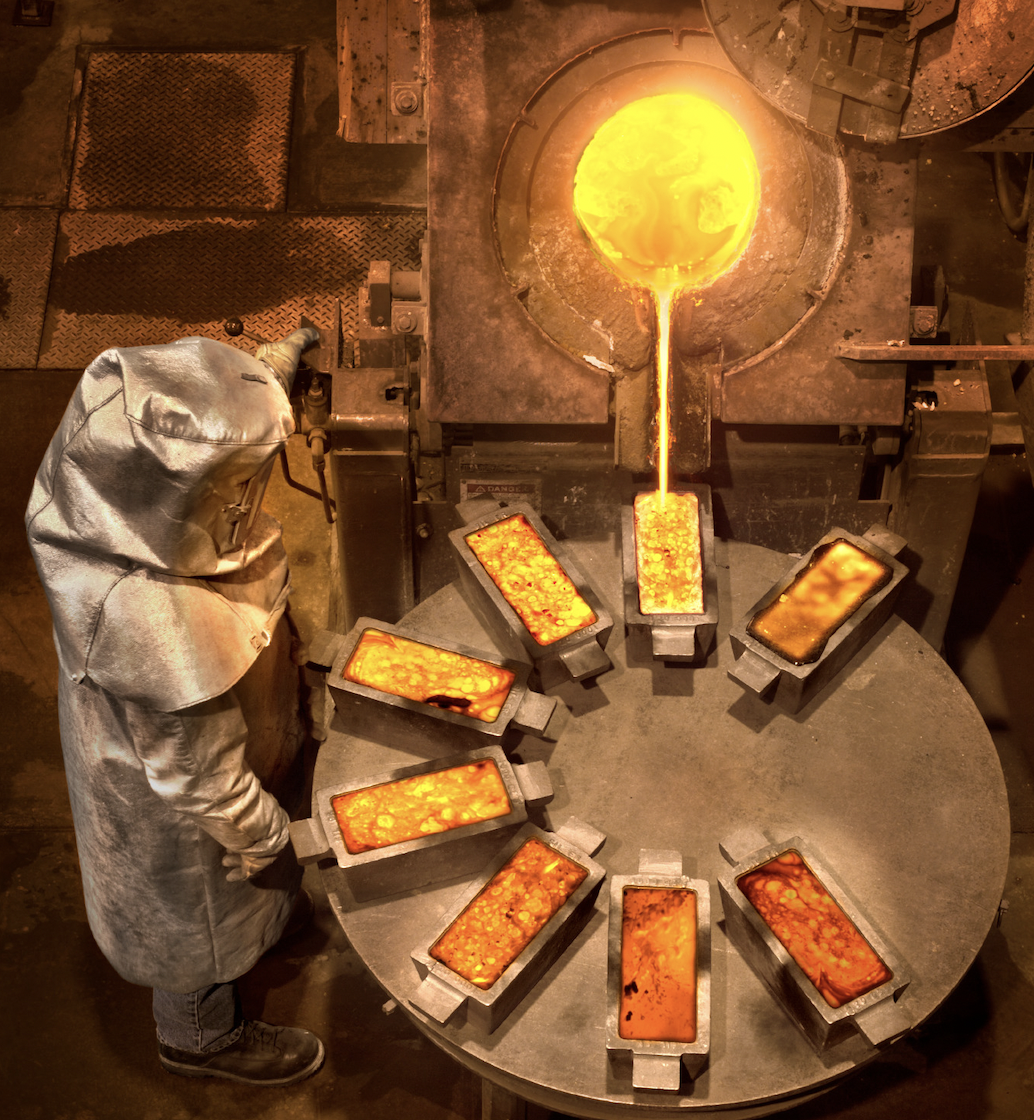
“Whenever there's a bull market, people come rushing in, and then a lot of projects that have been sitting on the sidelines because they couldn't get financing all of a sudden qualify, simply because the pool of money is larger,” said Douglas Silver, a Colorado-based mineral economist and financier with decades of industry experience.
The number of active hardrock exploration permits in Alaska swelled by 100% between 2018 and 2025, according to state data. And regulators are anticipating 20 entirely new early-stage mining projects this year. That's "a significant jump," according to Dave Charron, a top permitting official at the Alaska Department of Natural Resources.
"Gold prices are driving everything," Charron said. "It's a fever, for sure."
For Livengood and other major projects, the path forward isn’t assured. Even as record prices boost short-term exploratory drilling and prospecting across Alaska, they have been slower to translate into the much more expensive work of actually building large mines.
But experts say that if prices stay high for long enough, that could change — and Livengood could be a bellwether.
Its backers had been watching the price of gold, and the value of Tower Hill’s stock, waiting for the right moment to bring it “out of hibernation,” said Marcelo Kim, a partner at Tower Hill's largest shareholder, Paulson & Co.
“And that's what we've done here,” he added.
“A hell of a lot of money”
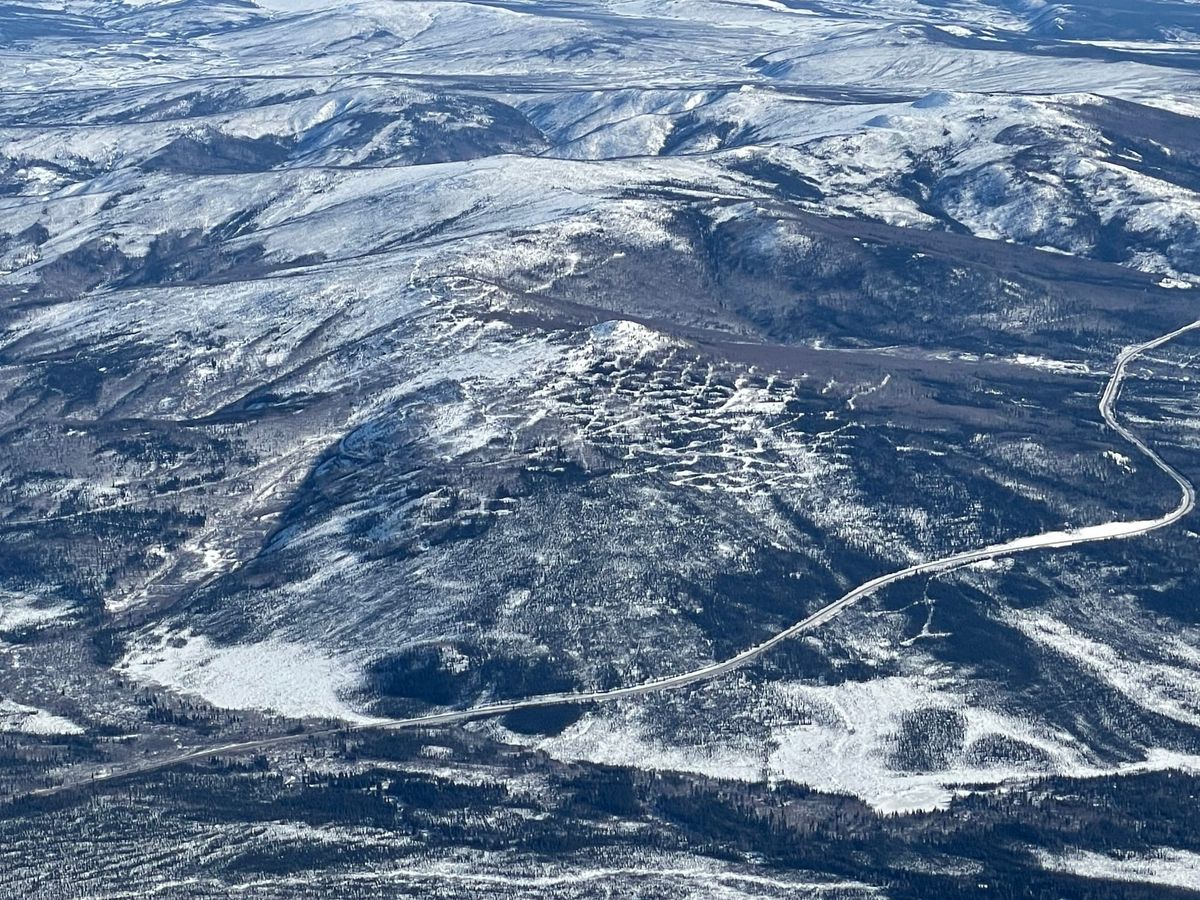
First envisioned more than a decade ago, Livengood would be an open-pit mine on a mix of state, federal and private land, near a remote stretch of the Elliott Highway about 70 miles northwest of Fairbanks.
Tower Hill’s mining claims extend across some 75 square miles, a swath of land nearly the size of urban Anchorage, though the core deposit is just one square mile.
The rural area around Livengood — home to 16 people, according to the last U.S. census — has drawn gold miners for more than a century, and small-scale placer mines still operate in the valleys nearby.
But the mine proposed by Tower Hill would dwarf those operations, with an open pit that could stretch nearly 1.5 miles.
The mine could produce 6 million ounces of gold over two decades, worth about $30 billion at today’s prices. The company says there's a lot more gold in the ground, and the current high gold prices could boost production figures, potentially putting Livengood on par with Alaska’s largest operating gold mine, also in the Fairbanks area: Fort Knox.
After more than a decade of drilling and studying the Livengood deposit, Tower Hill already has a strong understanding of the geology, Hanneman, the executive, said in a March interview.
“We know the gold is there,” he said. “We know where it is, and how much.”
Max Graham
A next step, Hanneman added, is drilling more rock samples to confirm recovery rates — the industry term for how much of the gold present in the ore can actually be extracted.
Tower Hill also plans to update Livengood’s construction cost, estimated a few years ago to be $1.9 billion.
That’s not unusual for a project of its size, but it’s still “a hell of a lot of money to raise for a gold mine,” said Silver, the mineral economist.
The cost is related to another challenge for the project: energy.
Livengood would need some 60 megawatts of power, according to a 2023 technical report — about half the capacity of Alaska’s largest hydropower dam.
The company has looked at building a substation and a 50-mile transmission line connecting the mine to the Fairbanks-area power grid.
But the region’s electric utility, Golden Valley Electric Association, says it already faces challenges supplying enough electricity to its existing customers.
“Our preference would be to connect to the grid,” Hanneman said. “But at some point we have to consider self-generation.” That could include trucking liquified natural gas down from the North Slope, he added — or burning diesel, as other off-grid mines in the state do.
Billionaire investors
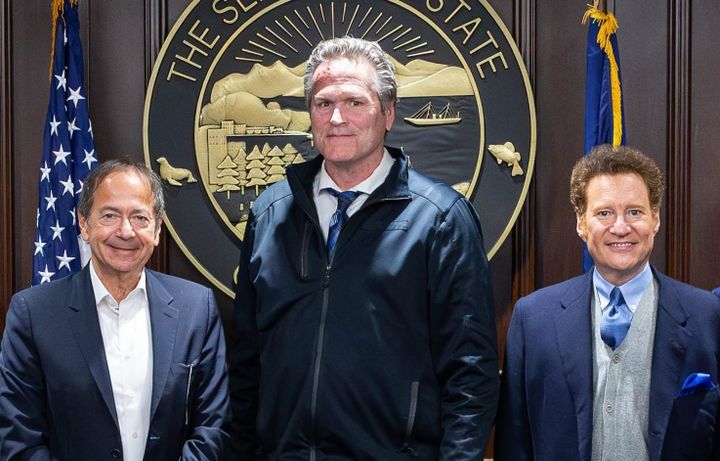
Livengood could be buoyed by support from two East Coast investors with deep pockets: John Paulson and Thomas Kaplan.
The two billionaires have become major players in Alaska’s mining industry over the past decade. Both are also heavily invested in the Donlin gold project, a proposed mine in Western Alaska that would be even larger than Livengood.
Max Graham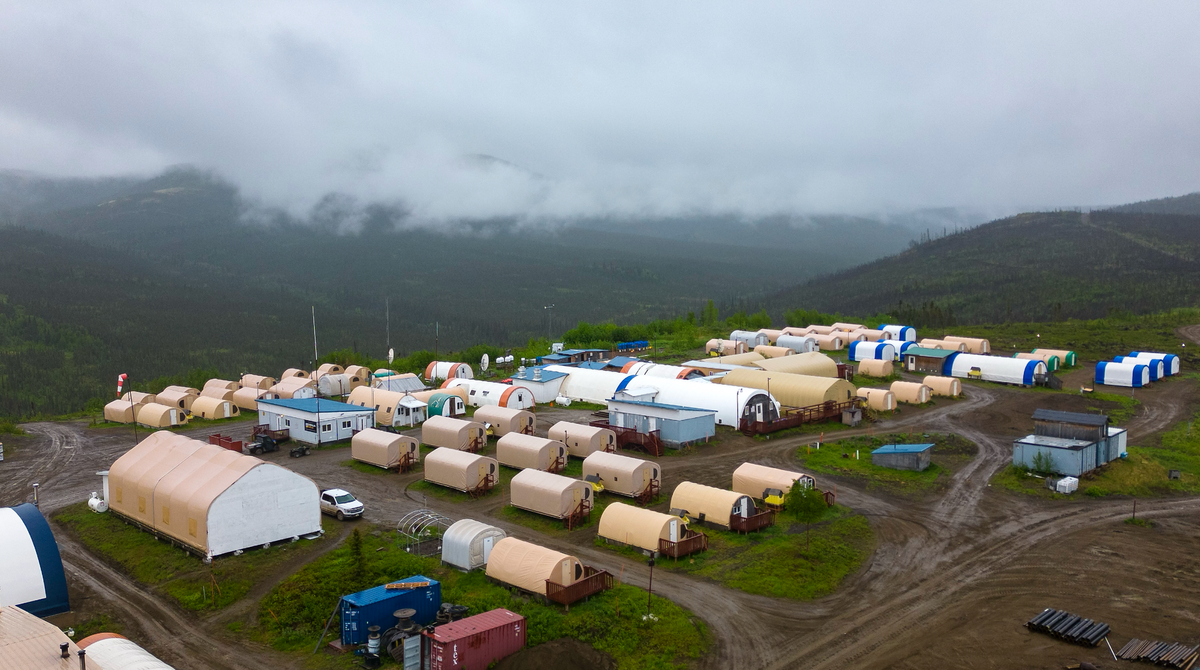
Kaplan and Paulson not only have vast personal wealth but also deep ties to Wall Street, which they could leverage to develop their projects, according to Silver.
Paulson, who has close ties to President Donald Trump, originally made a fortune betting against the housing market before the 2008 financial crisis. Last year, he invested $800 million in the massive Donlin project, buying a 40% stake from Canadian mining giant Barrick.
Paulson’s investment in Tower Hill has drawn less attention, but it’s still considerable. He first bought a stake in the company more than a decade ago and today is its largest shareholder, owning some 40% of the company.
Of the $115 million that Tower Hill announced raising earlier this year, $40 million came from Paulson.
Livengood “is a very interesting project because it is an extraordinarily large deposit,” said Kim, the partner at Paulson’s investment office and Tower Hill’s board chair.
The company expects the newly raised $115 million to cover all the work needed to reach a construction decision, Kim added.
Kaplan, meanwhile, through a firm called the Electrum Group, owns the second largest stake in the company, about 12%.
One advantage for the Livengood project, at least so far: It has run into relatively little opposition from conservation groups and Alaska Native organizations, which have aggressively fought other proposed mines in the state.
Krystal Lapp, interim director of the Northern Alaska Environmental Center, a Fairbanks-based conservation group, said the organization hasn’t taken a position on the project and is waiting to see how Tower Hill proceeds — and how much local buy-in it gets.
“I don't think anything is wrong with them getting money to actually do a feasibility study,” Lapp said.
But if the project moves ahead, she asked, “Is there going to be community outreach? Are there going to be community benefits?”
Reporting like this takes time and money. Northern Journal's primary revenue source is contributions from readers. If you're already a member, thank you. If not, we'd be grateful if you'd consider a voluntary subscription.