Alaska’s energy cliff isn’t coming. It’s already here.
The state’s gas shortage is hitting electricity consumers in Fairbanks and the Mat-Su, and will likely affect home heating prices, as well.
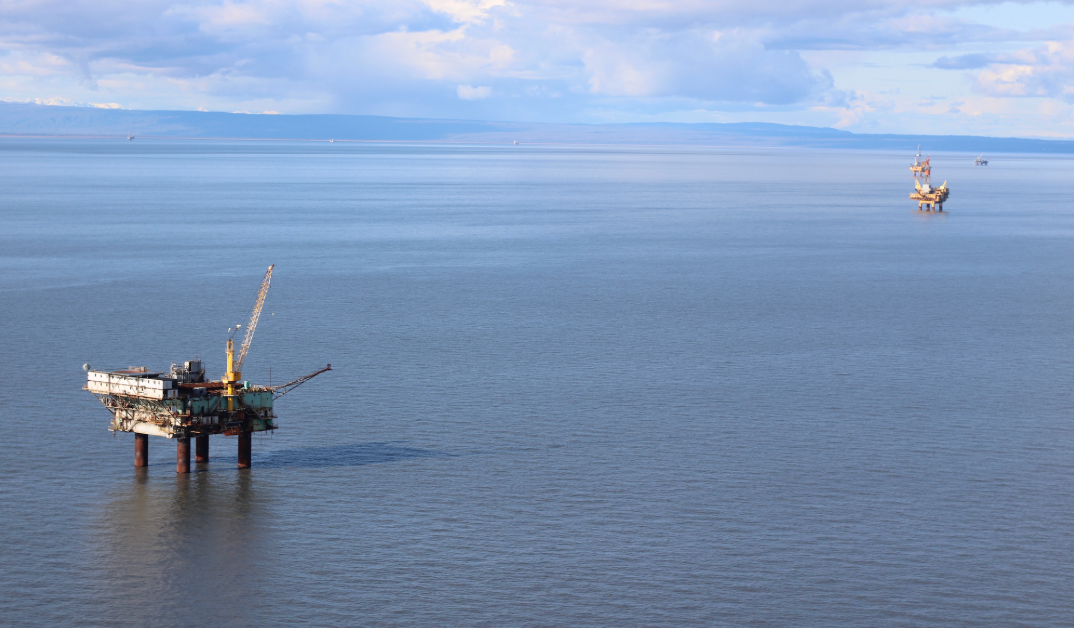
Alaska utilities have warned of sharp price hikes when they start importing liquefied natural gas in the coming years to replace dwindling supplies of locally produced gas that’s traditionally been used for home heating and generating electricity.
The first LNG tankers aren’t expected to arrive for a few years.
But increases in the prices paid by consumers are starting to land now.
This month, Hilcorp, urban Alaska’s leading local gas producer, is hiking by 14% the price it charges the electric utility in the Matanuska-Susitna region north of Anchorage — to $9.00 per thousand cubic feet, from $7.89.
More increases scheduled over the next two years will bring the price to $11.75 by 2028 — a 49% jump from the rate in early 2026, before the effective date of a revised contract approved by the Mat-Su utility’s board in recent months.
The utility members’ electric bills will rise by more like 5% each year, since gas prices are only one part of the utility’s operating costs. But by 2028, that still will translate into a monthly hike of more than $20 for typical consumers, according to utility correspondence with regulators.
Utility officials said the amended contract with Hilcorp gets them an extra year of guaranteed gas, when the alternative is a shortfall in supply that could force the utility to generate power with even more expensive diesel fuel.
But the officials also acknowledged that prices for consumers are likely only headed in one direction: up.
“We’re really seeing this as a gradual approach to the unfortunate increase in what Alaskans may see in fuel costs,” Kim Henkel, chief fiscal officer at Matanuska Electric Association, known as MEA, said in an interview earlier this year.
Officials with Hilcorp, urban Alaska’s dominant local gas supplier, said in a prepared statement that its amended contract with MEA reflects a “collaborative approach.”
The deal represents a “deliberate investment approach with our utility partners to bring forward existing production and provide a bridge while longer-term solutions are pursued,” the statement quoted Luke Saugier, Hilcorp’s top Alaska executive, as saying.
MEA isn’t the only utility whose ratepayers are facing imminent price hikes as a result of urban Alaska’s dwindling gas supplies.
In Fairbanks, the local electric utility has no natural gas plants of its own. Historically, as much as 30% of its power has been generated by other utilities’ gas plants farther south and shipped north along a transmission line.
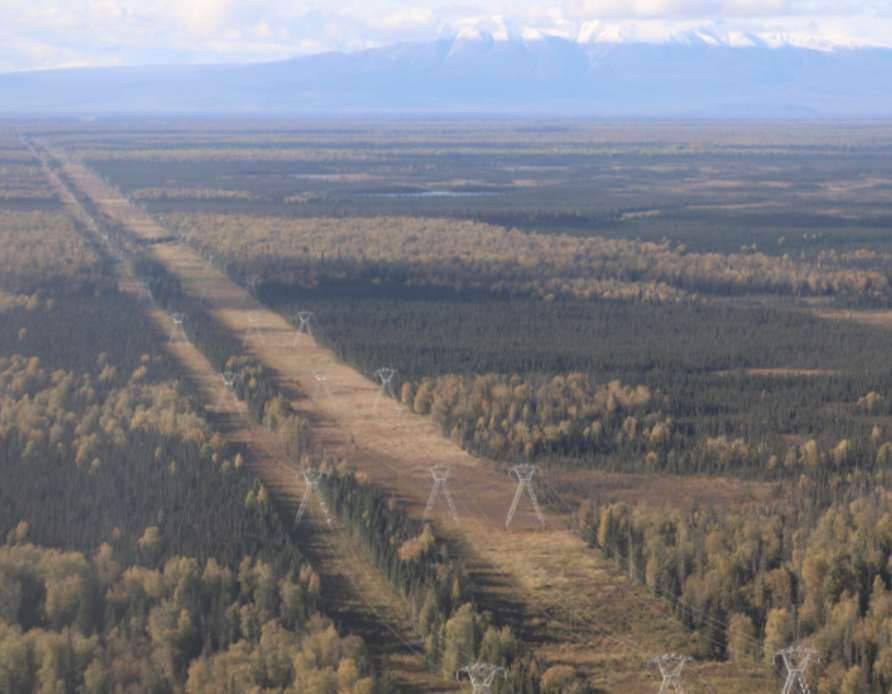
Now, with no excess gas, those lower-priced power sources have dried up, and Fairbanks’ utility has been forced to boost its dependence on its own expensive diesel generation.
Residential prices there have risen nearly 50% since a low in 2020, to roughly double the national average.
Meanwhile, customers of urban Alaska’s main heating utility, Enstar, could also pay $12 a month more if the company moves forward with a proposed acquisition of a new storage reservoir. Enstar says it could fill the reservoir with both locally produced gas in the short-term, as well as imported LNG when cargoes start arriving.
With its own supplies tightening, Enstar says, the $240 million storage project would also add to its capacity to pipe gas out to home and commercial heating customers — as flows become increasingly difficult to sustain with less fuel produced by local companies at any one time.
Additional price increases are almost certain in the coming years when Enstar, and Anchorage and the Mat-Su’s electric utilities, begin replacing their locally supplied fuel with imported liquefied natural gas — expected to cost at least 50% more than what Enstar currently pays Hilcorp for local gas.
“I hate to be the one crying wolf,” John Sims, Enstar’s president, said in an interview. But such steep increases in the cost of energy, he added, are “the start of an economy that just doesn't work any more.”
One problem, Sims said, is that local gas producers like Hilcorp have seen the prices that the utilities expect to pay for imported LNG, which have been revealed publicly in utility consultants’ reports. “Now I've got no leverage,” said Sims, whose company is investor-owned. “They know what the alternative cost is going to be.”
For now, it will be hard for the urban utilities to stem further price increases because of their deep dependence on fossil fuels — and decades of foregone decisions that could have been made to diversify and boost efficiencies, according to Phil Wight, an energy historian and utility expert at University of Alaska Fairbanks.
Urban Alaska’s four major electric utilities could have done more to cooperate on power plant construction and ongoing generation, so that only the most efficient plants were used, Wight said.
They also, added Wight, could have started construction on large-scale renewable projects when substantial federal tax credits were available. But no major projects are set to be built in the state before the credits phase out — and urban Alaska still runs on some 80% fossil power.
“We have these systemic structures that make it hard for us to really get out of this paradigm,” Wight said, adding: “We're going to be in this pit for a while.”
Reporting like this takes time and money. Northern Journal's primary revenue source is contributions from readers. If you're already a member, thank you. If not, we'd be grateful if you'd consider a voluntary subscription.