After Halong: Return and recovery
Second in a series on the impacts of the typhoon that hit Western Alaska last year.
Northern Journal is merging with the Anchorage Press! Read our announcement and other information here, and support us with a subscription here.
From Bethel-based freelance photojournalist Katie Baldwin Basile:
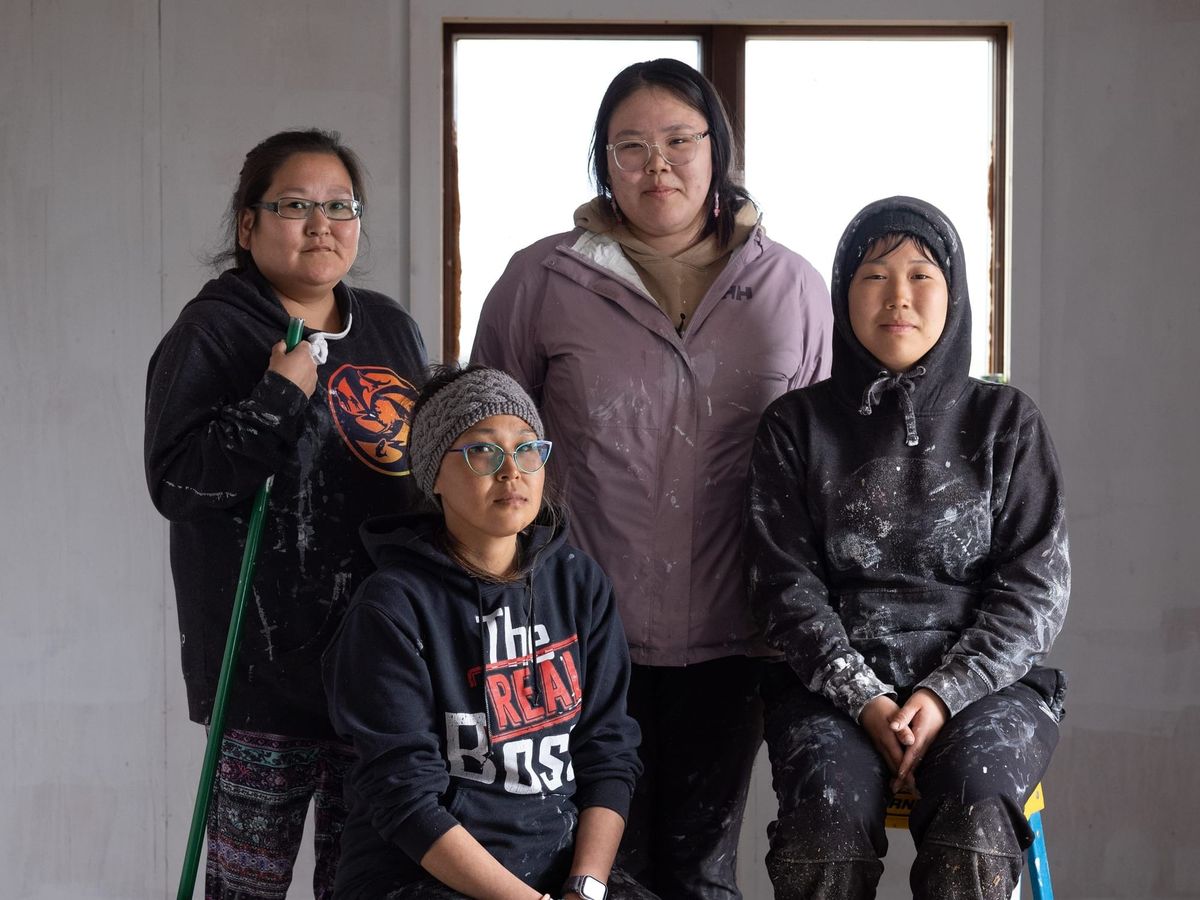
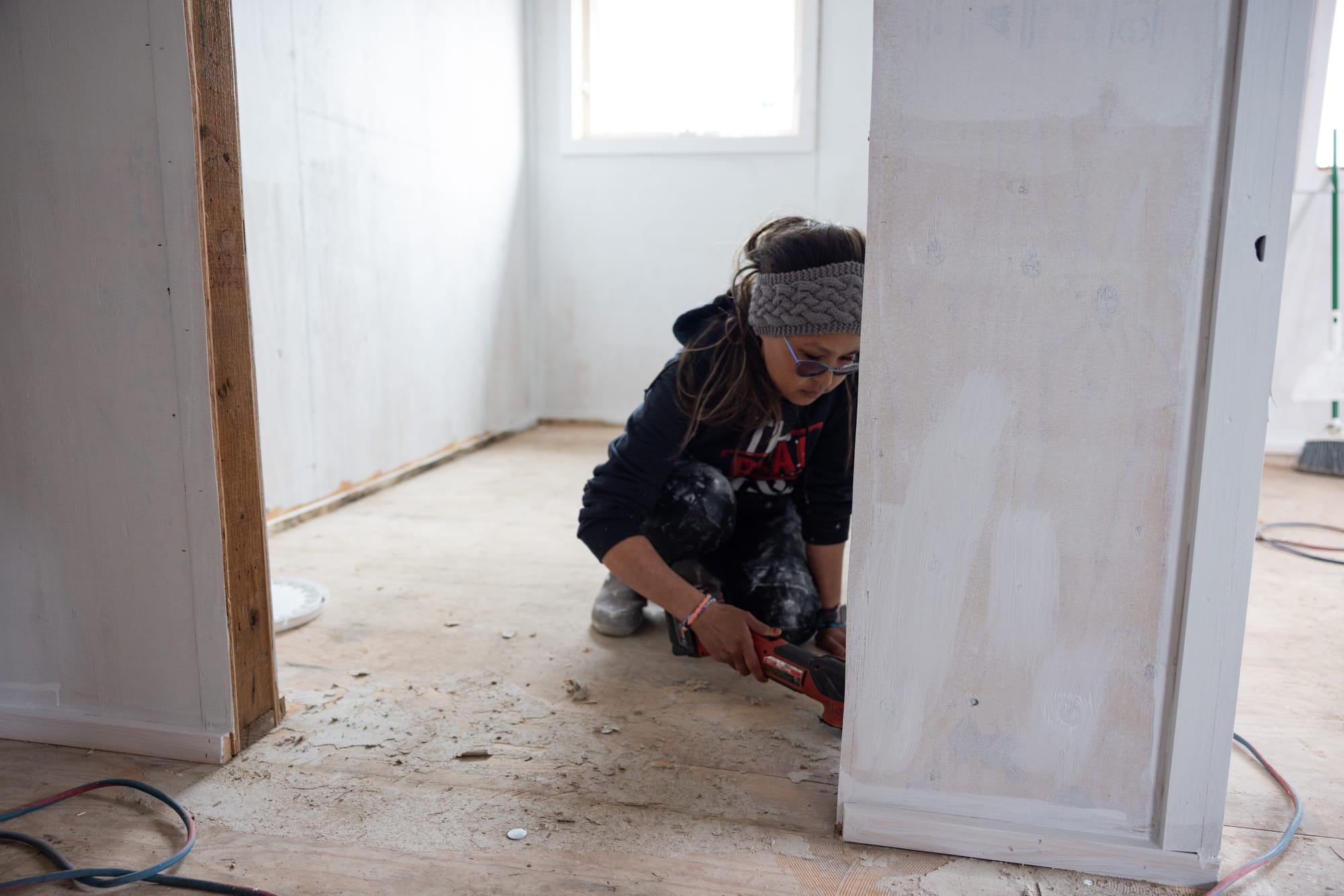
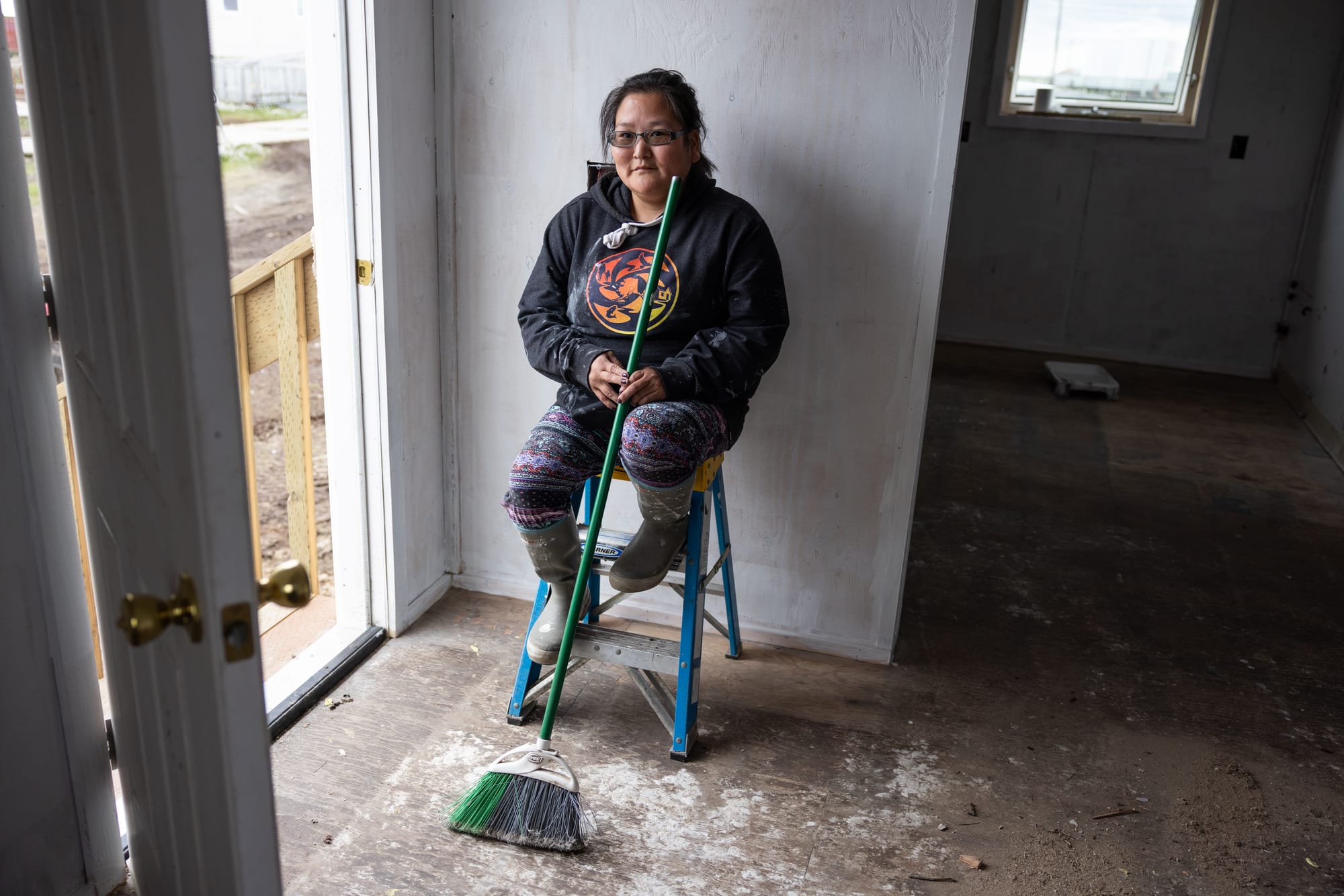
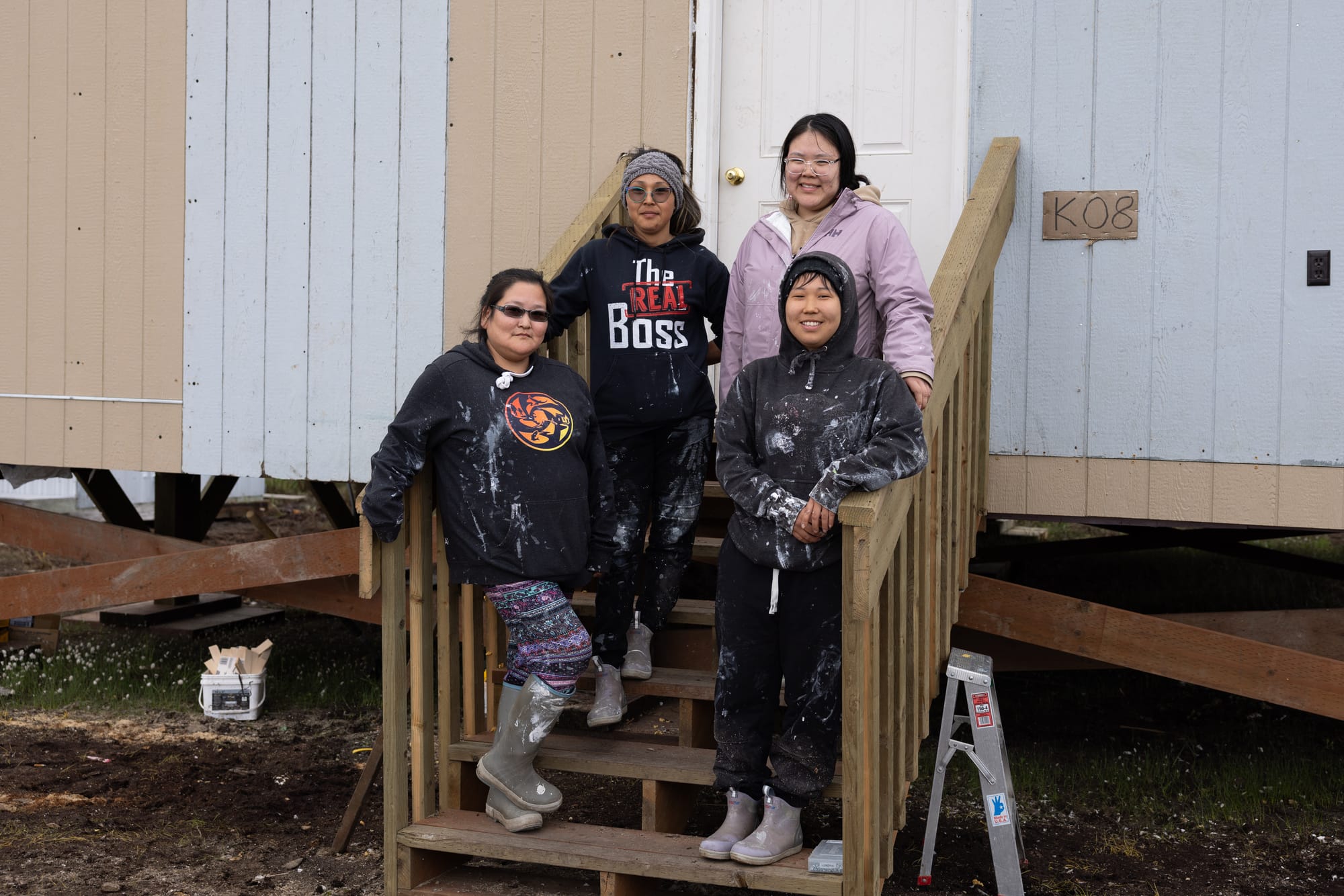
While on a recent assignment in the Western Alaska village of Kwigillingok, I met two women who had returned months after evacuating to help repair widespread damage left behind by ex-Typhoon Halong.
As the women, Nellie Manchuak and Lydia Tucker, worked side-by-side on a construction crew, they encouraged each other to talk about the night the storm hit and the flashbacks, nightmares and anxiety that have followed.
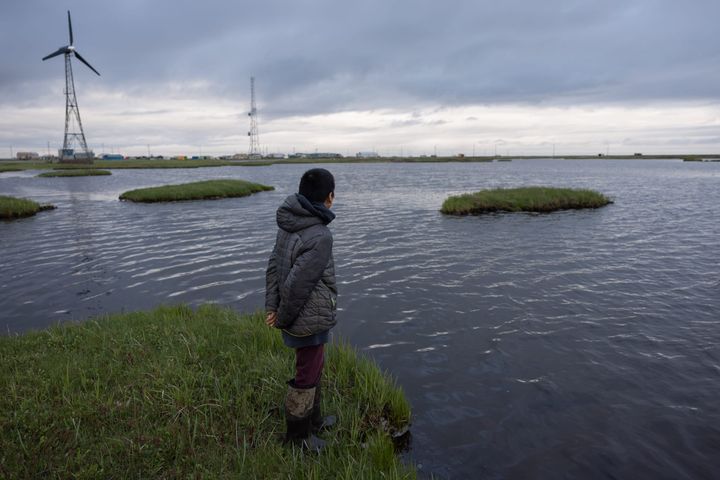
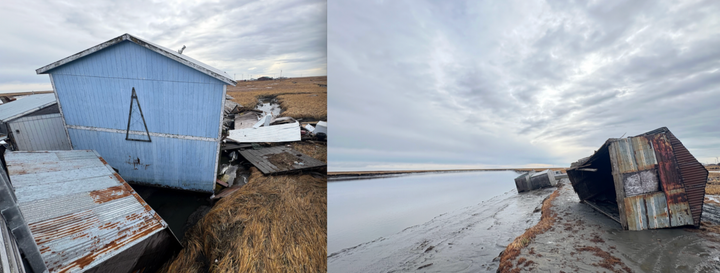
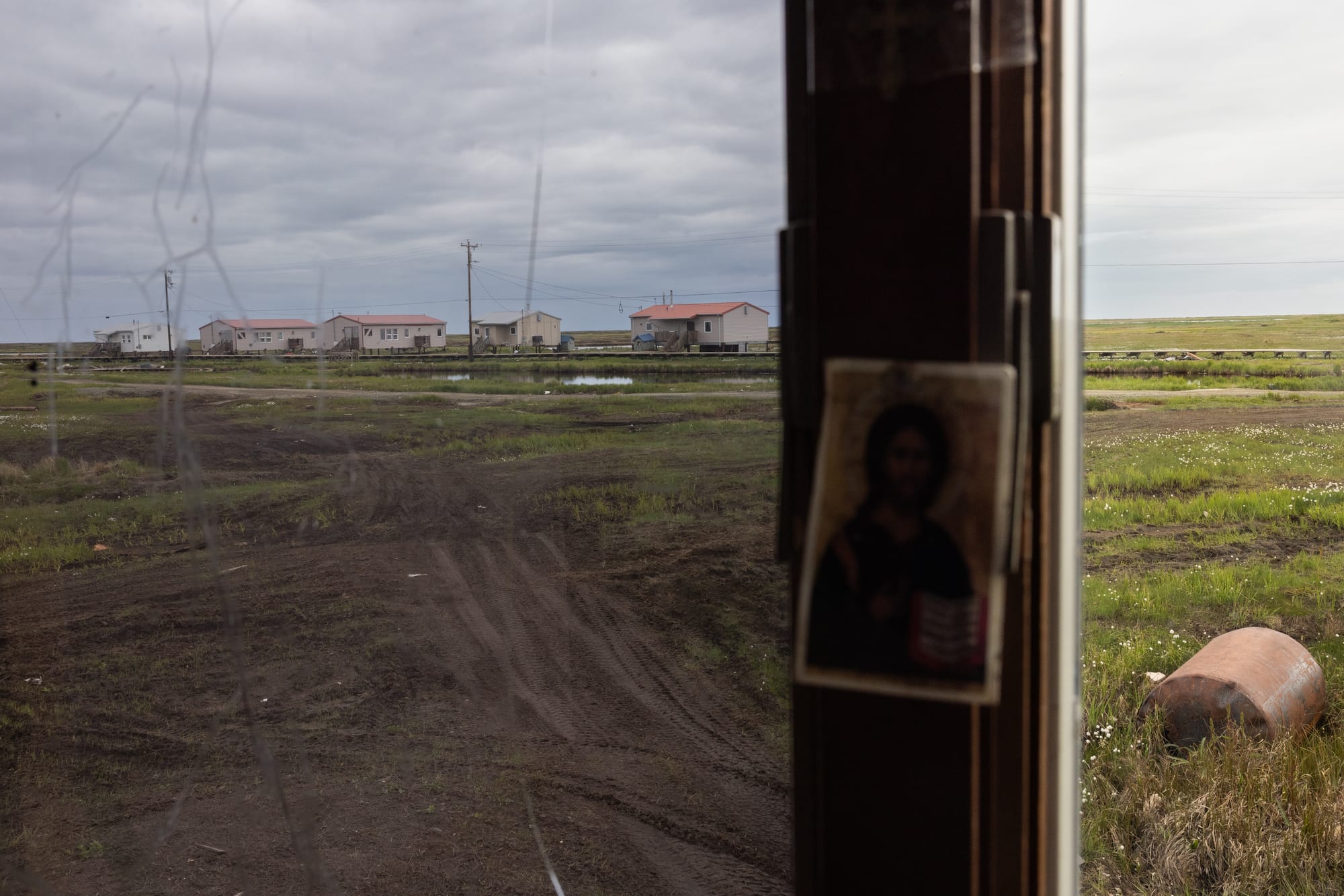
Halong swept through the region last October, tearing homes off foundations and forcing a terrifying evacuation for hundreds of residents, including Manchuak and Tucker. Piles of debris are still scattered around the village, nicknamed Kwig, and most residents have not returned.
 Nathaniel Herz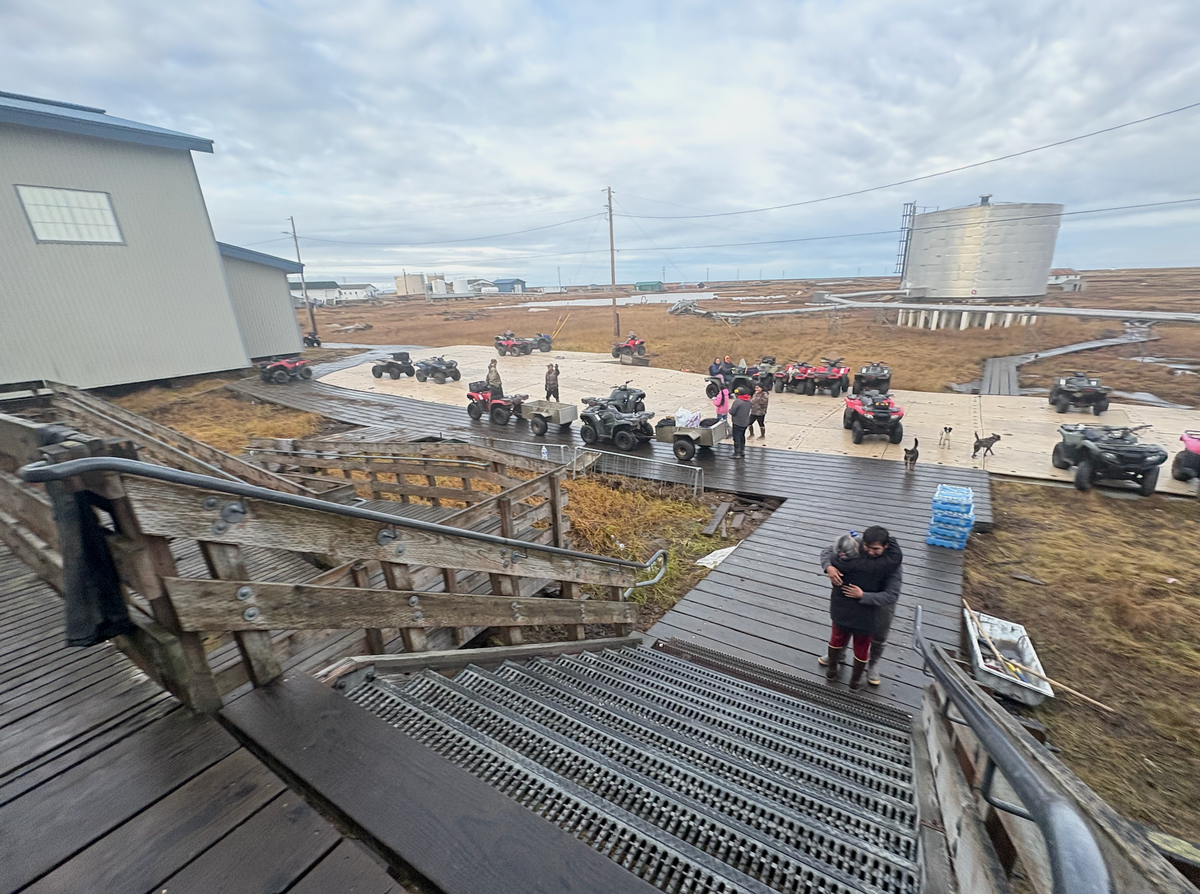
Manchuak and Tucker told me about their harrowing experiences during the storm, and they opened up about life since. Manchuak, along with her partner, two sons and two brothers, crossed rising floodwaters in the middle of the night to reach safety at the village’s school. Tucker was in her house with her baby and partner, afraid to move as the water level rose outside. Both women returned to Kwig this year.
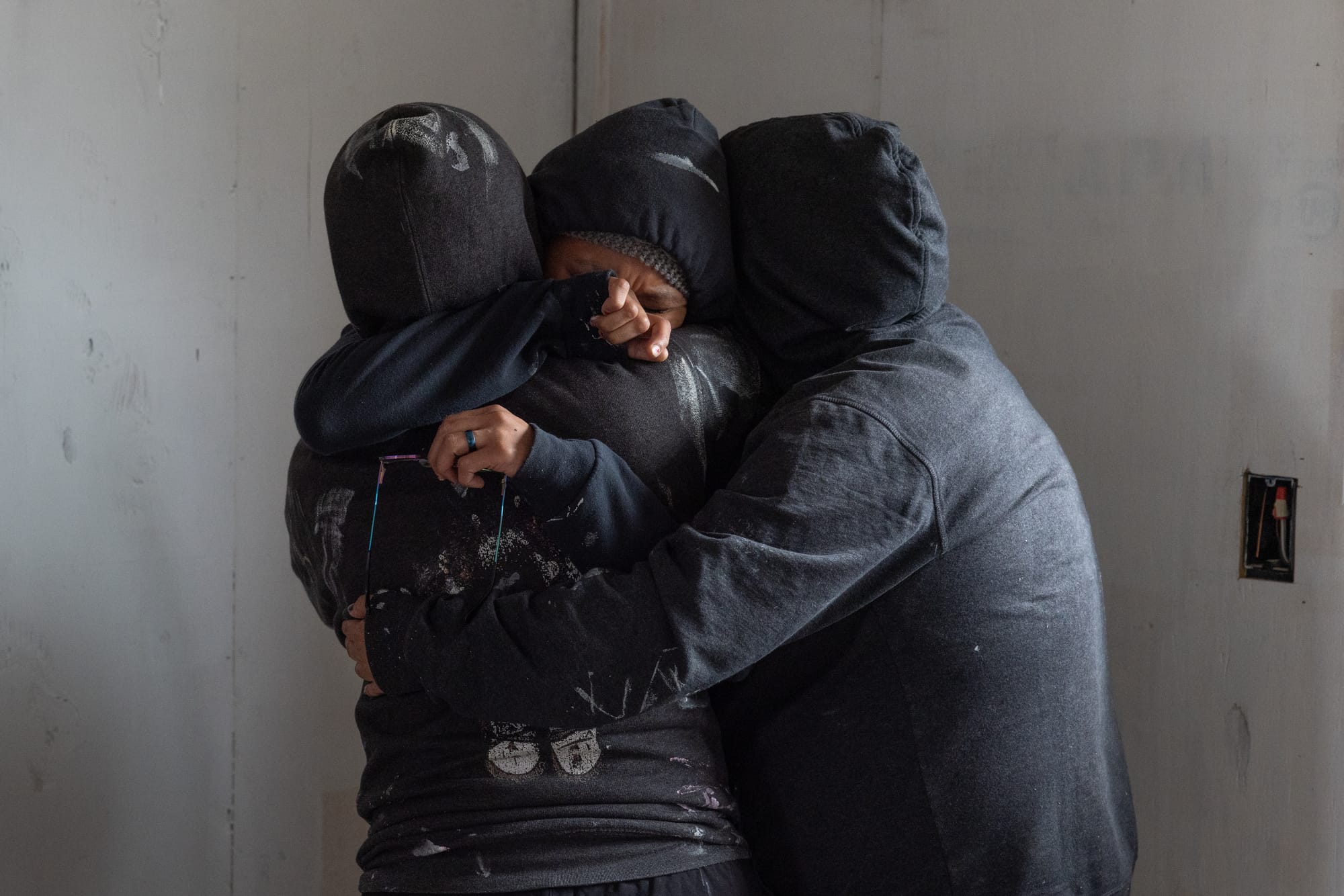
Their stories reflect a broader challenge around the lack of mental health support for Alaskans affected by Halong and other climate disasters. Manchuak and Tucker said they hoped that talking through that night and sharing their experiences would ease some of the stress and anxiety they have carried since October.
I was moved by the way these women support each other as they heal and rebuild both their village and their lives.
We spoke in June. Here is our conversation.
Nellie Manchuak: My name is Nellie Manchuak from Kwigillingok. I was born in Bethel and grew up here.
Lydia Tucker: I’m Lydia Tucker. I live here, but I'm originally from Emmonak.
Katie Basile: Nellie, how long have you been here in Kwigillingok since the initial evacuation?
Nellie: I came back in January to work and because I had no place to live. I didn't want to be in Anchorage; I tried looking for apartments, and I got denied, like, twice. So, I just came back home.
Katie: What was living in Anchorage like for you?
Nellie: It was crowded. We were mostly in the hotels, going back and forth to my parents. We were at Wingate (hotel), and they were at Aspen (hotel).
Katie: Where were you when the storm started?
Nellie: I was at home. I thought it was going to be like a regular flood. We all thought it was going to be regular.
They told us to evacuate to the school, but I just stayed home. My sister got ready with her kids, and got their stuff, blankets and everything. And then they went to the school. I told them that I was going to stay. There was me, my sons Quentin and Dale, and my partner Paiton — just four of us staying at home.
When we looked out the window, it was just like a regular, normal flood. But it kept coming in, like every 10 minutes or something. We were just chilling at home, watching TV, playing games, and then my parents went to the school. I saw them out the window. They were using a four-wheeler and a trailer. And then my two brothers hopped off and came into the house and said that they were going to stay with us, and I was so happy. We were all just chilling, watching TV. We kept looking out the window, though, and then the lights turned off around 1 a.m. or so.
 Katie Baldwin Basile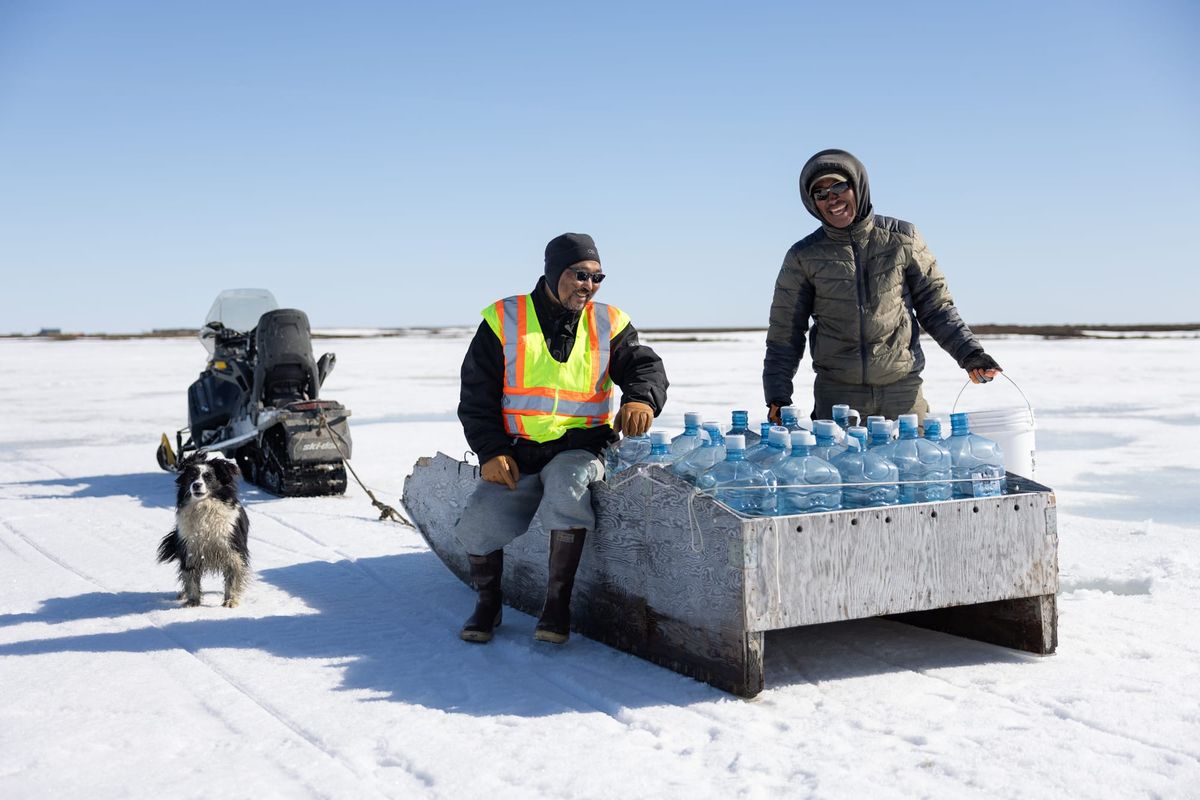
As soon as the lights turned off, I turned on my phone light and yelled at them, “We're all going to the school!” I got my baby's blanket and pillows. I didn't even grab a change of clothes. I just got my baby ready in a panic. I couldn’t find my son's boots, so I just let him wear shoes. And then a shed hit the house. It shook the house. We looked out the window, and the doghouse floated, and the boardwalk floated with it. The water was up to the porch.
(My brothers) Frank and Sean and Paiton jumped off the boardwalk, and the water was more than waist deep. It was so cold. I was holding my baby, and I just handed him to Paiton. I held Quentin's hand and just jumped. We were so scared, but we just kept walking. I told Paiton and Frank to get the four-wheeler onto the boardwalk. It didn't reach the bridge. The boardwalks were like that by my house. We had to climb up.
Katie: They were floating?
Nellie: Yeah, they were floating. The boardwalks were floating.
Katie: Did you get the four-wheeler on top of it?
Nellie: Yeah, and then when we stopped the boardwalks would sink slowly. There was debris, pieces of wood, and we would just drive on top of them. But they’d get stuck, and Paiton would get off the four-wheeler and take them off. We kept going, even though it was like the four-wheeler was just on water. We were the last ones to get to the school, I think. There were two four-wheelers. My four-wheeler didn't have a headlight. We could see the boardwalks, the rails. But when we got to Sarah Philip's house, we couldn't see the boardwalks to the school because they were under the water.
We tried flicking the lights for someone to help us. But they couldn't even reach us because of all that water. And then I told Paiton, just visualize and just go.
Katie: You just had to pretend you could see the boardwalk?
Nellie: Yes. And then if we took a wrong turn we would have slipped off the boardwalk, and yeah… one wrong little turn. I was scared. Just a small little turn…
Katie: You couldn’t see the boardwalk, but what could you see?
Nellie: Just water. It was just water. Then we got stuck again. Paiton couldn't get it off. I got off the four-wheeler when he couldn't do it with my baby holding him. Then he got on the four-wheeler, picked me up. Then we just went to the school, splashing all over Frank and Bob.
Quentin couldn't get off the four-wheeler. He was just holding on so hard, even though we were by the school. We had to forcefully take his hands off.
Quentin didn't want to come back to Kwig with me at first. He would ask, “Is it gonna flood again? Is it gonna get ‘high tide’ again?” Even a couple days ago, I had anxiety at work when we were at the reservoir because it was high. And I just cried.
When we got into the school, I took my boots off and poured them out in the kitchen. My clothes were soaked, and it was cold, so cold. I went to my mom's room, and she had extra pants I wore while she dried our clothes.
Katie: How does it feel when you think back to that night?
Nellie: Like it just happened yesterday.
Katie: What's it like being back now? Does it feel like home?
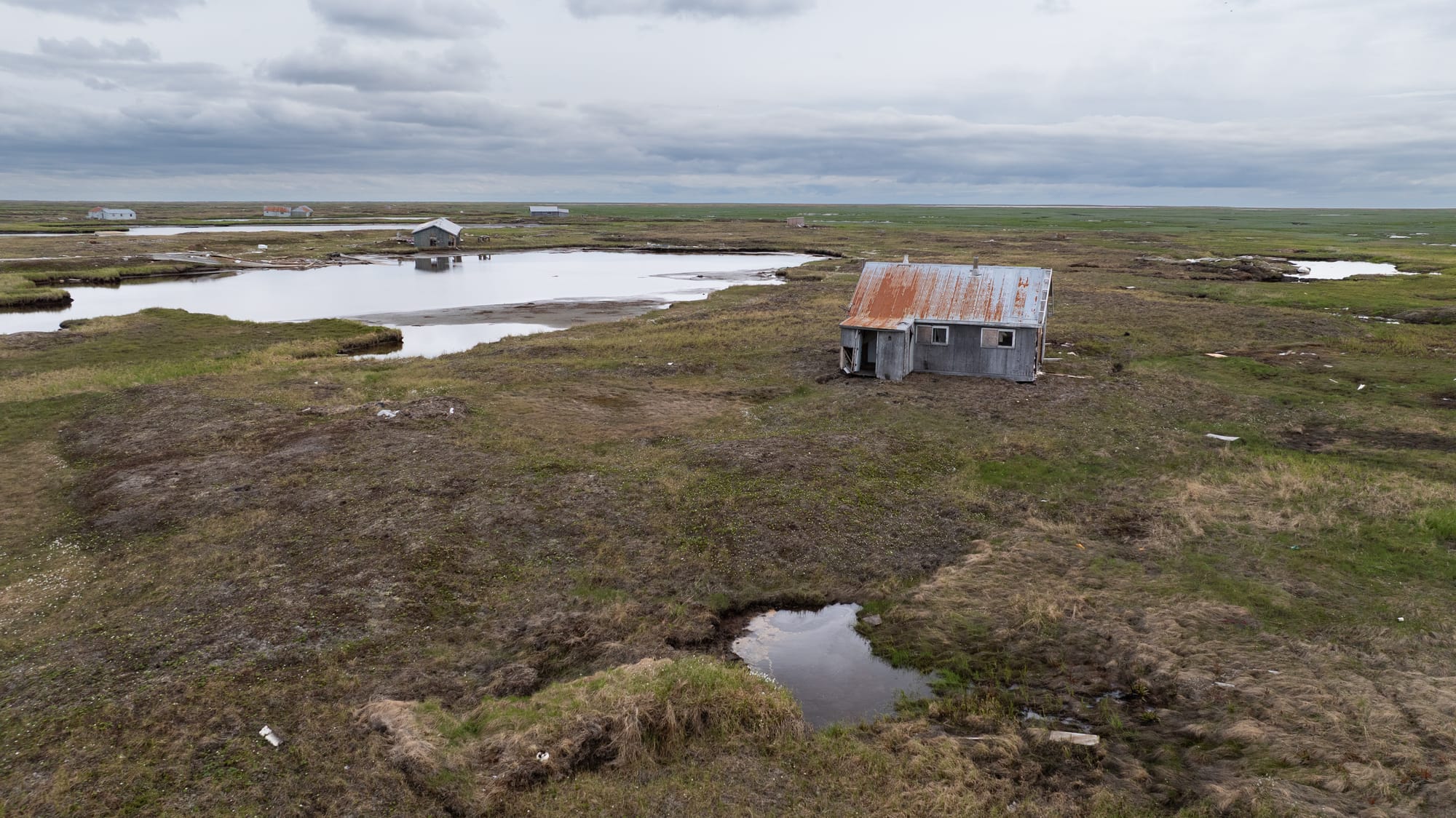
Nellie: Yeah, it does. But not really. I always miss my house (after it floated away during the storm). Two weeks ago, we were going to head out to Anchorage. From here to Bethel, I told the pilot that I wanted to see my house, and we went around it because it's way out there, maybe five or seven miles away. It was on the river bank the day after the typhoon, but then it got picked up (by the water) again.
The pilot took us on a tour around the house, my house. The porch has no walls. The windows are broken. I just cried, missing my house. But it’s always home. No matter what, it's just home.
Katie: Is it helping you to rebuild, and to be part of the village recovery?
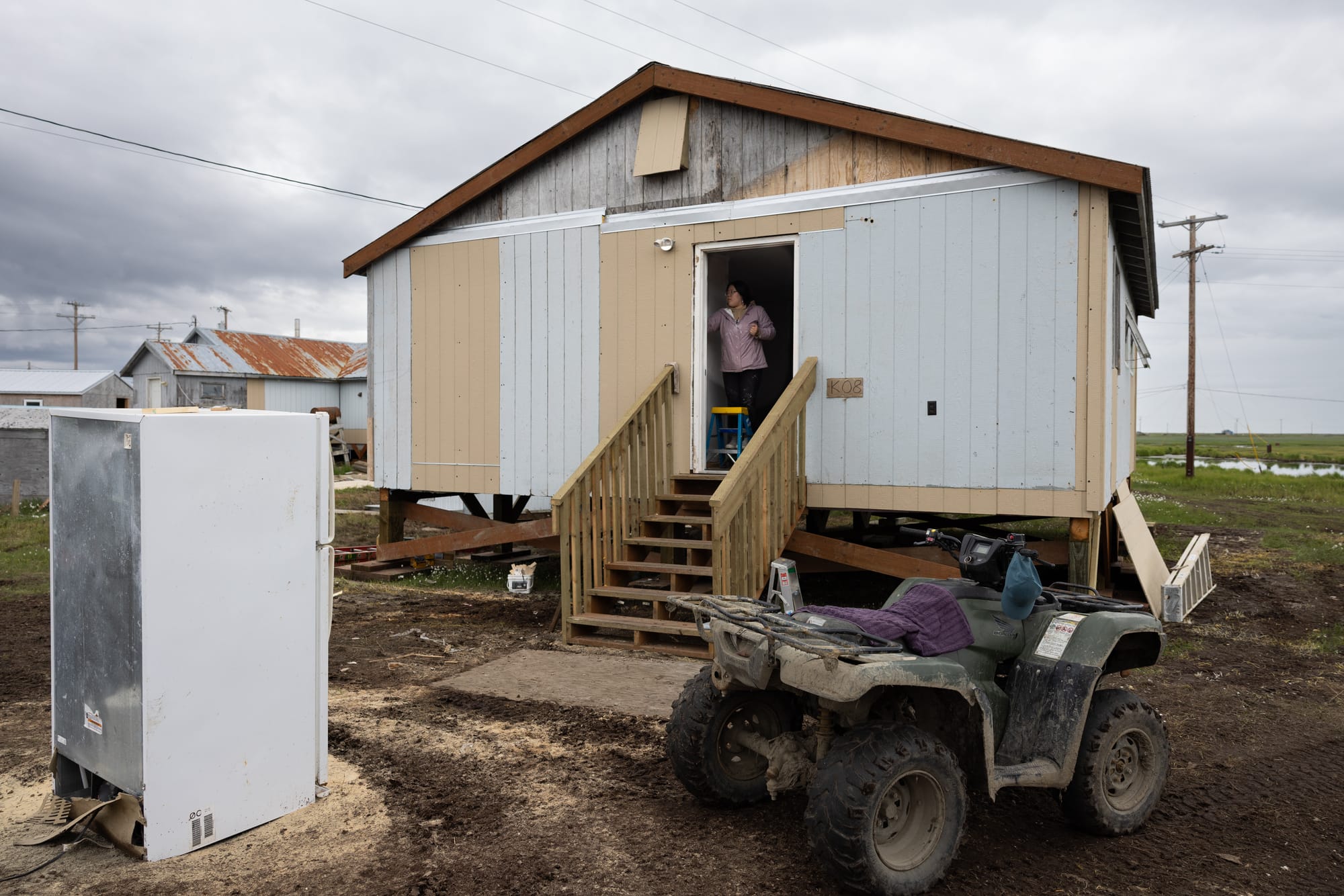
Nellie: Yes, we're just doing it for people to be happy to come home to their newly fixed houses.
Katie: You have a job with Hog River Construction. What's your job title?
Nellie: Neighbor.
Katie: Neighbor. That's what they call it?
Nellie: Yes.
It's fun to do men's work, to do construction. When we cut up wood and insulate the paper barrier. I did that. I’ve learned a lot.
Lydia: That’s where she got her tan. Natural tan.
Nellie: [Laughter] I was outside a lot. I would even work inside too, putting up sheets — nails, nail guns, staple guns. Those guys taught me a lot. People are just going to come back home so happy, with their house nicely done.
[Editor's note: Nellie and Lydia are no longer working with Hog River. Their jobs ended in early July, Lydia said recently.]
Katie: Lydia, do you want to share? If so, maybe just start at the beginning. Where were you?
Lydia: We were at home watching the tide. Like Nellie said, everybody thought it would go up and go back down because that's what it usually does. But it just kept coming up.
(My partner) went outside and said it was a deep one, and we were thinking about going to the school. But it came so fast. We decided to go into our maqi [steamhouse or sauna] because it was a little higher than our house and we thought we were going to float away. But then the maqi started floating up, and we had to go back to the house. We were carrying our babies on our shoulders.
Then the power turned off, and there were really strong winds. (With) every gust, you would feel the house shaking. And after the water reached us, I guess maybe we started floating, but we didn't float away. When the power turned off, we kept looking out the window. We couldn't really see, but you could just see how high the water was. At our house, we have to bend down to look underneath it. But when we walked out, the house was much higher than that.
Katie: Because it was floating?
Lydia: Yes.
I started praying, and then my 5-year-old started praying with me: Watch over us. Don't let us float away. Keep everybody safe. And even though it was so high, we didn't float. We didn't move.
We started panicking and asking if someone could come get us by boat. But the tribal administrator told us that nobody could go anywhere: “Everybody stay in their houses. If you guys float away, watch on the map to see where you are going.”
After we changed the baby’s clothes and wiped them down, we wrapped them in all the blankets, and they fell asleep after they got warm. We didn't sleep all night. People that were at their houses — we'd check on them, and they'd check on us by flashing lights at each other. We kept panicking, asking if the tide's going down, or if the wind's dying down. After all the water went down and it started getting bright, we looked out the window. But we couldn't see through the grass and the salty water going down the windows. When we went to check outside, it looked like a dream. Everything was so out of place. Even our boardwalk was on top of that old truck by the school.
Katie: So your house floated, but it didn’t float away. Do you know why yours stayed in place? Was there something different about your house?
Lydia: We were thinking the spiritual way. They say that kids' prayers are stronger than ours. And my baby was praying with me. She started crying, and I was scared to use the bathroom because I knew we were floating. I was too scared to move in the house. Like, if we moved or walked around it would rock.
We sat in one spot in the living room, all together.
Katie: How many of you were there in the house?
Lydia: Me, my other half and the three kids. The older two were going to school in Bethel, so they didn't know. They knew it was windy and flooding. But they didn't know how bad it was.
Katie: After that night, what happened next?
Lydia: We went to the school.
We brought some stuff because at first, the elders got priority to evacuate. And after the elders, they asked everybody. First it was, “Whoever wants to evacuate, come put your name on the list.” And the next day, “Everybody has to leave. Nobody can stay. One bag per person.” So, since there were five of us, we used trash bags to take what we needed, mostly clothes and the diapers. And some keepsakes.
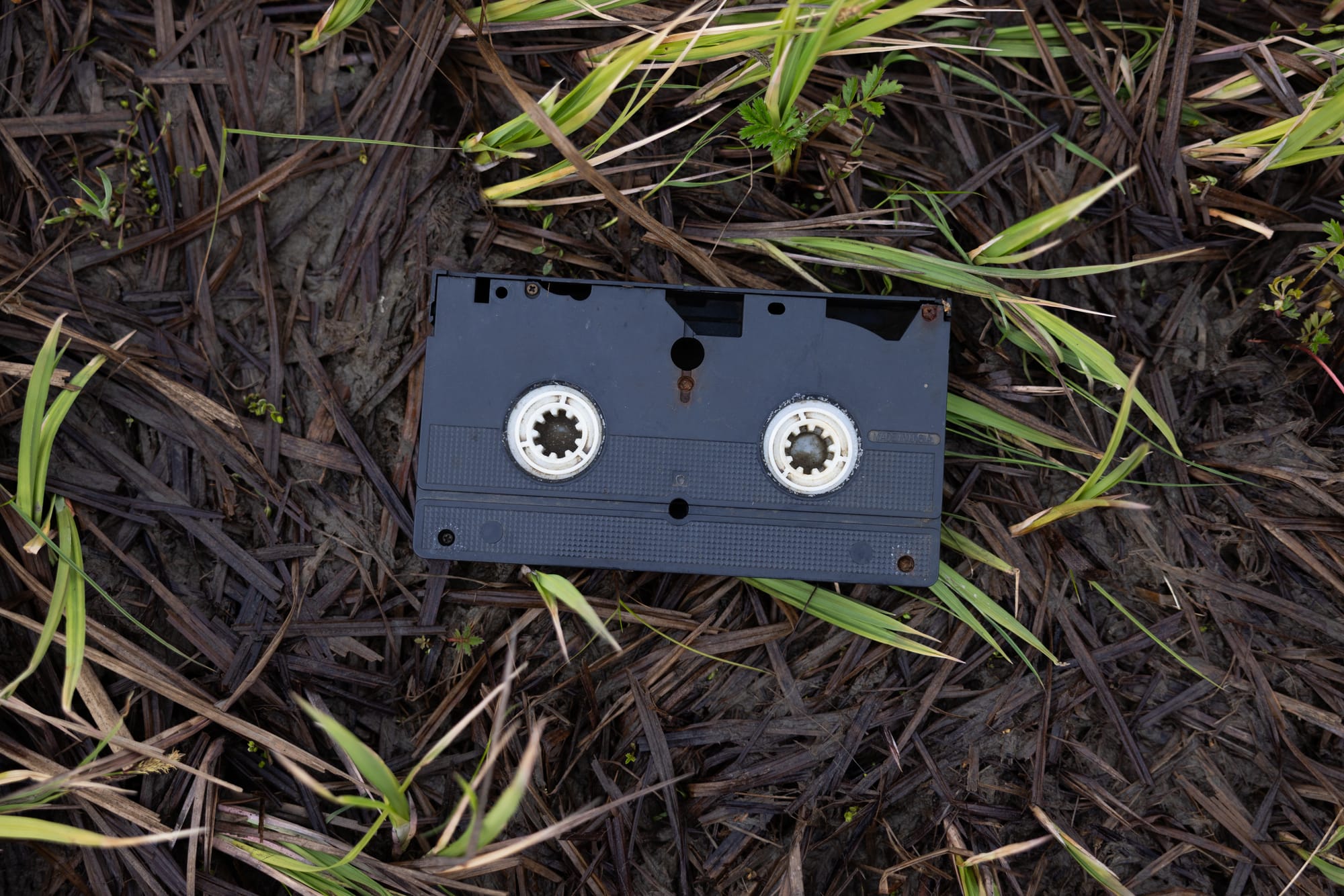
Katie: What kind of stuff did you keep?
Lydia: My last child, he’s 4. He had a twin (who) didn't make it (when he was a baby). And so when we had to evacuate to Anchorage, I brought all the stuff we'd had at the hospital for him.
After my other half had been working for maybe two or three months, the kids and I came to visit two weeks go, and I lucked out on a construction job.
Katie: How does it feel to be rebuilding the village?
Lydia: It doesn't feel the same, because most of the population is gone. The only thing downtown that's available is a store, and they only open Monday, Wednesday, Friday for two hours.
Katie: How old are your kids?
Lydia: One just graduated — he's 18. My daughter's 17. She'll be a senior. I have another boy who is 13, and a 4-year-old and 5-year-old.
When we first got back here, the baby got off the four-wheeler. He was standing in front of the house. He looked around.
“It's not gonna get big water, Mommy?”
“No, there won't be big water.”
“Will it be right here?" he asked, pointing to the stairs.
No. Even when it was high tide, like what Nellie was saying, they asked me, “Is it going to get really big water again?” No. “Will it come by the house?” No. Even in Anchorage, even if they're just randomly playing with their toys, they talk about "big water," "big flood."
Maybe even I feel emotional when they talk about it, and I just think maybe that's their way of coping with it, their way of expressing how they feel.
Katie: Is there anything you'd want to share with people who have to go through something like this?
Lydia: It helps to talk about it. Even with people who weren't here, just talk to them or talk to anybody. It'll help you release some of the stress.
Katie Baldwin Basile is a Bethel-based visual journalist.
This story is the second in a series supported by the Alaska Community Foundation, the Alaska Center for Excellence in Journalism, the Institute for Nonprofit News, the Google News Initiative and the CatchLight Global Fellowship.