Haunted by Halong
Western Alaska youth are grappling with trauma they suffered during last year's climate disaster.
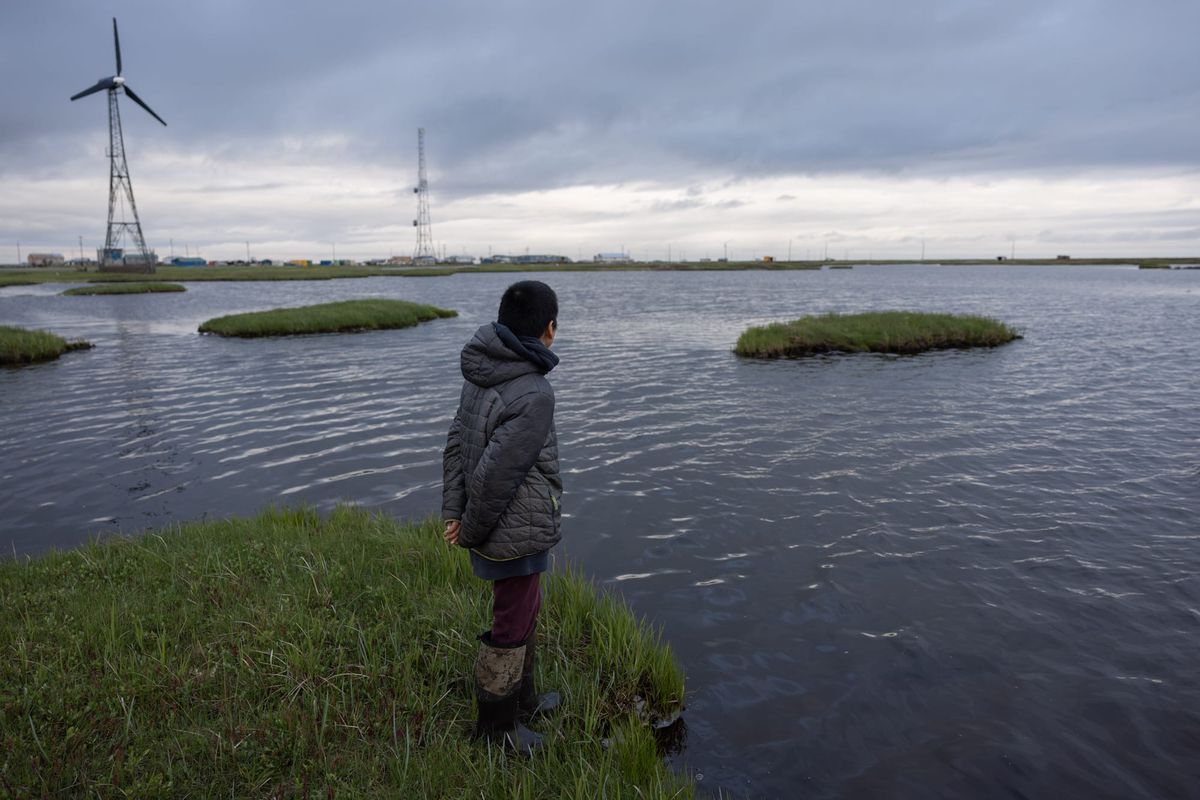
This story was produced by The Margin with support from the Anchorage Press, and co-published by KYUK.
Please note this story contains mention of suicide. If you are in crisis, please call, text or chat with the Suicide and Crisis Lifeline at 988, or contact the Crisis Text Line by texting TALK to 741741.
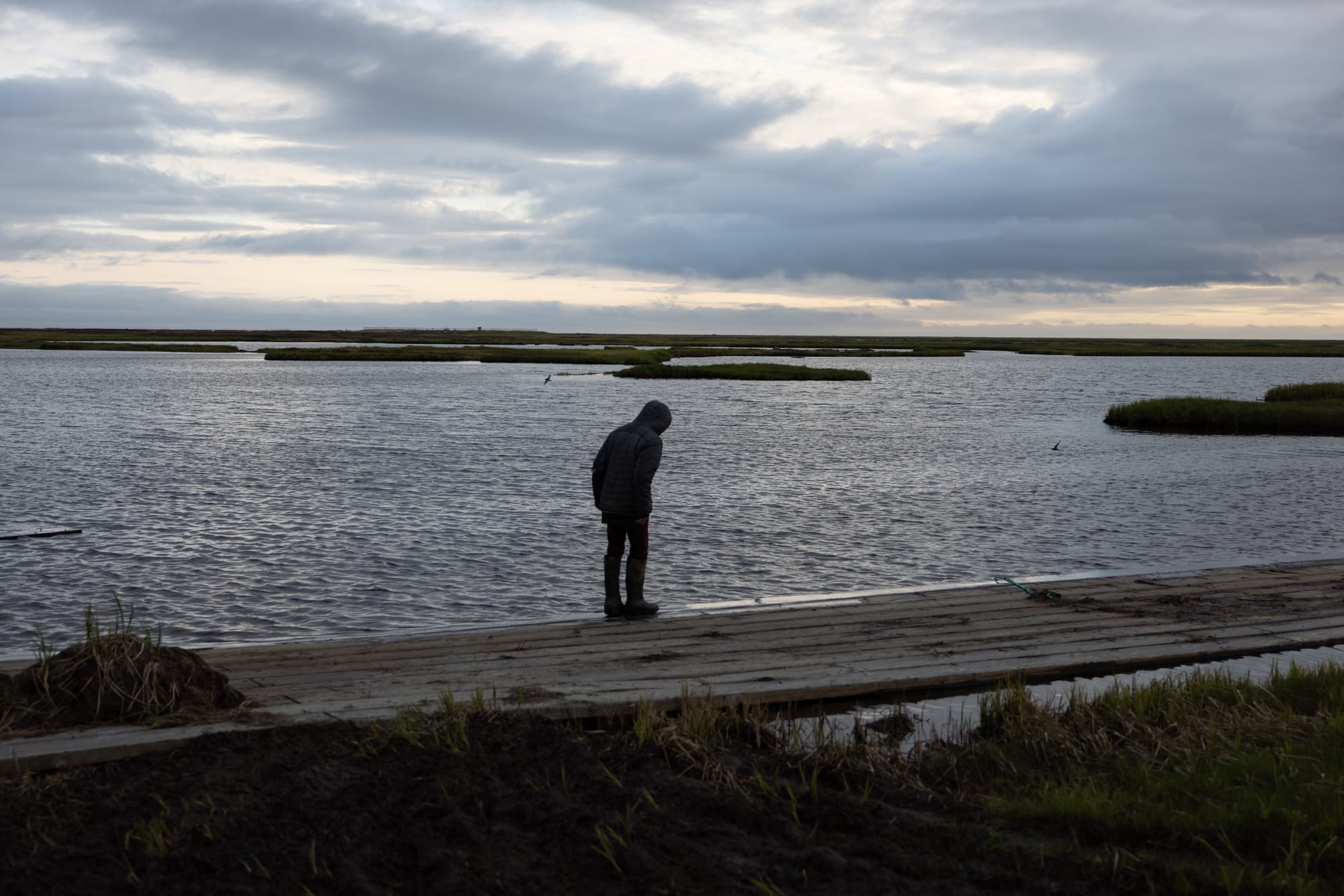
In the early evening of October 11th, 12-year-old Seth Friend went out to fish for tomcod on the Kwigillingok River. It was windy, and the rain tasted like seawater. Dark clouds cast a shadow over Seth’s boat as he navigated strong river currents that nearly towed him away. Spooked, he returned home.
Seth and his older sister, 20-year-old Ariel, settled into their two-story house — where they lived with their parents, two younger cousins, four dogs, and a guinea pig named Hazel — to wait out what they thought would be just another fall storm. On western Alaska’s Bering Sea coast, late autumn often brings storms that have increased in severity with climate change.
But they weren’t prepared for how devastating this one would be. Remnants of Typhoon Halong slammed into Alaska’s western coast a few hours later, bringing up to 100-mile-per-hour winds and a storm surge that unleashed major floods across the Yukon-Kuskokwim Delta. The region, nearly the size of Oregon, is one of the world’s largest river deltas. Kwigillingok and its neighbor, Kipnuk, a Yup’ik community, were the two hardest-hit villages. The storm surge reached up to twelve feet in both villages. Halong came with only 36 hours of warning, presenting a limited opportunity for mass evacuation.
The National Weather Service’s categorization of Halong as the “remnants” of a typhoon undercuts its sheer force. Bryan Fisher, the director of Alaska’s Division of Homeland Security and Emergency Management, described Halong as the most catastrophic storm he has witnessed in over three decades. Disaster recovery experts have compared the destruction to that of Hurricane Katrina.
On the night of October 11, as the storm intensified, the Kwigillingok Tribal Council urged all families to seek shelter in the local school, which sat on high ground. But the Friend family was already trapped. Within thirty minutes, floodwaters had rushed in through a hole in the laundry room, inundating the entire first floor. The waters knocked their home of nearly ten years off its foundation. “Our house lifted up,” Ariel recalled. “It went really fast.”
They ran upstairs. From the windows, Ariel watched as neighboring houses smashed into theirs, shattering their windows and letting in even more water. Barrels of stove oil split, filling the air with the stench of gasoline. A wire snapped, and the power went out. Ariel felt like she was in a boat out at sea in pitch darkness. As she remembers it, the house twirled in circles, and she began to feel seasick. “I was terrified and dizzy because the house was spinning,” she said.
Ariel didn’t sleep all night. In the morning, after the floodwaters started receding, Ariel went to the bathroom and threw up. “I couldn’t hold it in,” she said, “I just lost my home.”
A few days later, the Friend family participated in one of the biggest mass evacuations in Alaska state history. The six of them flew in an army helicopter 77 miles northeast to Bethel, a rural hub of approximately 6,300 people that is home to the region’s only hospital and major supermarket. Like the other 56 villages in southwest Alaska, Kwigillingok is off the road system and only accessible by bush plane, boat, or snowmachine, depending on the season.
At least 300 people were evacuated to Bethel and dozens more to relatives’ homes in other villages. In total, Halong displaced over 1,600 people, including nearly every resident from Kwigillingok and Kipnuk. The majority were flown to Anchorage, where housing was more readily available through large congregate shelters and hotels.
Nearly nine months after the storm, as of this reporting, the majority of evacuees have yet to return to their homes. Many have spent the time since Halong in limbo: transitioning from shelters to couch surfing with relatives and friends.
These transitions have been especially difficult for young people between the ages of 12 and 24, like Ariel and Seth. Tribal leaders and school officials have confirmed at least two youth evacuated from Kwigillingok and Kipnuk have died by suicide in the last six months, and at least one other young person attempted suicide. One 16-year-old boy from Kwigillingok who died by suicide was involved in mental health advocacy and was preparing to go to Juneau to meet with legislative officials at the time of his death.
This has raised concerns for service providers, Tribal officials, and state officials around gaps in mental health support for evacuated youth. Many are beginning to exhibit a wide range of trauma responses to the climate disaster, including feelings of isolation, depression, and anxiety, according to three school officials, five mental health providers, and 10 youth between the ages of 12 and 24 interviewed by The Margin.
“Can you imagine being in your home not being anchored, and it floating away with you inside?” asked Jennifer Sahaba, a site administrator for the Lower Kuskokwim School District who has been working to support evacuated youth in the village of Toksook Bay. “That kind of trauma doesn't go away in days and weeks, and maybe even years.”
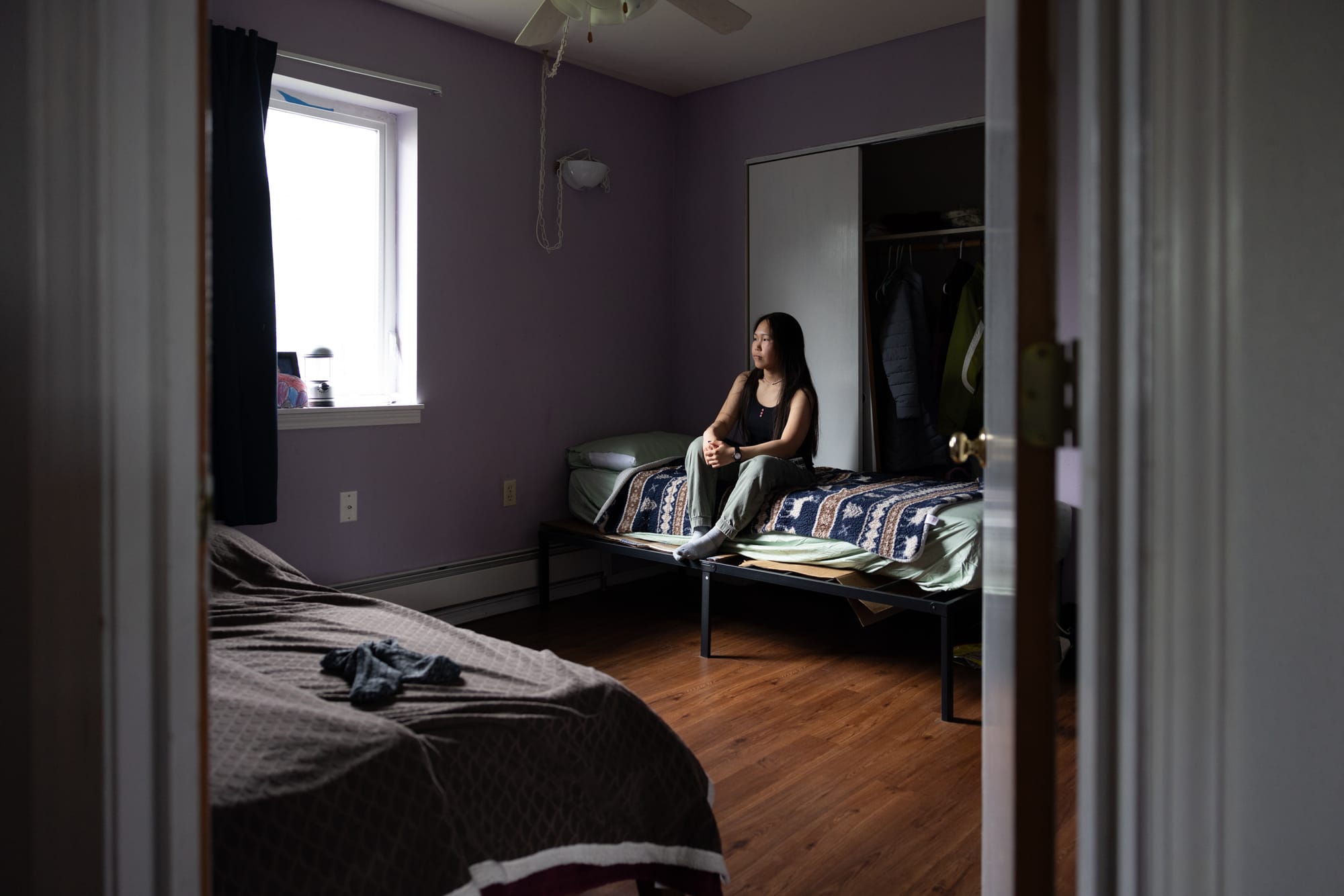
Six months later, Ariel and Seth Friend still have nightmares about the night of Halong. And they’re not the only ones. Children as young as 6 years old are reporting flashbacks and trouble sleeping. These acute stress responses are compounded by their displacement. The storm hit a month into the school year, and many young people are now living hundreds of miles away from their homes, from their villages’ tight-knit social networks, their Yup’ik language, and familiar subsistence lifeways.
These symptoms are alarming mental health professionals in Alaska, where the suicide rate is more than double the nationwide average, a crisis that disproportionately affects youth.
From 2011 to 2023, the percentage of Alaska high school students who attempted suicide more than doubled from nine percent to 19 percent. In 2023, the most recent year of data available through the Alaska Statewide Suicide Prevention Council, Alaskans aged 15 to 24 had the highest rate of deaths by suicide of any age group. From 2020 to 2024, youth between 11 and 19 years old exhibited the highest rates of emergency room visits due to suicide attempts.
The picture is grimmer in rural areas, like the Y-K Delta, which was home to the highest rate of suicide per capita in 2024. And among Alaska Native Youth, there’s a distinct risk. In 2023, an Alaska Department of Health survey found that one in four Alaska Native high schoolers had attempted suicide, compared to one in seven white high schoolers statewide.
The aftermath of losing one’s home and loved ones, plus the alienating impacts of displacement, is contributing to an already dire youth mental health crisis among Alaska Natives. However, the existing, mounting data on youth suicide risk has not resulted in more resources for mental health; practitioners worry that young people’s emotional well-being will worsen as climate-fueled storms like Halong become ever more frequent. And the complicated, outdated funding models for disaster recovery are escalating stress and uncertainty for young Halong survivors.
In a March 2026 address to the Alaska State Legislature, Representative Nellie Unangiq Jimmie, whose district includes Kwigillingok and Kipnuk, identified mental health support as one of the greatest needs for her constituents impacted by the disaster. She cited these youth suicides as an area of major concern. “From populations [this] small, this is catastrophic,” she said.
II: ‘The houses seem to rise out of the sea’
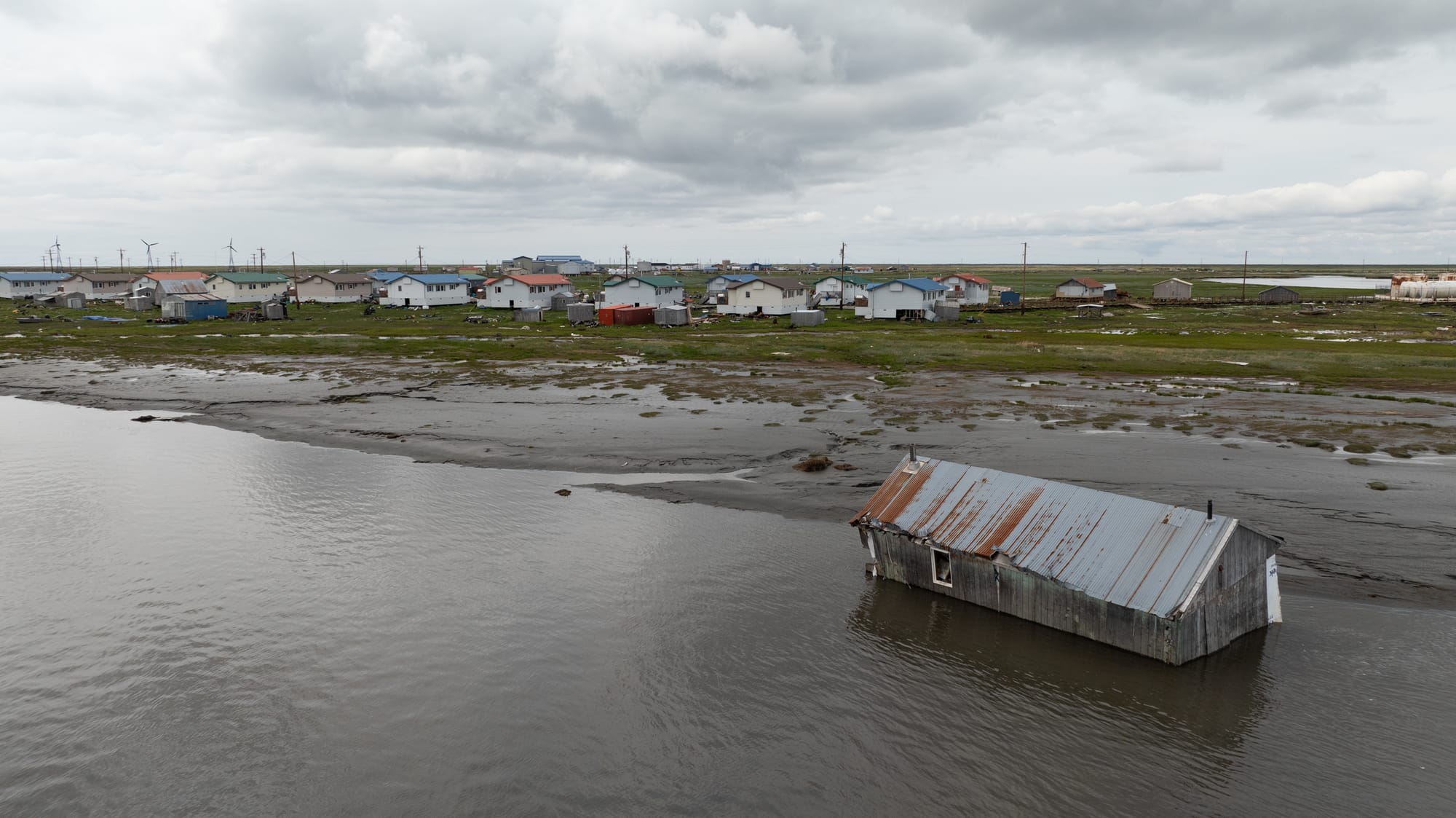
Ariel lived in Kwigillingok’s downtown area, which bore the brunt of the storm. Powerful floodwaters forced homes like hers off their foundations and sent them barrelling into raised boardwalks. Some houses drifted for several miles, crossing a river that runs from north to south down the village’s center. Panicked livestreams flooded social media that night.
Residents in Kwigillingok’s uptown area watched helplessly as their neighbors pleaded for rescue. One neighbor opened his window and clutched a light pole to avoid being carried away by strong tides. Another recorded himself as he waded through knee-deep water in his living room, the walls of his home swaying while he frantically tried to retrieve floating items like a guitar case, house slippers, and a trash can.
While the Yukon-Kuskokwim Delta often experiences fall storms, Halong was a product of our warming climate. Originating as a category four typhoon off the coast of Japan, the tropical storm trailed east before defying weather forecasts and veering northward. Fueled by abnormally warm ocean temperatures, the storm gathered strength and took an “extremely rare” track to hit villages like Kwigillingok with the intensity it did, according to experts in atmospheric science. The region has only experienced one other fall storm this strong in the last seven decades, and only four other ex-typhoons since 1970. In 2022, Typhoon Merbok — a similar meteorological phenomenon — destroyed homes, critical infrastructure, and fish camps along Alaska’s western coast. The costs of recovery from Merbok have totaled $170 million so far.
Even before Halong, young people in Kwigillingok faced frequent climate-related stressors. For years, the Y-K Delta has been sinking due to a combination of rising ocean temperatures, melting sea ice, and thawing permafrost. Dotted across this flat, low-lying landscape are 56 villages. The population of these communities — ranging from less than ten to over 900 inhabitants — is almost entirely Alaska Native.
For communities on the Bering Sea coast, like Kwigillingok, some areas are only 10 feet above sea level. As a result, high tides and storms can send seawater over dozens of square miles of low-lying tundra. Strong winds from the south even blow sheets of ice over the village’s shores. These extreme weather events, coupled with sea level rise, are also accelerating erosion of the coastline.
According to Henry George, a 67-year-old man who grew up in Kwigillingok, the land that the village sits on wasn’t suitable for long-term inhabitation to begin with. “The tundra [in Kwigillingok], it's not hills, it's not bluffs. It's just lowland,” he said. With each passing year, George has observed the tundra growing softer and more sod-like.
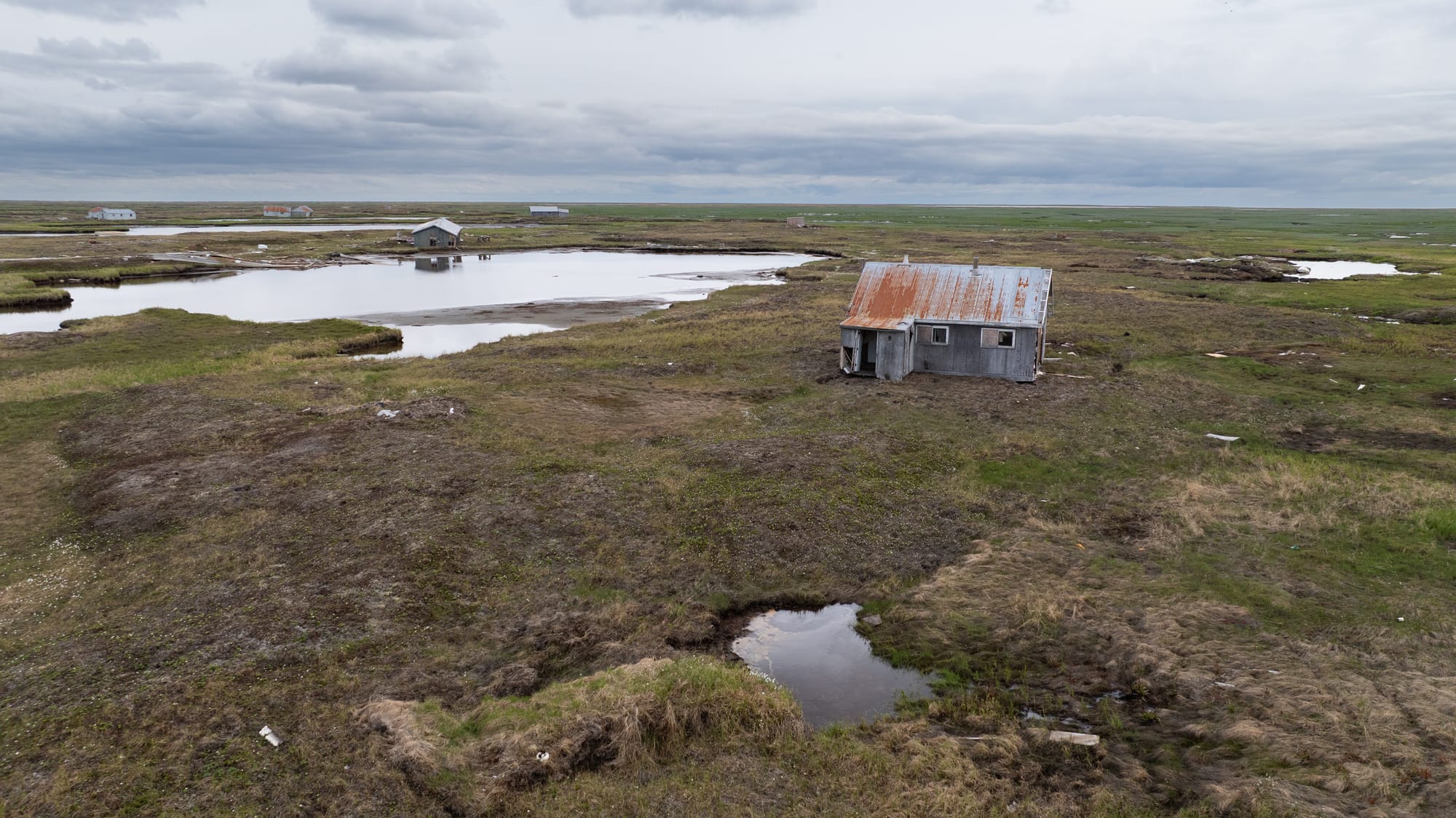
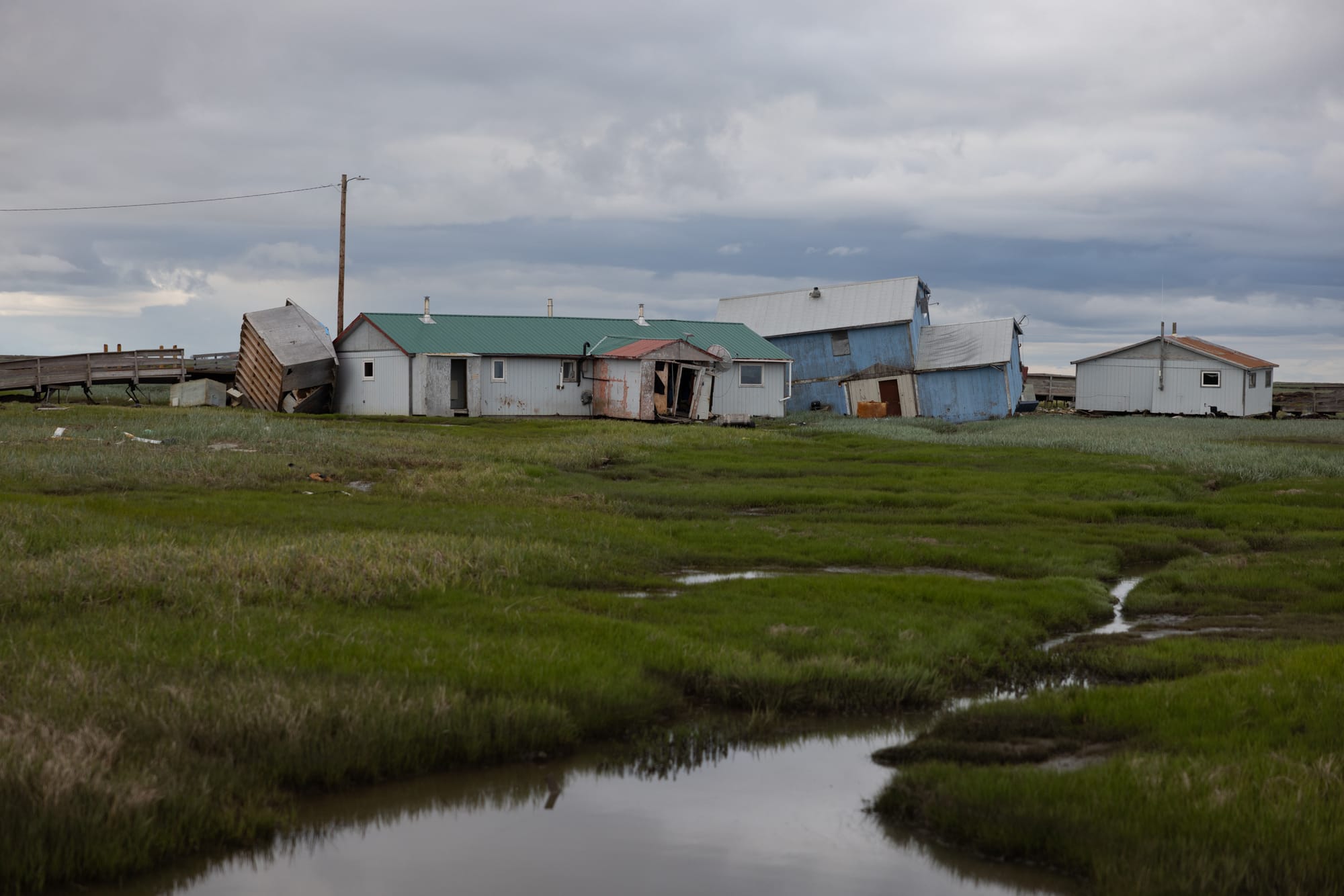
Houses are scattered across the tundra near Kwigillingok last month. (Katie Basile for Anchorage Press)
As with many other villages in the Y-K Delta, missionaries played a major role in the formation of a permanent village at Kwigillingok. In the late 19th century, missionaries dispatched from the headquarters of the Moravian Church in Bethlehem, Pennsylvania, arrived in southwest Alaska. After establishing their missionary center in Bethel, the Church stationed members in Indigenous settlements across the Y-K Delta. At the time, Alaska Native communities were dispersed amongst camps and small settlements along the sloughs and rivers that drained out into the Kuskokwim Bay, and then farther west towards the Bering Sea. They lived a semi-nomadic lifestyle, establishing seasonal villages depending on subsistence needs.
In the early 20th century, the Moravians identified Kwigillingok as an ideal location for a “permanent mission station” because it was accessible by waterways and was populated in the fall and winter. When approaching Kwigillingok from the Kuskokwim Bay, the Moravians noticed how close the village was to sea level. “Houses seem to rise out of the sea,” they observed, “there is really no high ground.” Despite this unstable land, the Church encouraged the Kwigillingok community to establish permanent infrastructure — supplying lumber from a saw mill they ran in Bethel for the construction of log cabins and boardwalks.
Within decades, Kwigillingok’s traditional sod houses — semi-permanent, insulated dwellings that sheltered residents in colder months — were replaced by year-round western-style homes. The opening of a Moravian day school in 1915 and a Bureau of Indian Affairs school in 1924 solidified Kwigillingok as a stationary village. Kwigillingok’s population increased as Alaska Native people across the Bering Sea moved there to comply with a 1929 compulsory schooling mandate.
Communities like Kwigillingok, whose locations are the result of colonization, are now on the frontlines of climate change in subarctic Alaska. As climate-fueled storms have increased in intensity, the low-lying land of the Y-K Delta has proven especially vulnerable to these disasters.
III: ‘The trauma is coming back up’
The morning after Halong, the subarctic sunrise illuminated the village, bringing the full picture of the storm’s destruction into view. The stormwaters lifted large swathes of the village several feet above ground before depositing them in twisted configurations. Pieces of boardwalk lay on top of four-wheelers and snowmachines. In the village cemetery, residents had begun above-ground burials in recent years to avoid disturbing the tundra earth, which was softening with rapid permafrost thaw. Overnight, the storm had ripped caskets from their wooden encasements, leaving black unmarked coffins all over the village.
When floodwaters finally began receding at 8 am, Ariel’s younger cousin, who lived nearby, came to rescue the Friend family. Their two-story house had tipped forward, blocking access to the front door and windows. Ariel’s cousin stood on top of their porch and ripped open a crack in the siding of their roof so the family could escape from the second story.
The Friends considered themselves lucky. An intact boardwalk had prevented their house from becoming completely unmoored. But nearly all their belongings were ruined — covered in a thick layer of tundra sludge, brine, and stove oil. Ariel’s parents were devastated by what they had lost, especially her mom, who cried over the precious traditional beadwork she had spent hours on. Their house was beyond saving. The wall joints had split open, and the foundation was ruined. They demolished it in January of this year. “Most of the memories were in the house,” Ariel said. “We moved there when I was in grade school.”
Ariel and her family went to the local school, where they joined the rest of the village. Many Elders had taken shelter there before the storm started. Some residents had left halfway through the night when staying home became life-threatening, driving four-wheelers atop floating boardwalks with young kids cradled in their arms. Helicopters rescued those whose houses floated miles away.
Three people were missing — including Ariel’s aunt’s best friend, who was later found dead. “I thought she was gonna be at the school, but then I found out her body was decomposed by the water,” Ariel recounted between tears. Six months after the storm, one missing resident remains to be found.
***
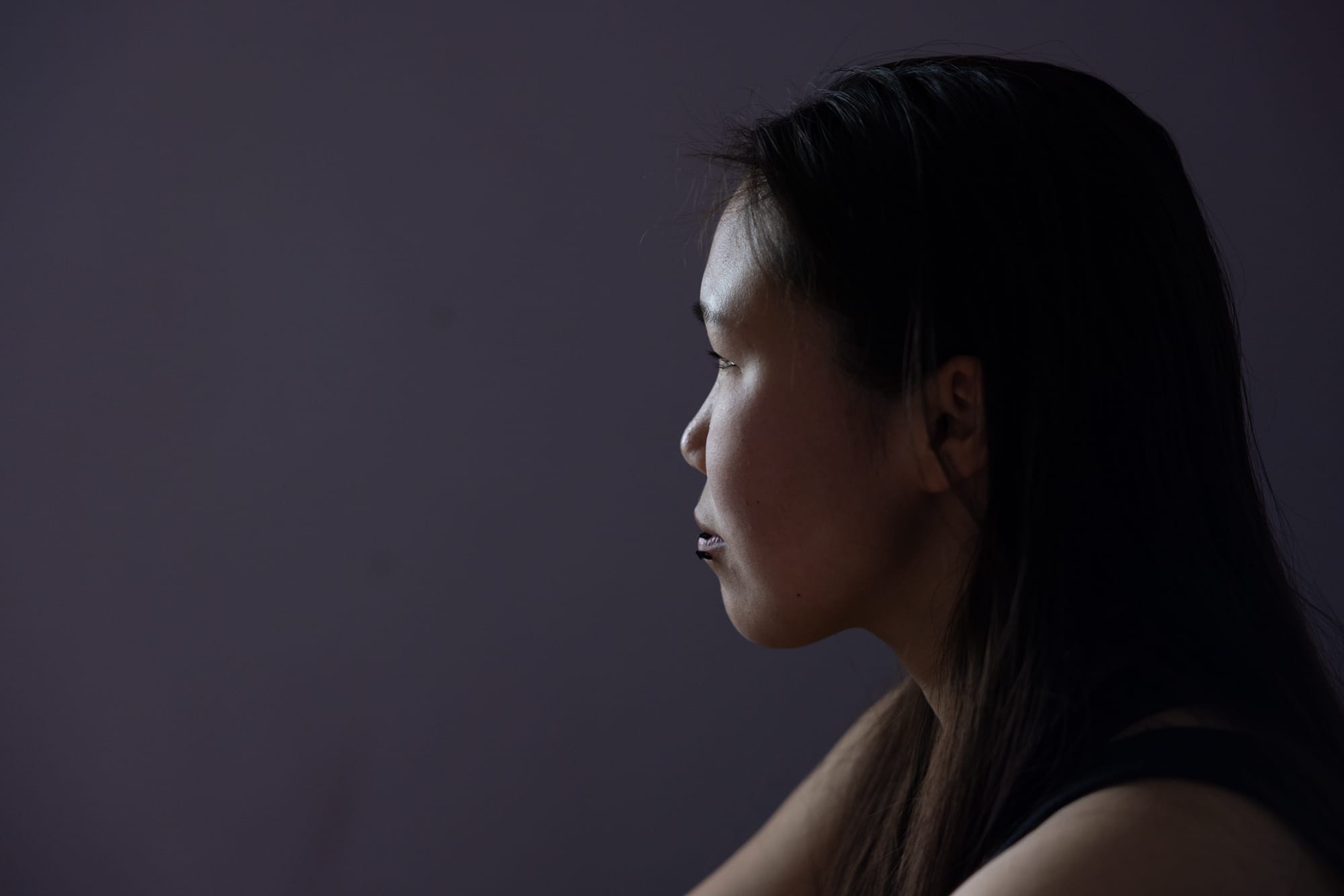
Seth and Ariel Friend still have dreams about the night of the storm. And they’re not the only ones reporting what psychiatrists call “intrusive re-experiencing,” a stress response that involves reliving a traumatic event. Families have reported children as young as 6 years old waking up in tears from recurring nightmares of Halong. Eighteen-year-old Elijah Paul, who lived in an eight-person intergenerational household in Kipnuk, spent the night of Halong sheltering in the local school. He remembers a dream he had following evacuation from his home, which had floated during Halong. “I was alone in the house. There was nobody to help me,” he said. “I woke up crying for some reason.”
Extreme weather also triggers flashbacks of the storm. Elijah began planning for the future after he finished his senior year of high school in the village of Toksook Bay. He wants to attend technical school to become a welder. But when he hears strong winds, he’s right back in the throes of Halong. “I’m traumatized 'cause [of] how the school was shaking in the wind,” he said. When a low-lying area of Bethel flooded with the spring river breakup, children and teens across town expressed anxiety around another displacement.
Research has demonstrated the short- and long-term consequences of environmental disasters on emotional well-being. In the months after Hurricane Katrina, rates of anxiety and mood disorders like post-traumatic stress disorder among people directly impacted rose to nearly 50 percent; survivors’ trauma responses persisted over a decade later.
Frieda Evon, whose family evacuated from their Kwigillingok home in the middle of the night when Halong was at its worst, remembers her sons, 5 and 7 years old, trembling in her arms as she drove their four-wheeler atop floating boardwalks to get to the school. She described how the mental health impacts on her children have persisted since the family moved to Bethel. “When it's really windy, they start to ask, ‘Is it gonna flood? Is it gonna flood high?’” she said. “I think it was from being traumatized.”
For 18-year-old Janel Lincoln-John, whose Kwigillingok home floated during Halong, the sound of whistling windstorms incites visceral dread and terror. “I was worried I wouldn’t make it past that night,” recalled Janel, who lived with her mom and stepdad in the village’s heavily impacted downtown. Memories of the storm permeate her subconscious. Janel hasn’t slept well since her evacuation: she wakes up every day at 5 am, around the time when Halong was at its worst. “I think my mind tries to remind me of that night,” she said.
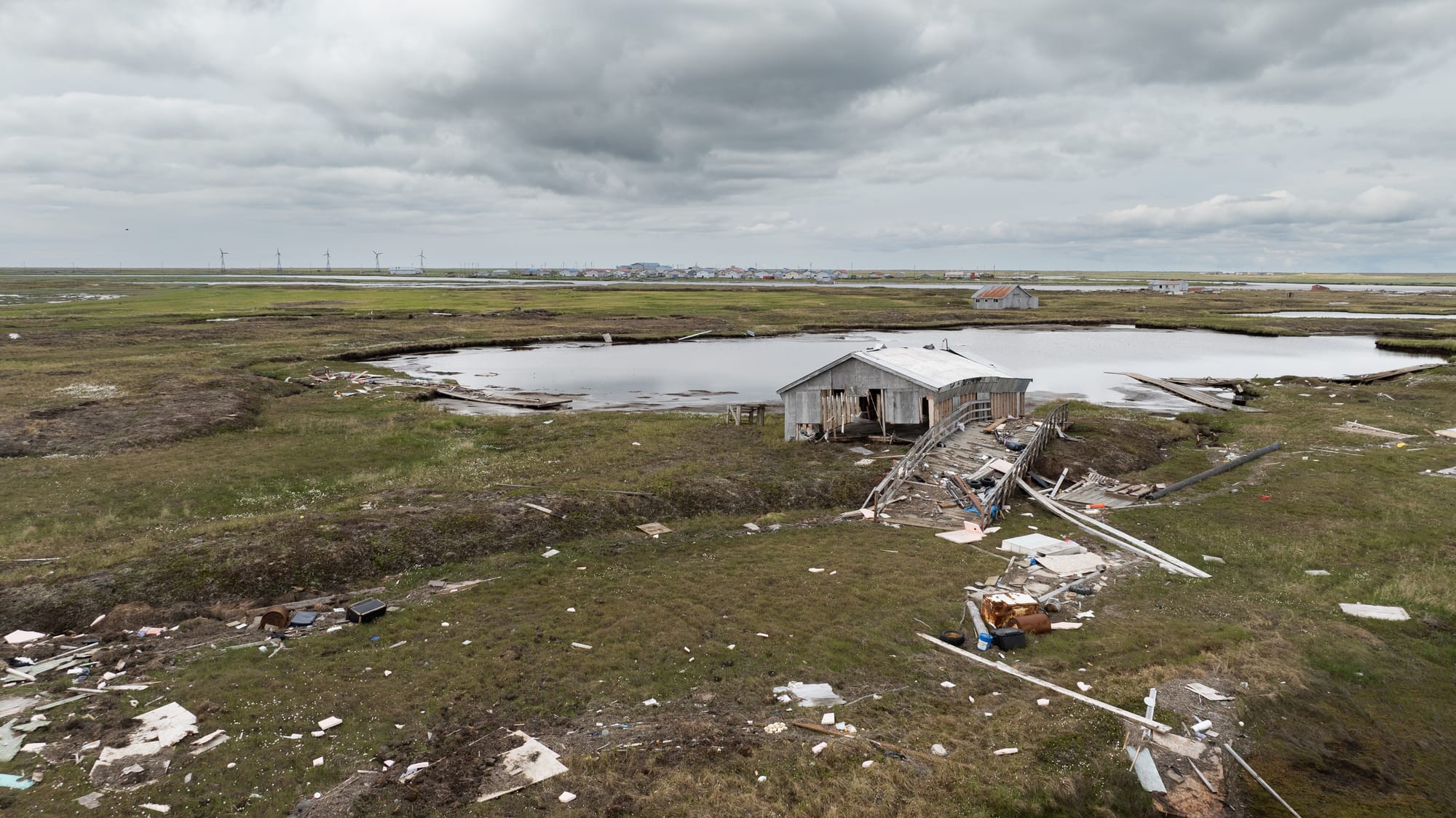
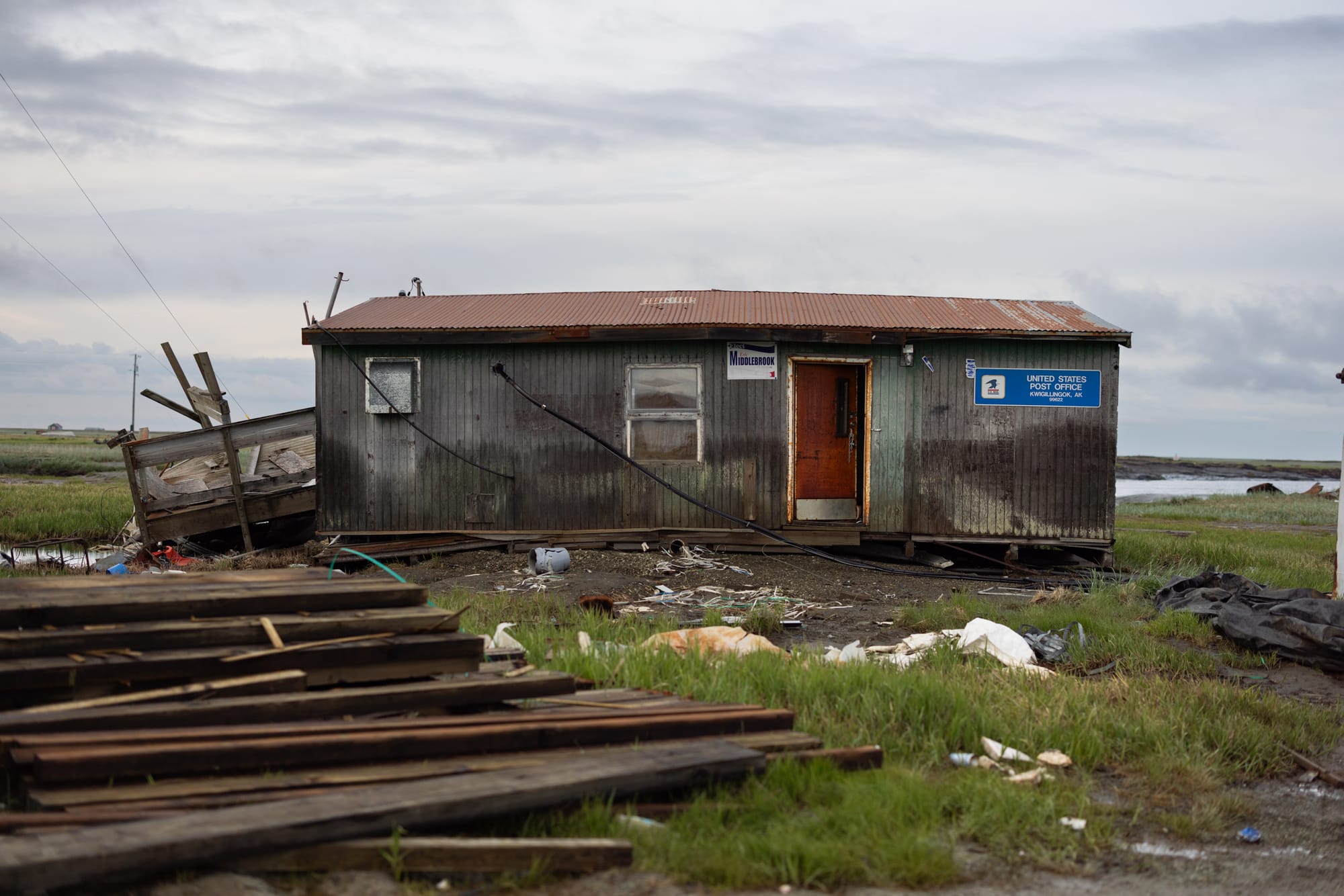
The Kwigillingok post office and other buildings sit displaced last month after floodwaters from ex-Typhoon Halong moved them from their foundations last year. (Katie Basile for Anchorage Press)
Jim Biela, a school social worker for the Lower-Kuskokwim School District (LKSD), has seen firsthand how young people’s trauma is manifesting: as nightmares, flashbacks, and feelings of isolation and anxiety. Biela said he counsels an expanded caseload, including 18 youth who evacuated from Kwigillingok and Kipnuk to other schools in the LKSD. The kids in his care describe nightmares, flashbacks, and feelings of isolation and anxiety that make him worry these mental health challenges will escalate risk factors for suicide.
The emotional pain tied to traumatic events, including climate events like Halong, is seen as a major contributor to high suicide rates in villages, according to a 2020 survey conducted by researchers at Montana State University and the Johns Hopkins School of Public Health.
In the first few months after a disaster, service providers like Biela focus on immediate crisis response, ensuring students’ physical needs are met. This initial stage of disaster recovery is adrenaline-filled. Those affected take action and attend to their immediate needs, such as food, water, and shelter. Humanitarian aid pours in. It’s only over the long term that the real emotional toll surfaces. “The trauma does not just happen overnight,” Biela said. “It will develop after a while, especially if you don't talk about it.” Trauma responses look different for everyone. Some ramp up hypervigilance and anxiety, while others sink into numbness and despair. Without early intervention, these acute stress responses can develop into chronic mental health disorders.
A 2026 Harvard Review of Psychiatry study evaluating global disasters from 1990 through 2024 found that one in five people will develop mental health problems such as anxiety, sleep problems, PTSD, and depression in the initial months after surviving a disaster, and during a second peak about a decade later. Roughly 20 percent of survivors developed suicidal thoughts. The link between climate change and suicidality was reinforced through a 2020 study by researchers at Nantong University in China, which found that extreme weather events were significantly associated with an increase in suicide attempts and deaths.
Biela believes mental health providers are approaching a critical time for intervention for evacuated youth. “We’re just seeing it now, some of the trauma is coming back up,” he said.
Displaced youth are coming to terms with the long-term consequences of Halong. The schools in Kwigillingok and Kipnuk currently have no plans to reopen, and many school-aged youth are scattered. The LKSD operates schools in Bethel and 26 of the 56 villages in the Y-K Delta region. When Halong hit last October, roughly 130 displaced students transferred to LKSD’s Bethel schools to finish out the year.
Biela is assigned to a handful of remote villages and acts as a first responder for mental health emergencies. In his two decades with the school district, Biela has lost 18 students to suicide, he said. When Biela encounters a student in crisis, he refers them to just four clinicians in Bethel at the Yukon-Kuskokwim Health Corporation, a Tribal provider that operates the only hospital in the region. Those four professionals cover mental health needs for approximately 26,000 people of all ages across the 56 villages in the Y-K Delta.
Staffing shortages mean a waitlist: it can take up to six months for a young person in need to see a mental health clinician for an initial evaluation. Even when students are referred to intensive programs, they need to fly to the rural hub of Bethel to access them — a journey that can take up to an hour each way.
According to Biela, who is one of nine social workers in the school district, staffing shortages and geographic isolation present challenges to mental health care for village youth. Although LKSD’s social workers provide frontline care to dozens of schools in their district, more than half of the villages in the region do not have social workers in their schools. “The sheer volume of kids [...] it's impossible to catch everybody,” Sahaba said.
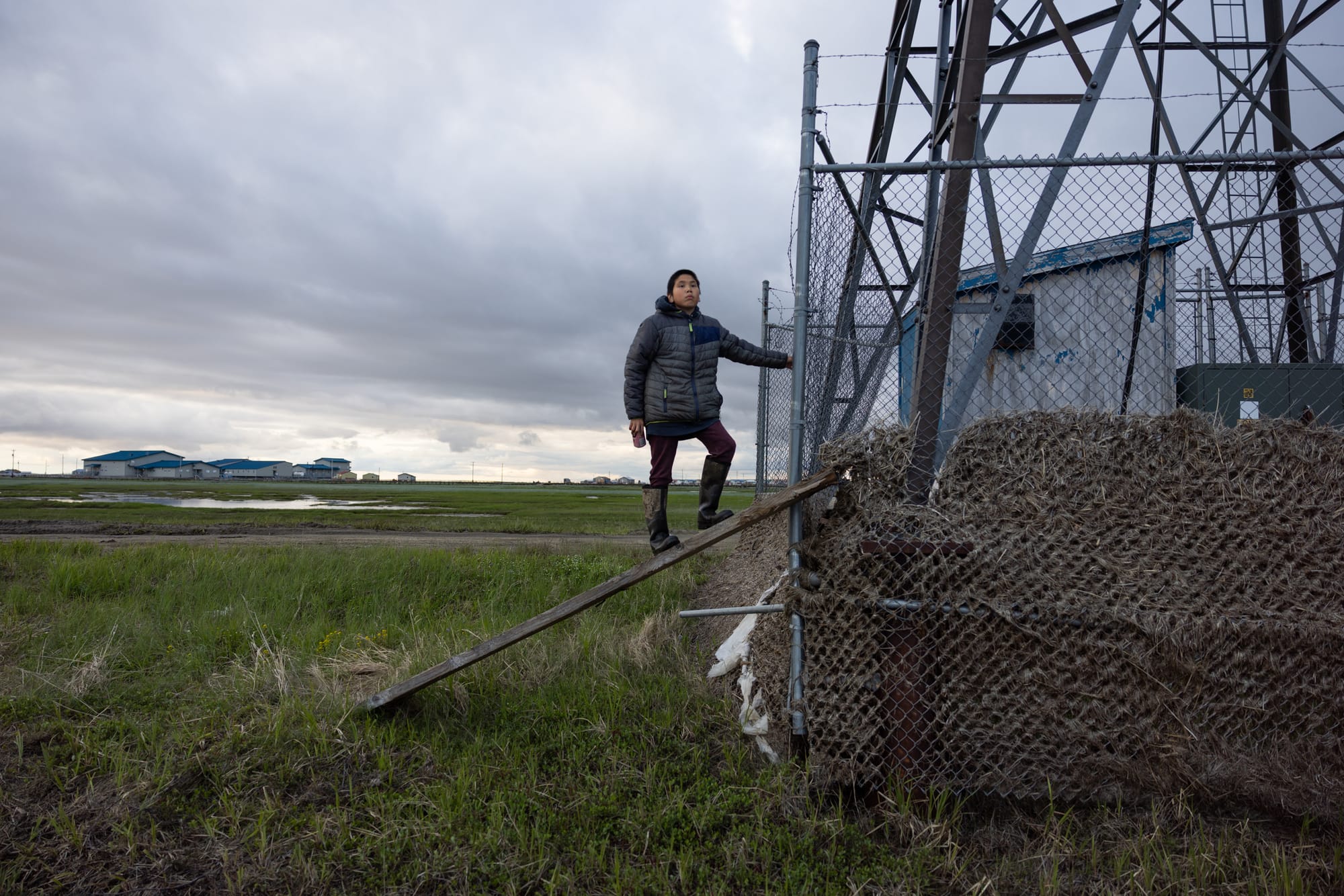
In many parts of rural Alaska, access to community-based mental health services is already limited. For example, while Anchorage and Juneau have Mobile Outreach and Crisis Response centers, which have been proven to reduce inpatient hospitalization and residential confinement for youth, the entire Y-K Delta region, including Bethel, does not. This means that calling a crisis hotline often leads to law enforcement intervention instead. Young people with a serious risk of suicide are held in the village jail until they are flown to Bethel, then Anchorage, where inpatient care is available.
“ I've had young girls wait two to three days [...] in the public safety office,” Biela said.
The lack of community-based mental health infrastructure led the United States Department of Justice to conclude, in 2022, that the state was failing to provide adequate services for youth, with the largest gaps occurring in rural regions.
Biela sees funding as the main explanation for staffing shortages in rural Alaska. State funding for mental health and school-based services has been declining in recent years, and federal grant cancellations under the Trump administration have led to more scarcity, according to lawmakers and advocates. “Funding is the biggest issue,” said Biela. “ The public service, the mental health, and all that's always the first to get cut.” Even when the state sets aside money for behavioral health and crisis programs, Biela said, “the rural areas get less than the cities.” Working with what they have, this summer, the LKSD will begin training on trauma and PTSD in order to prepare staff like Biela to address these crises as the first anniversary of Halong approaches.
In response to the recent suicides amongst displaced youth, Indigenous youth advocates from rural Alaska are fighting for a series of statewide suicide prevention bills: to establish a mental health curriculum in schools, to expand state funding for the 988 suicide hotline, and to fund the Statewide Suicide Prevention Council. The bill to fund mental health education, which has been under consideration for eight years, passed the state Legislature before Gov. Mike Dunleavy vetoed it in June 2026.
“In my district, there are no therapists down the road, no crisis counselors in every school. When something breaks in a child in rural Alaska, it usually breaks quietly, and we always see how that ends up. We always find out too late,” Rep. Jimmie told news media while advocating for state support for rural suicide prevention during the 2026 Alaska state Legislative session. “We are losing kids.”

Some Indigenous mental health advocates argue that merely expanding resources for existing mental health interventions is not enough. In 2012, Rose Domnick, a 67-year-old Yup’ik trauma intervention expert, founded Calricaraq, a preventative services program that centers Indigenous ancestral wisdom to address suicidality and other behavioral health issues. The program acknowledges intergenerational trauma is a key factor behind high suicide rates.
“It’s so culturally grounded in an Indigenous worldview, it's really difficult for Western minds to see and understand that [this] truly is suicide prevention,” Domnick said.
The appeal of culturally-aligned behavioral health programs was highlighted through a 2020 survey of youth from Alaska Native villages, which was administered by researchers at Montana State University, The University of Washington, and the Johns Hopkins School of Public Health. Survey participants indicated a desire for community-based suicide prevention programs rooted in Indigenous culture. Evaluations of similar interventions — like the Yup’ik Qungasvik project and the White Mountain Apache Tribe’s New Hope program — have demonstrated their efficacy.
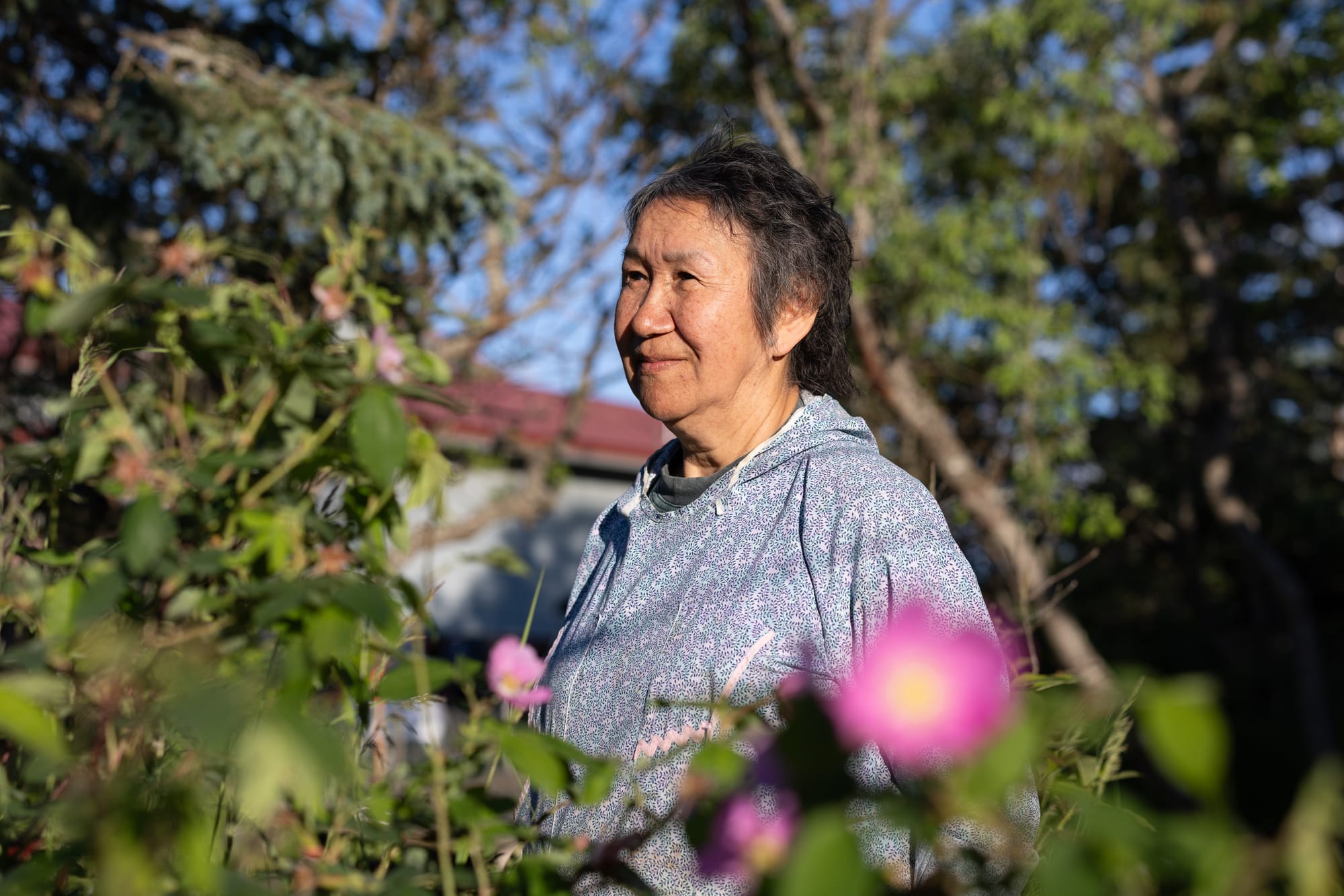
Domnick takes issue with individualistic views of suicide prevention. She sees youth suicides as the result of colonization’s trauma and violence, which hindered the development of emotional coping skills for Indigenous communities. “That is what colonization severed: transmission of knowledge from one generation to the next,” she said.
Therefore, Domnick added, addressing mental health issues amongst Alaska Native youth requires collective healing to restore the social and emotional supports that historically existed at the community level. She described this process of slow repair. “We will never be as impactful as the parents, grandparents, aunties, and uncles in preventing suicide,” she said. “And so we have to teach the communities, families how to take care of their children in the same way that our ancestors did.”
Domnick emphasizes that the Calricaraq program is not merely a translation of Western models of behavioral health, because: “We can’t utilize what harmed us to heal us.”
“Our healing must utilize our identity, our culture, and our wisdom to move us away from the impacts of historical trauma and colonization,” she said.
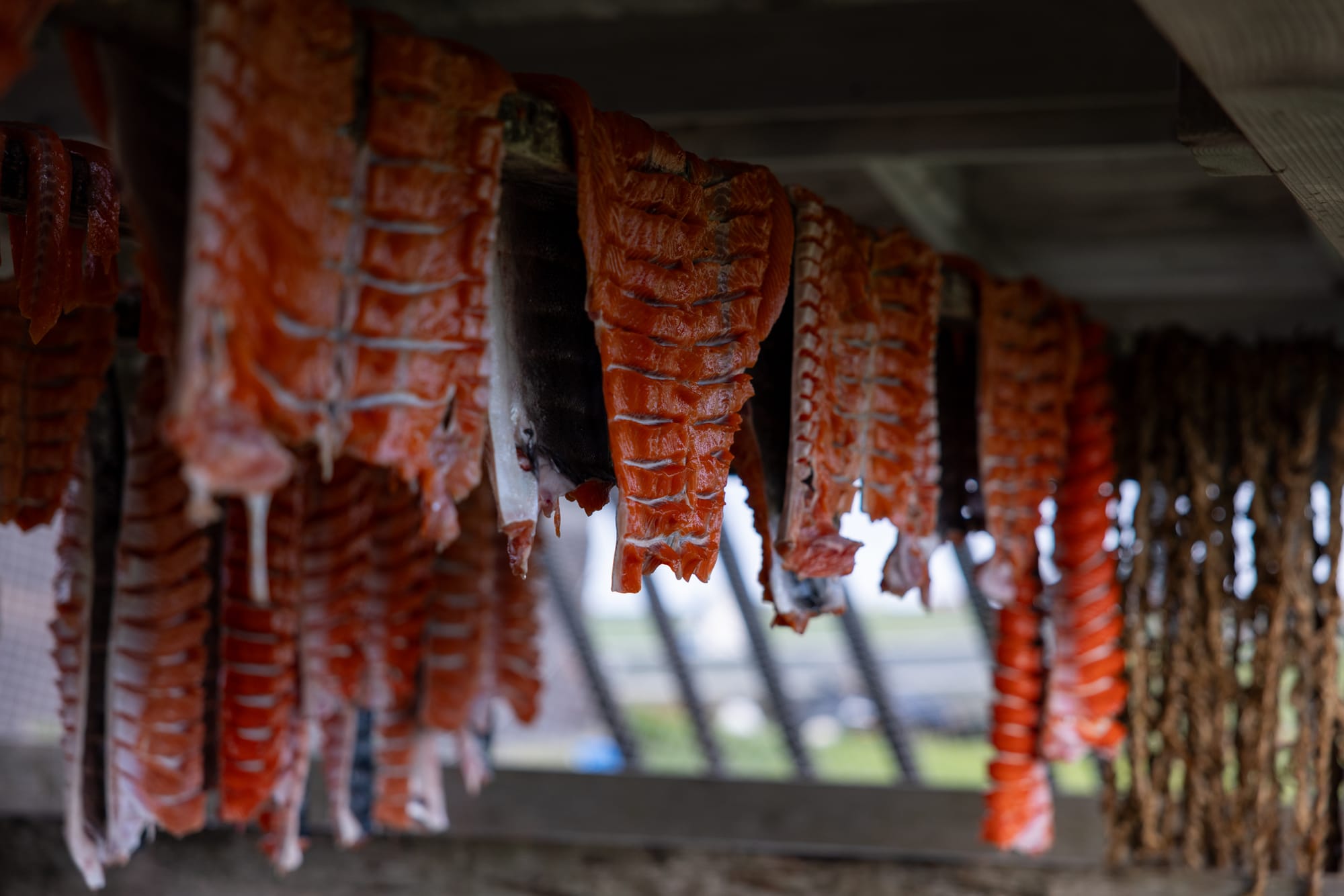
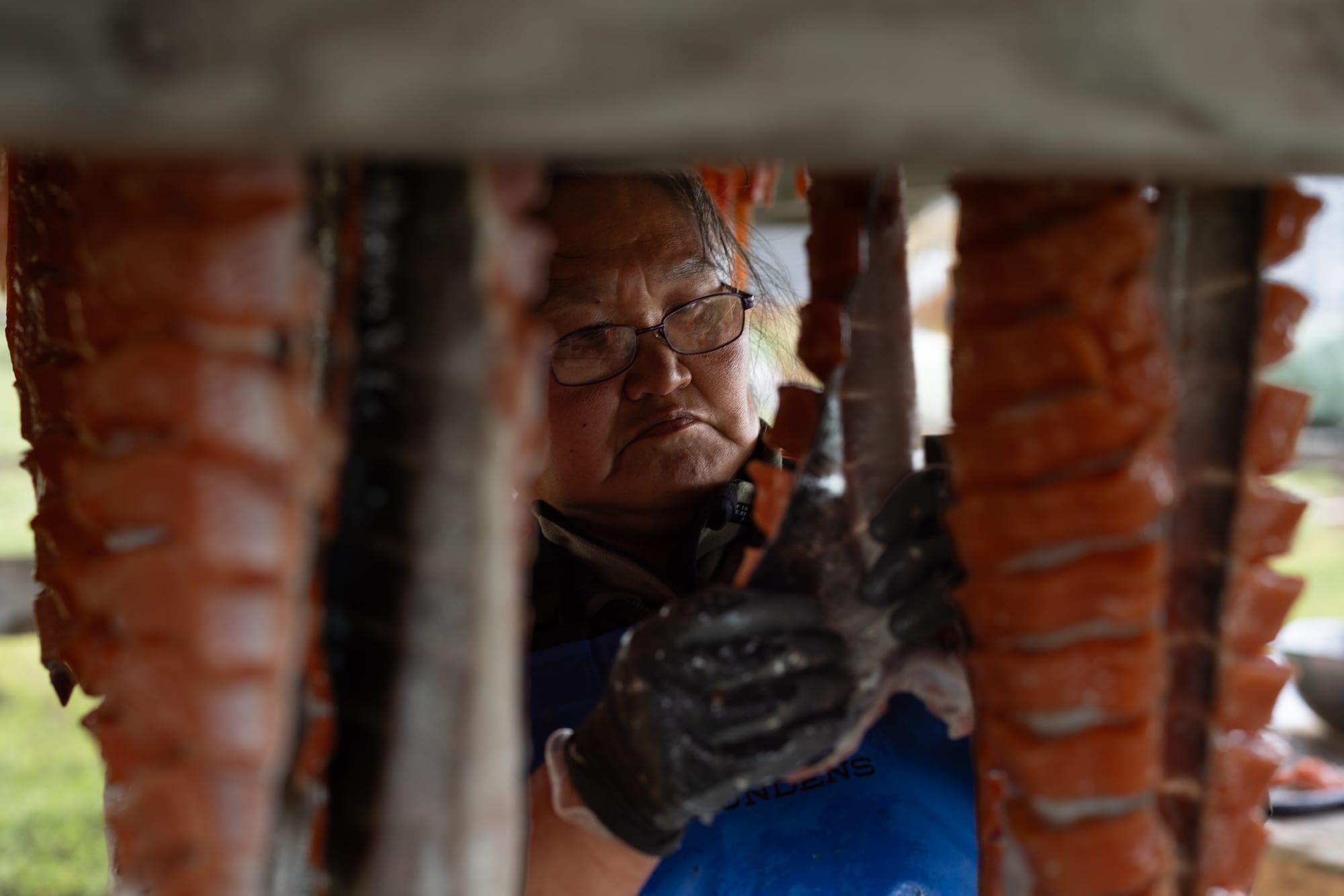
Helen Friend cuts and hangs salmon outside her home in Kwigillingok last month. Helen and her husband returned to the village after a brief evacuation following ex-Typhoon Halong. (Katie Basile for Anchorage Press)
IV: ‘I don't know where home is anymore’
Faith Paul spent the summer before her senior year of high school in Kipnuk — a Yup’ik community of 700 residents thirty miles west of Kwigillingok — with her dad’s side of the family. She arrived in Kipnuk at the beginning of the subarctic spring, right as migratory shorebirds were descending on the Bering Sea coast, depositing their eggs in beds of feathers, grass, and driftwood. Her dad took her egg hunting, and they harvested five gallons.
Then, it was herring season, closely followed by halibut season, and Faith spent long hours helping her friend process the catch. At times, she passed sun-filled days driving boats through gleaming river bends as tall tundra grasses waved in the wind. She reveled in the freedom of village life. Although she spent the school year in Kwigillingok with her mom’s side of the family, summering in Kipnuk was an annual tradition.
Now, the changing seasons bring Faith painful reminders of routines no longer possible. “It doesn’t truly feel like it’s gonna be summer ‘cause we're not home,” she said.
Having grown up between the two villages hardest hit by Halong, 17-year-old Faith is experiencing a double loss from the storm. After her evacuation, Faith finished her senior year of high school in Bethel, and in the spring of this year, graduated from LKSD’s Kuskokwim Learning Academy. But what should’ve been a celebratory time only dredged up feelings of isolation. Faith has struggled to adjust to the move to Bethel. She wishes she were graduating with her classmates in Kwigillingok — whom she grew up with — instead of with people she barely knows.
Faith has struggled to move on from the night of the typhoon. She thinks about it every single day. In Bethel, she has found it difficult to access hobbies she enjoys. Her days blur together. “Every day is just the same routine. I just stay home,” she said. “I still feel stuck in October.”
As she talks about the typhoon, her sentences trail off into whispers, like she forgets to draw in air. And the final words emerge like a gasp, “I think about it every day ‘cause every day I wake up, and I'm not at home.”
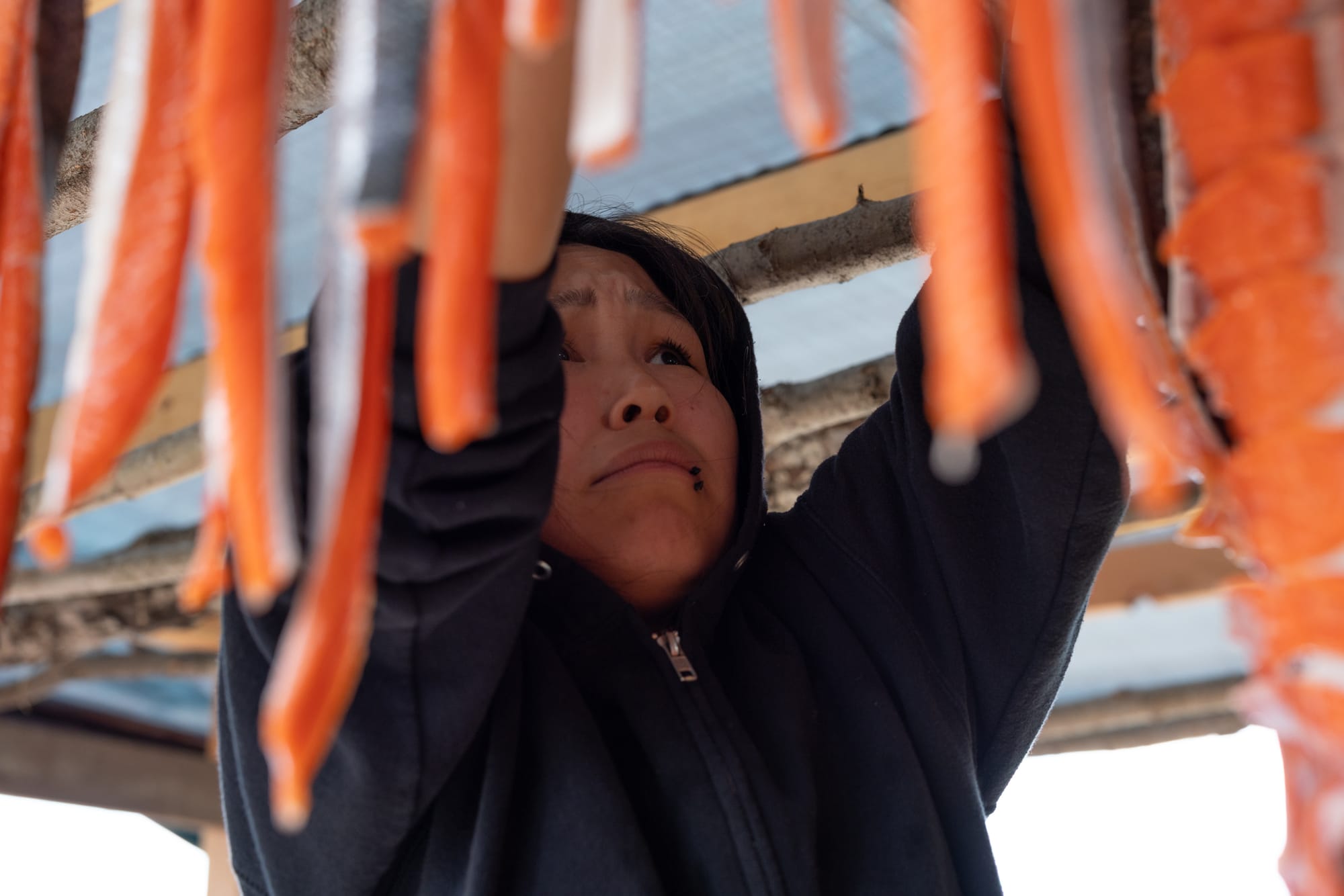
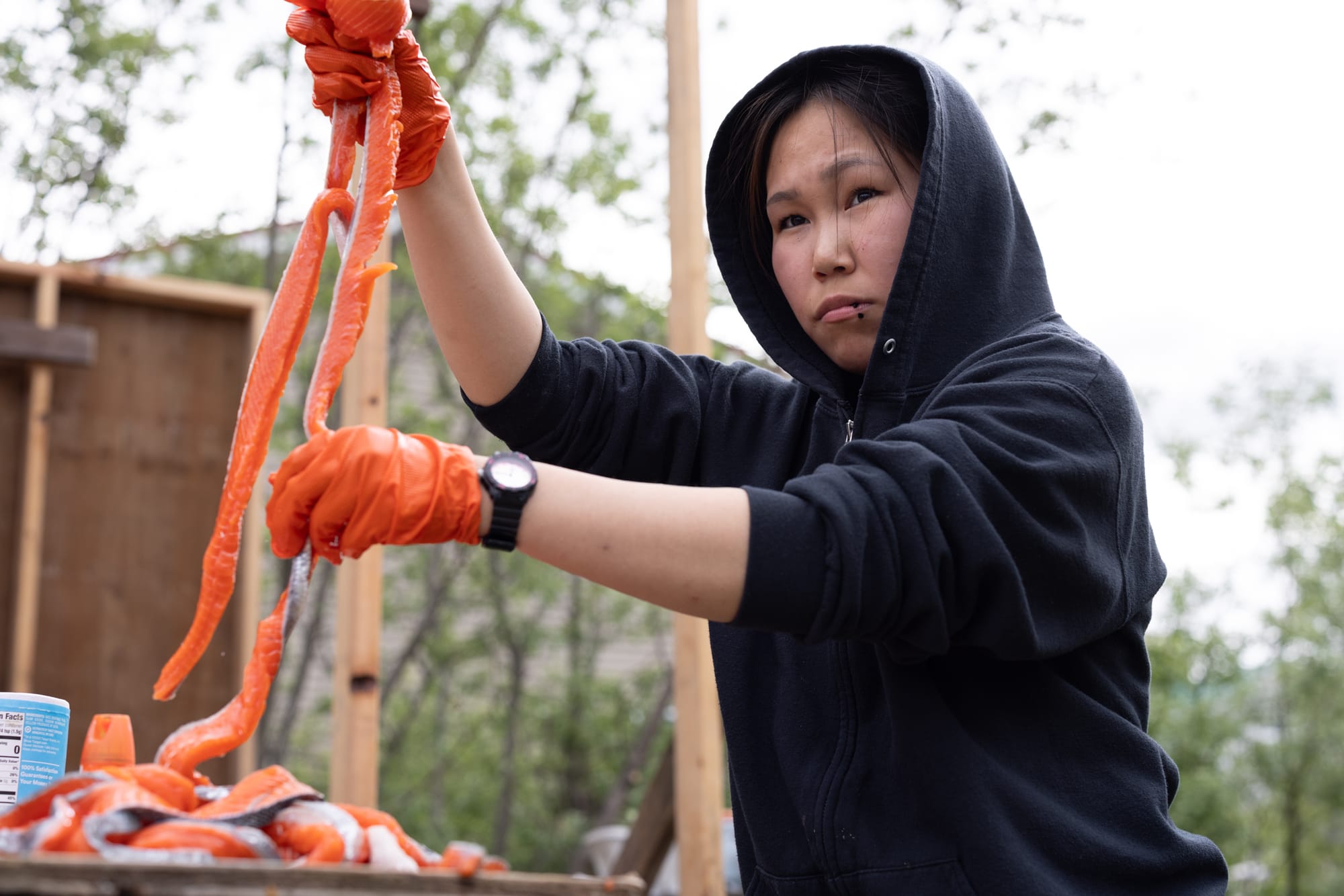
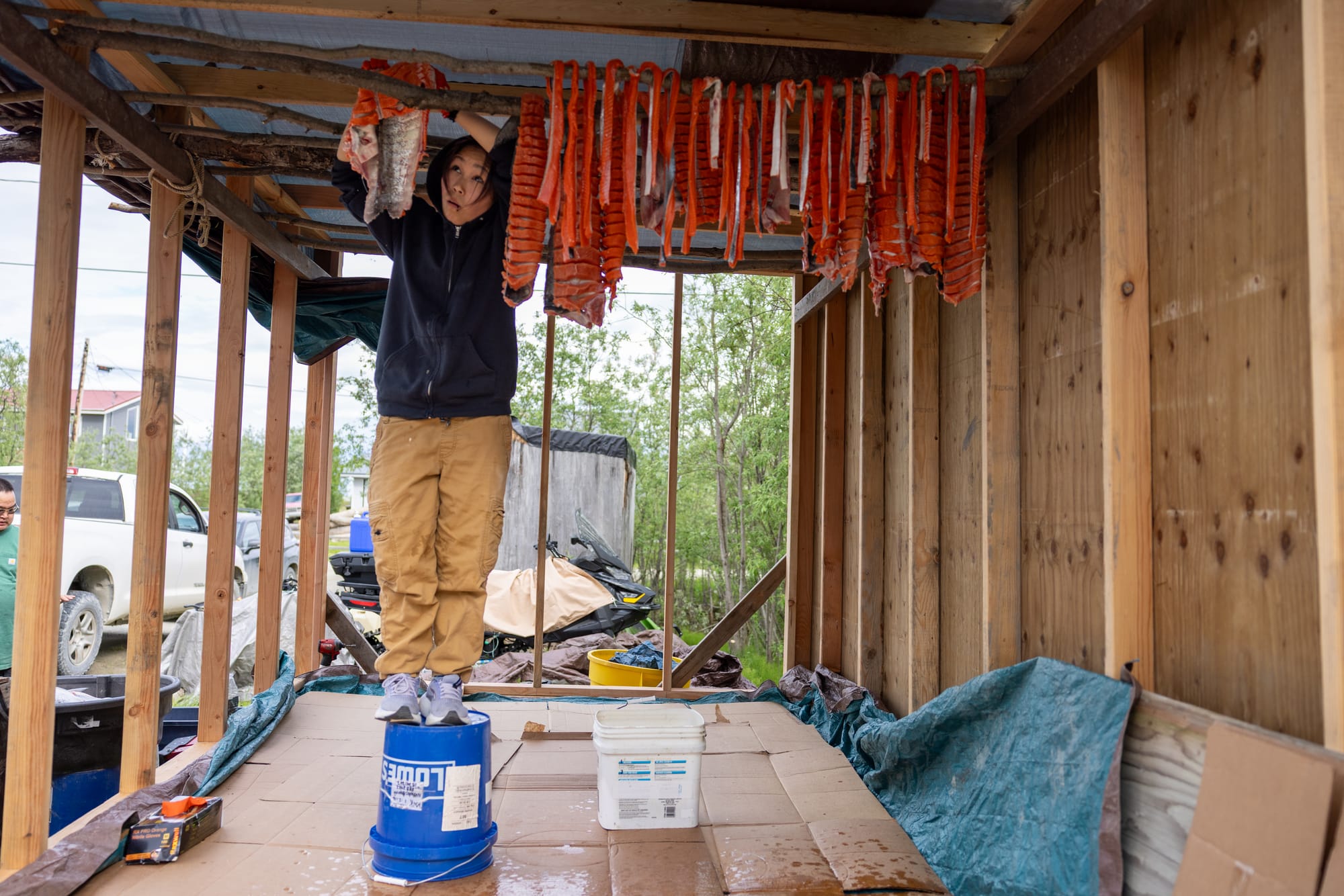
Ariel Friend, 20, hangs fish to dry in Bethel last month. Normally, she would be hanging fish with her mom in Kwigillingok, but she relocated to Bethel after ex-Typhoon Halong devastated her community. (Katie Basile for Anchorage Press)
Meghan Crow, who has worked as a social worker for over two decades for LKSD, has been providing counseling for Kwigillingok youth since their evacuations. Before Halong, Crow served as Kwigillingok’s school social worker and traveled to the village monthly to meet with students. According to her, post-Halong mental health interventions need to address youth’s loss of their physical rooting in the world.
“The biggest factor is loss of place,” she said. “It’s like an existential spiritual loss that they're grieving.”
According to Crow, this uprooting affects all areas of mental health. Her students are struggling to adjust to new schools and transition from Yup’ik to predominantly-English speaking environments.
For Native youth, separation from their familiar landscape also bars them from lifeways central to their identity and self-worth. Ariel spent her summers cleaning and processing fish — up to 40 per day — that her parents would net from the Kwigillingok River. Ariel loves hunting, partly for the thrill, but mostly for the fulfillment of providing for her loved ones.
“It’s this way to feed your family or friends if they really need it,” she said. “That's what the hunting part is about.”
Now Ariel lives apart from her parents, who have returned to Kwigillingok with their pets that survived the storm to help with rebuilding efforts. She’s living with an older cousin in Bethel, and sometimes she thinks about going back to Kwigillingok because she misses her dogs, her guinea pig Hazel, and her family.

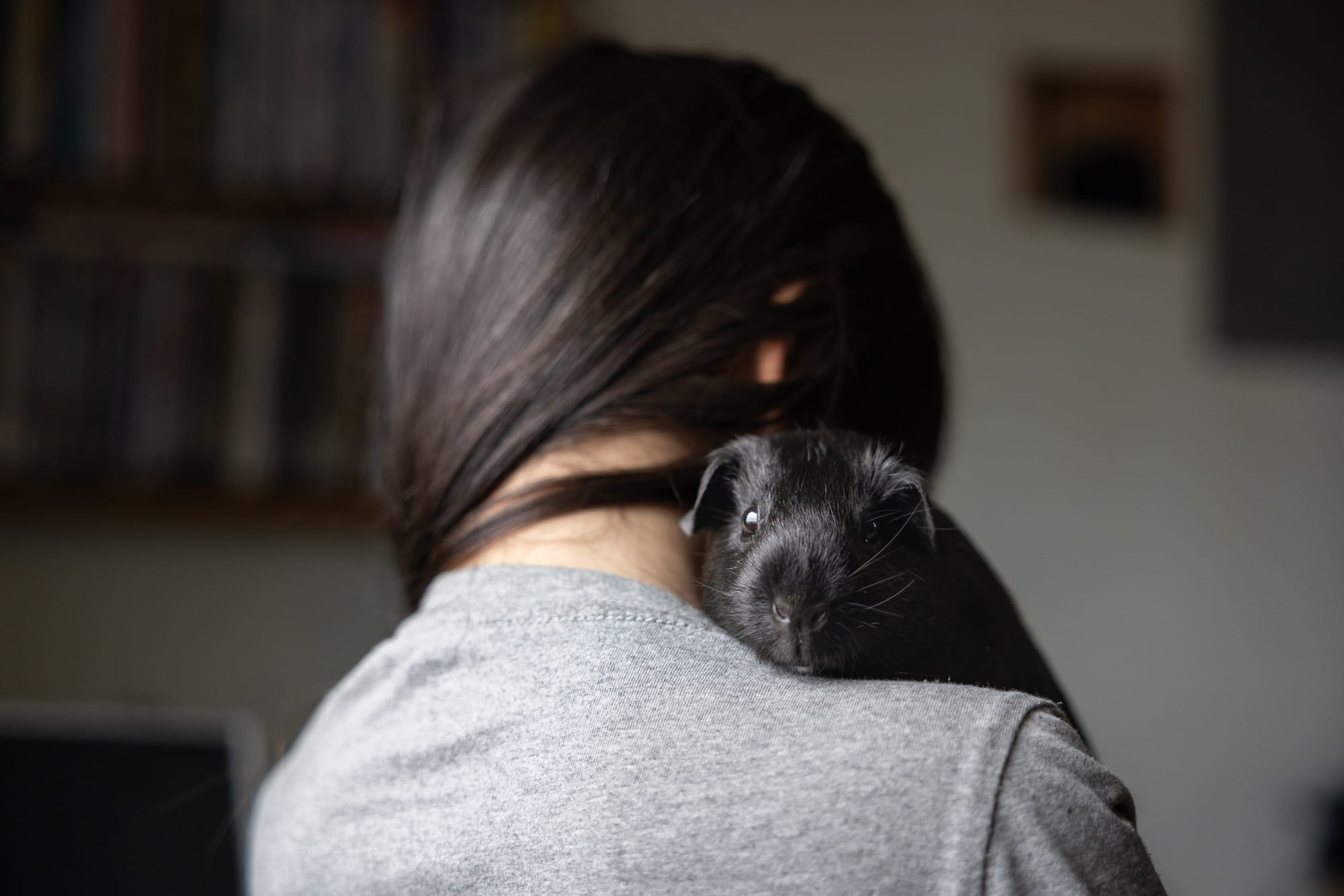
At left, Seth Friend, 12, holds up a phone so his sister, Ariel Friend, 19, can see and talk to her pet guinea pig, Hazel, from her house in Bethel while their family is at home in Kwigillingok last month. Ariel relocated to Bethel after ex-Typhoon Halong. At right, Zariah Maher, 7, holds Hazel. (Katie Basile for Anchorage Press)
Recovery efforts in Kwigillingok and Kipnuk are balancing two competing goals — reuniting the community as quickly as possible at an interim village site and preparing for a large-scale relocation in the long term. Roughly 30 percent of Kwigillingok buildings were destroyed, and around 90 percent of buildings in Kipnuk were destroyed. Both villages have voted overwhelmingly to relocate to higher ground, rather than to rebuild in place.
These two efforts will require separate funding mechanisms.
Repairing damage from Halong is funded under the Stafford Act, the statute that governs federal disaster declarations. The law requires infrastructure to be rebuilt in the same place. “Our law hasn't caught up with the current climate reality of Alaska,” said Rachael Gunn, the chief of staff for Rep. Jimmie. The Alaska state Individual Assistance program provides renters with only three months of rental assistance, and Tribal leaders report that residents are already facing evictions and housing insecurity.
Both Kipnuk and Kwigillingok want to be reunited at one interim village site while they wait for relocation, according to Tribal leaders. But, state agencies set construction priorities, sometimes without consulting local leaders, according to Tribal officials.
“This violates our Tribal sovereignty,” said Rayna Paul, the tribal administrator and environmental director for Kipnuk. “We want to relocate and do not want to build back in place and have repeatedly stated that to the state and to the FEMA officials.” “This is about our survival and the survival of future generations.”
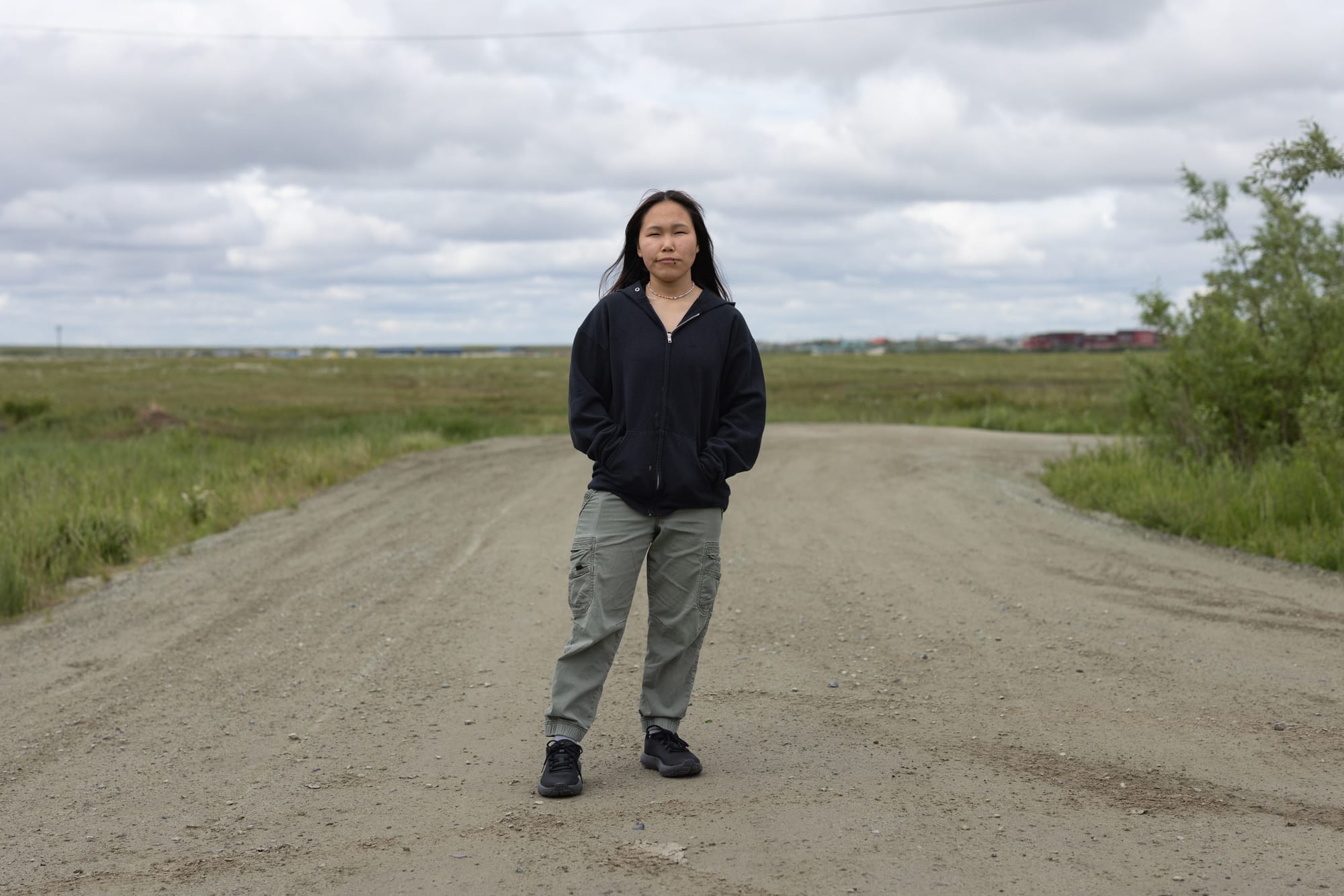
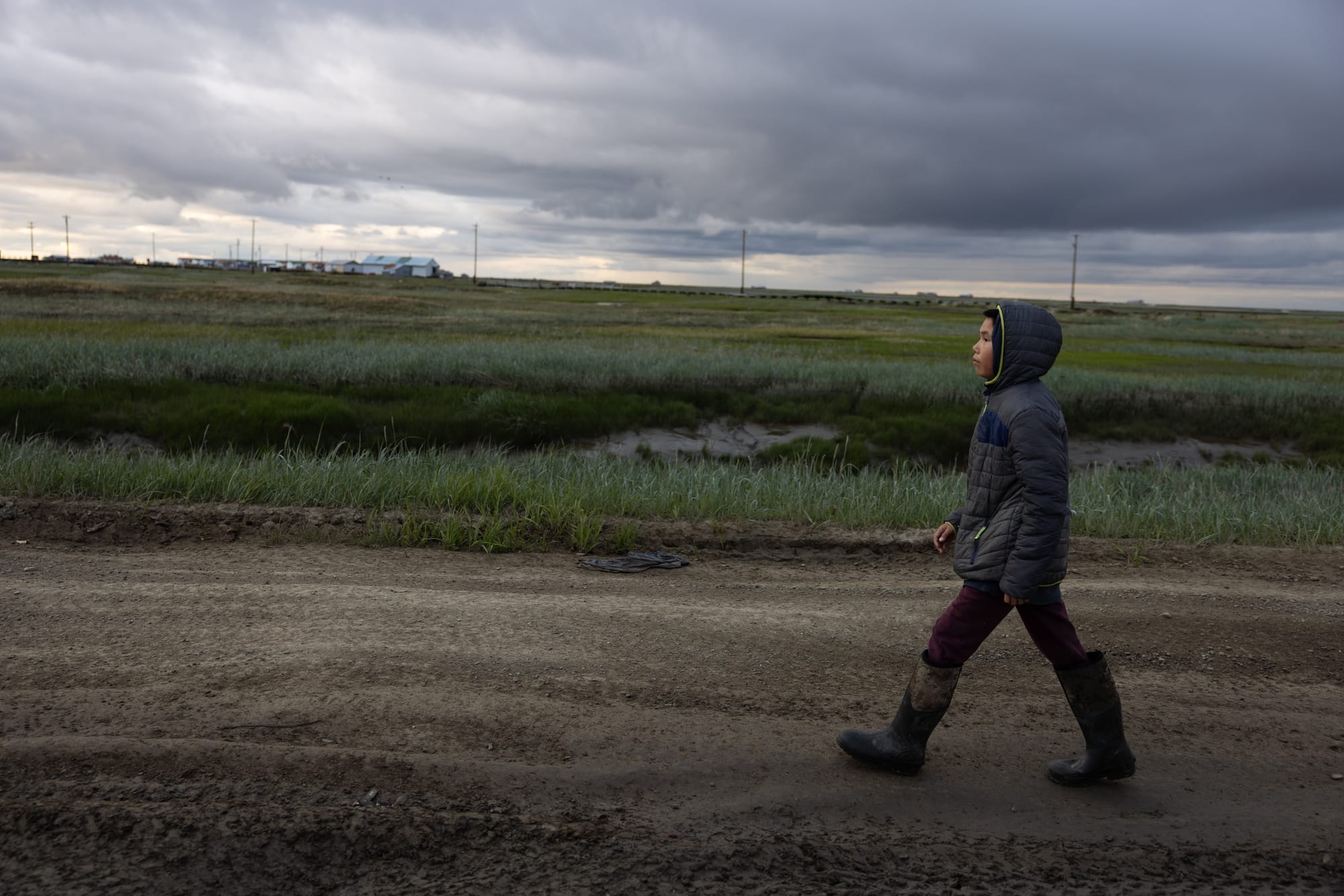
At left, Ariel Friend, 20, stands near the home she shares with family members in Bethel after relocating from Kwigillingok following ex-Typhoon Halong. At right, Seth Friend, 12, walks along the road in Kwigillingok last month. (Katie Basile for Anchorage Press)
According to Gunn, the real limitation is the lack of resources. FEMA has estimated that repairing the damage from Typhoon Halong will cost close to $125 million. But lawmakers are preparing for these estimates to increase significantly. The Trump administration has denied several of the state’s appeals for FEMA to increase its share of recovery costs.
Converging crises — many of which stem from federal administration decisions — will likely drive up repair costs over time. The U.S. war with Iran has aggravated a rural energy crisis by driving up gas and home heating prices. Tariffs have skyrocketed construction costs for a winding and delicate supply chain in rural Alaska.
This funding dilemma exposes structural inequalities across the state’s vast geography, Gunn added. “It's always been a competition between rural and urban Alaska for resources, and rural’s been left behind for a long time.”

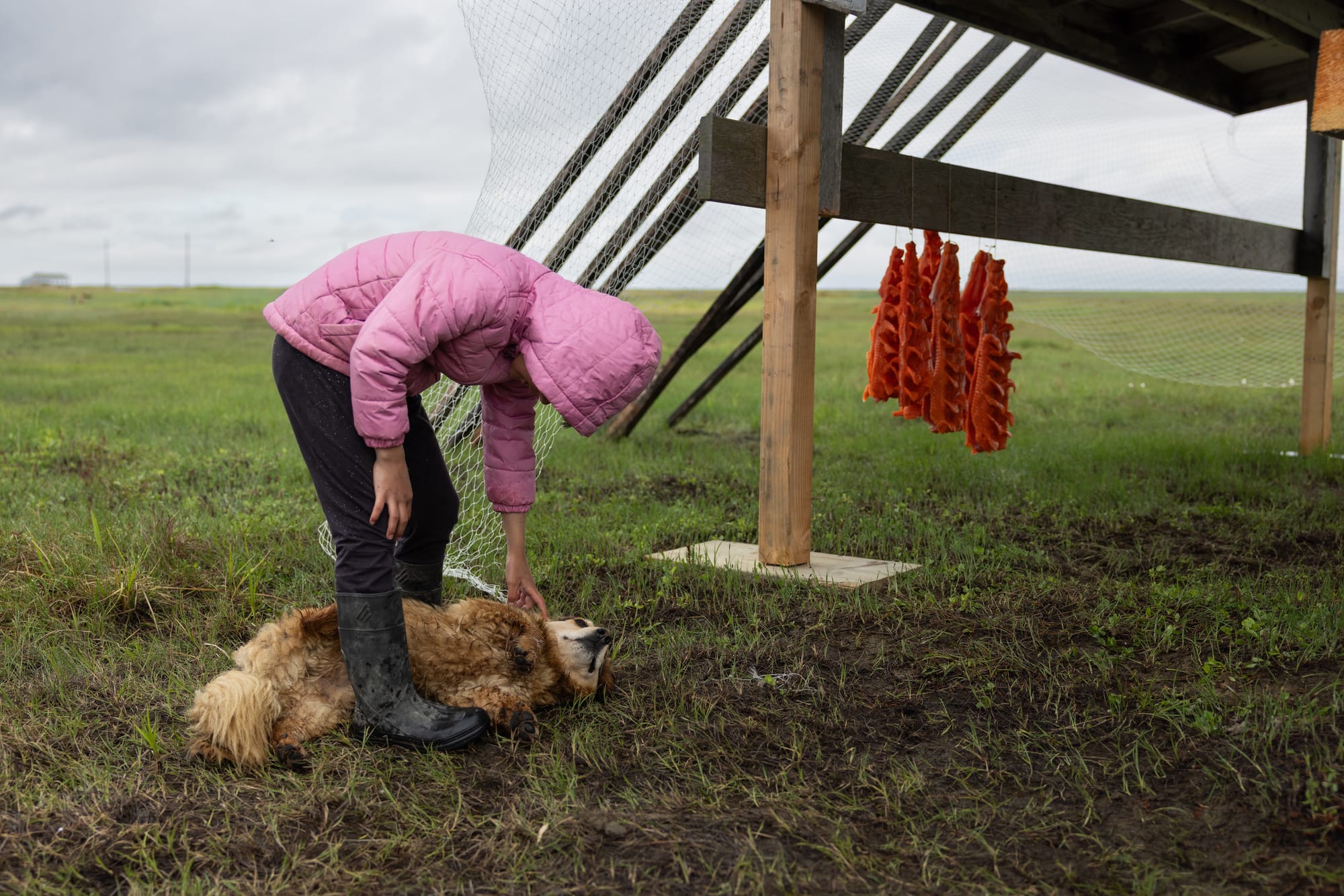
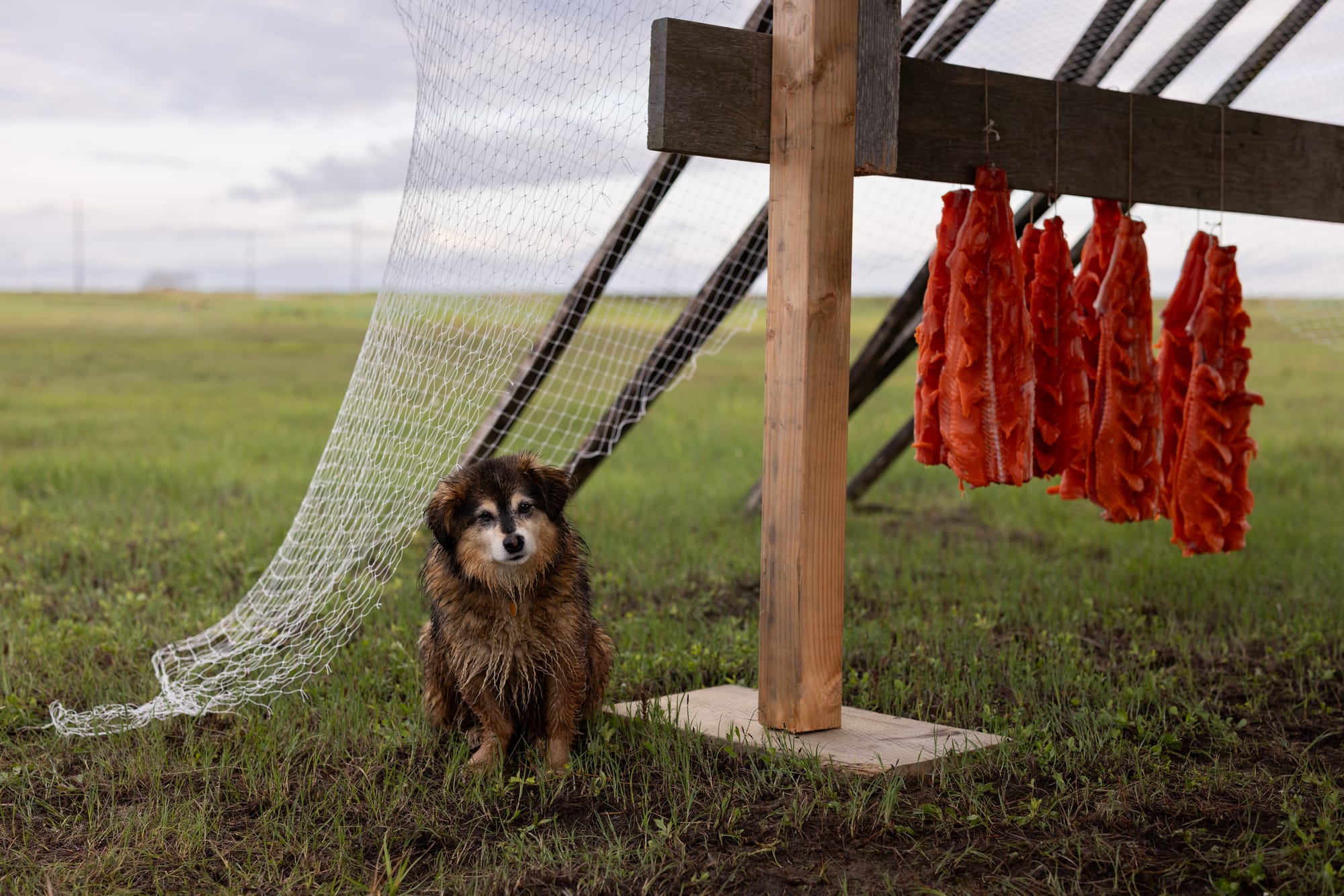
At left, salmon eggs dry on a rack outside Helen Friend's home in Kwigillingok last month. At center, Deja Maher, 9, plays with her dog Violet while her aunt cuts and hangs salmon. At right, Violet sits beside salmon drying on a rack.(Katie Basile for Anchorage Press)
For Janel Lincoln-John, an 18-year-old who grew up in Kwigillingok, relocation debates ignite feelings of anger and frustration. Janel sees the village’s current predicament as an outcome of governmental neglect. For years, residents of Kwigillingok have raised fears about worsening floods and sought assistance for relocation.
“It took how many years?” Janel said. “People would try to ask for relocation, and it took Typhoon Halong to [get] people to notice.”
Faith has experienced firsthand how difficult it is to coordinate a community-wide relocation in her region. Roughly 90 miles northwest of Kwigillingok sits Mertarvik — the new site for the village of Newtok. Newtok’s residents made the decision to relocate their village to higher ground in the face of climate change in 1993, 15 years before Faith was born. The more than three-decades-long relocation process frequently stalled due to anemic funding and a lack of central government planning. It took until 2019, when Faith was 11 years old, for Newtok’s residents to finally begin moving to Mertarvik.
“I feel like it'll take forever, and by the time it's done, I feel like I'd be old,” Faith said of Kwigillingok’s planned relocation. “It wouldn’t be the same anymore.”
“Wherever we move in the future, I feel like [nothing] would make it feel better,” she said. “I don't know where home is anymore.”
Jennifer Sahaba, the LKSD site administrator, has witnessed how environmental stressors impact Alaska Native village youths’ hopes for their future. Even before Halong, villages across the Y-K Delta faced escalating threats of permafrost thaw, erosion, and flooding. “At one point, this was a sustainable future [...] being able to maintain what they grew up with,” Sahaba said. “But as these environmental factors become much more prevalent, it gives a sense of hopelessness.”
Research across the globe has documented how repeated climate stressors harm young people’s long-term outlook. A study published in The Lancet Planetary Health last year found that adolescents living in flood-prone areas of Bangladesh showed significantly higher levels of anxiety and depression than those in low-flood regions. This research also found that cognitive overload and feelings of hopelessness limit these young people’s ability to plan for the future.
Still, Faith, like many other young people displaced by the typhoon, longs to return home to Kwigillingok, where locals say a construction crew of 30 — more than half of whom are residents — works 12-hour days, seven days a week, to repair Halong’s damage. They are laying fresh boardwalks, patching and repainting damaged walls, and using inflatable airbags to move homes back onto their foundations. During the winter, they salvaged over a dozen houses that the stormwaters had uprooted. As a short subarctic construction season kicks off the summer, cleanup crews plan to flock to the villages to remove hazardous waste, restore safe drinking water, and repair sewage infrastructure.
The goal is to give residents the option to return to the village by late fall 2027. Faith’s home is still intact, but her parents are hesitant to return, in fear of another disaster.
“For the future, I was hoping to still live in [Kwigillingok],” she said. “I'd even want my kids, if I had any, to grow up there.”
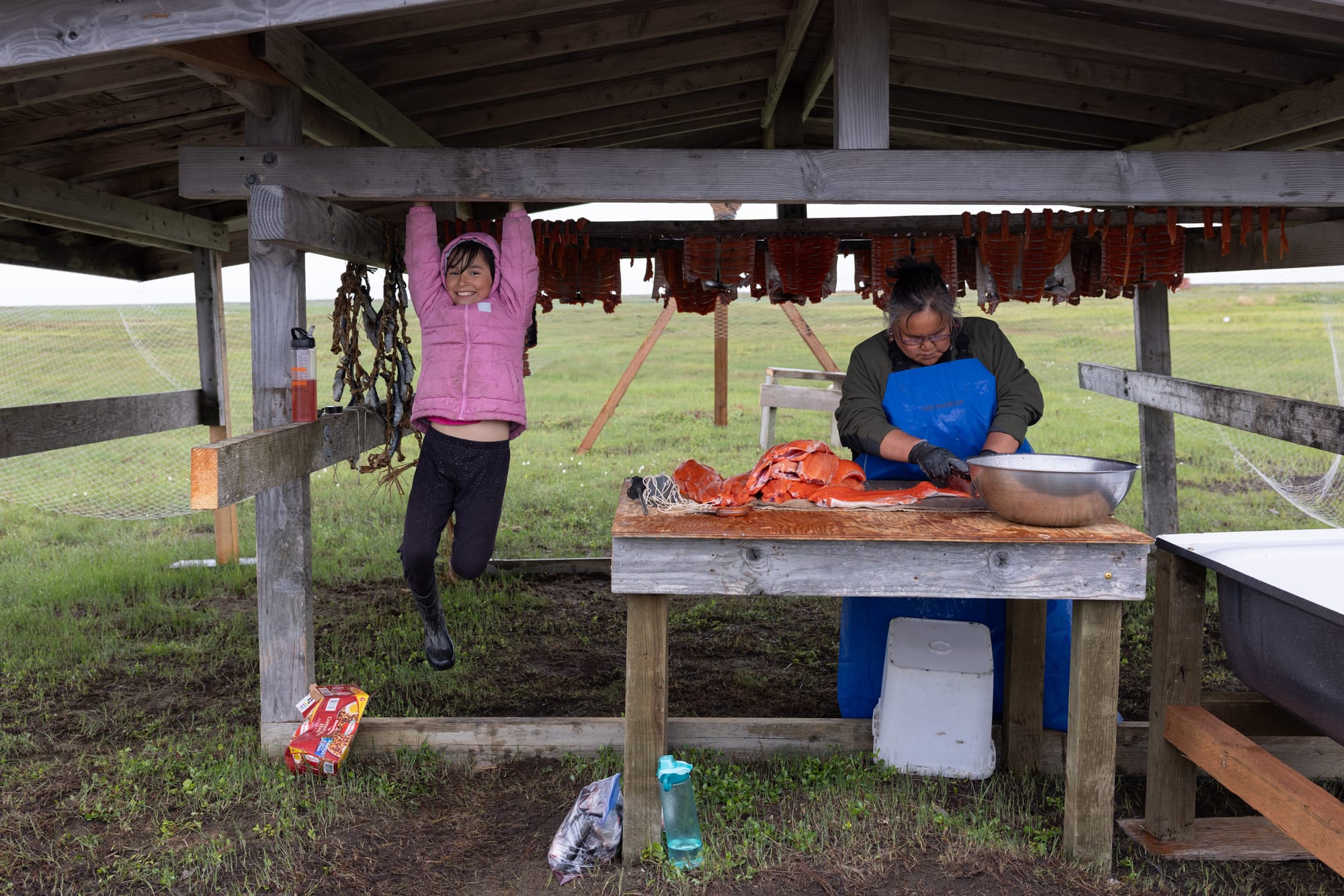
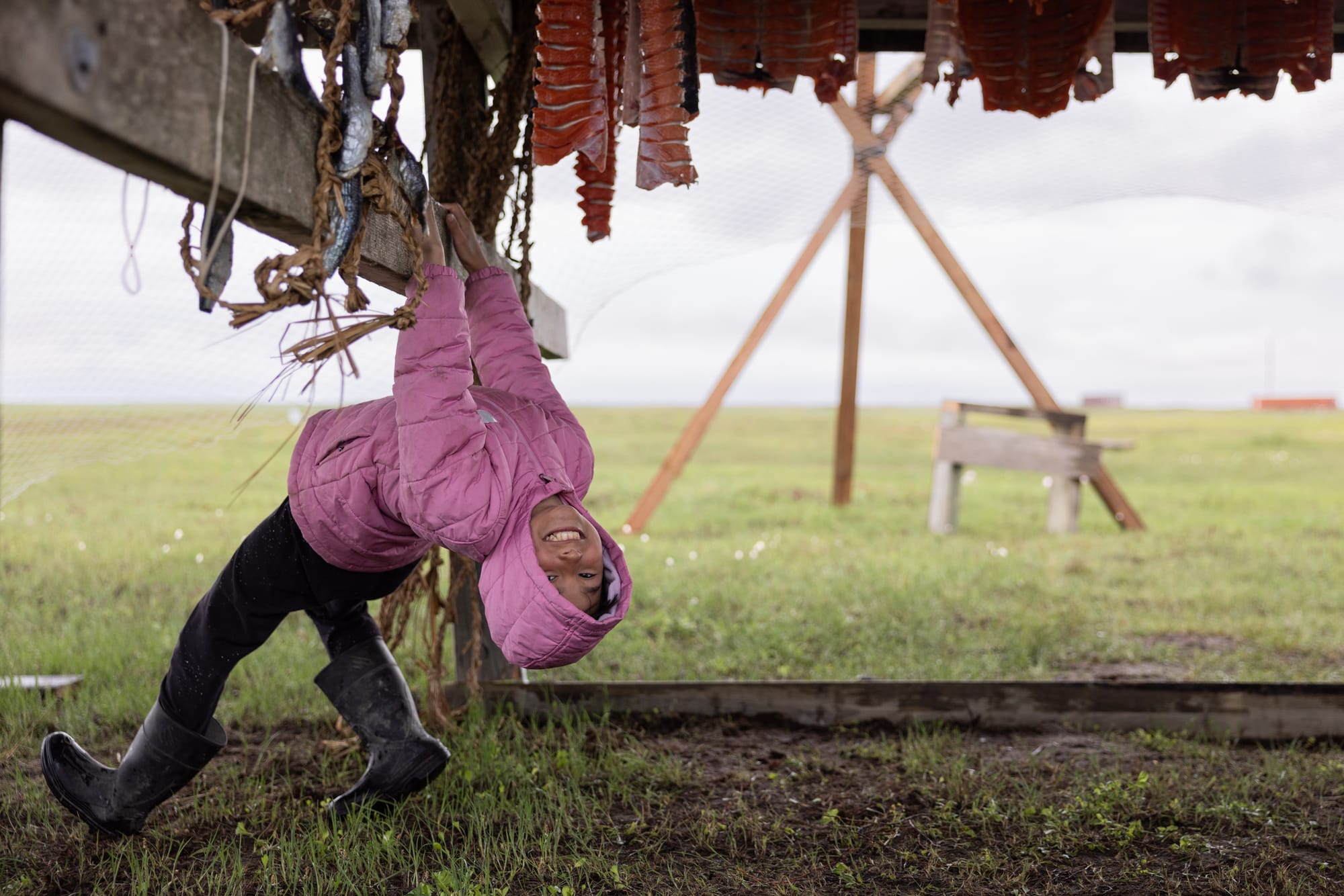
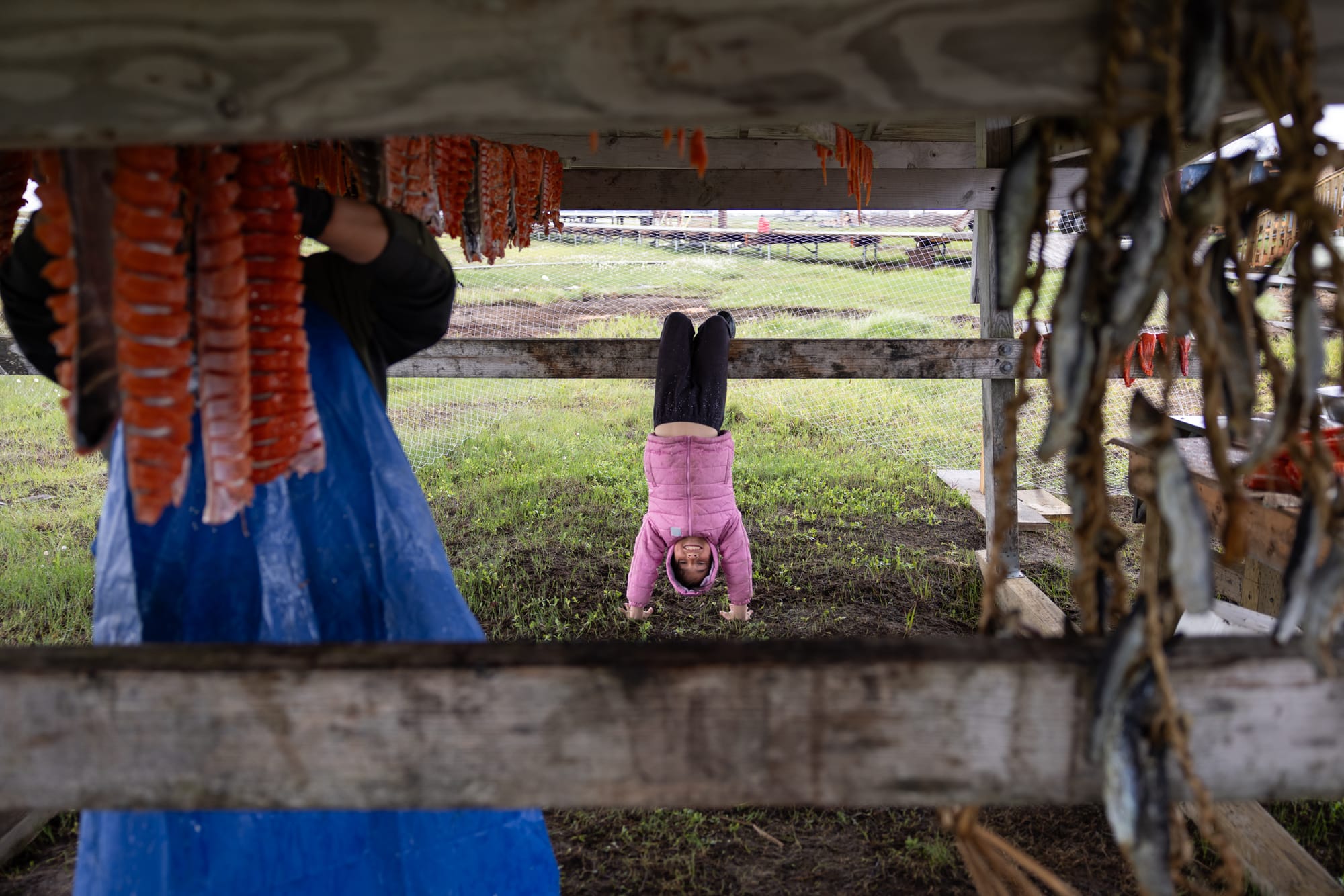
Deja Maher, 9, plays while her aunt, Helen Friend, cuts and hangs salmon outside her home in Kwigillingok last month. (Katie Basile for Anchorage Press)
Jess Zhang is a researcher and writer based in Brooklyn, NY. She writes about climate, incarceration, and arts and culture. Her work has appeared in The Guardian, Grist Magazine, and Hyperallergic, among other publications.
This story was written and reported by Zhang; edited by Ko Bragg and Bryce Cracknell; and produced by Jasmine Williams and Cracknell, with photography by Katie Basile. Data storytelling and creative direction by Ode Partners.
Zhang reported this story while participating in USC Annenberg’s Center for Health Journalism and Center for Climate Journalism and Communication 2025 Health and Climate Change Reporting Fellowship. Basile's photography was supported by a grant from the Alaska Community Foundation.
Additional contributions by Nathaniel Herz, Evan Erickson, Megan Ahearn, Mason Grimshaw, Peter Sherman, Stephen Downs, Magda Kęsik, Mateusz Ryfler, Mateusz Hallala, Mikołaj Szczepkowski, and Łukasz Knasiecki.