Alaska’s embattled economic development agency approves $700,000 PR budget
Amid continuing opposition to its oil drilling and road projects, the Alaska Industrial Development and Export Authority says the public should know about its less controversial small business loan programs.
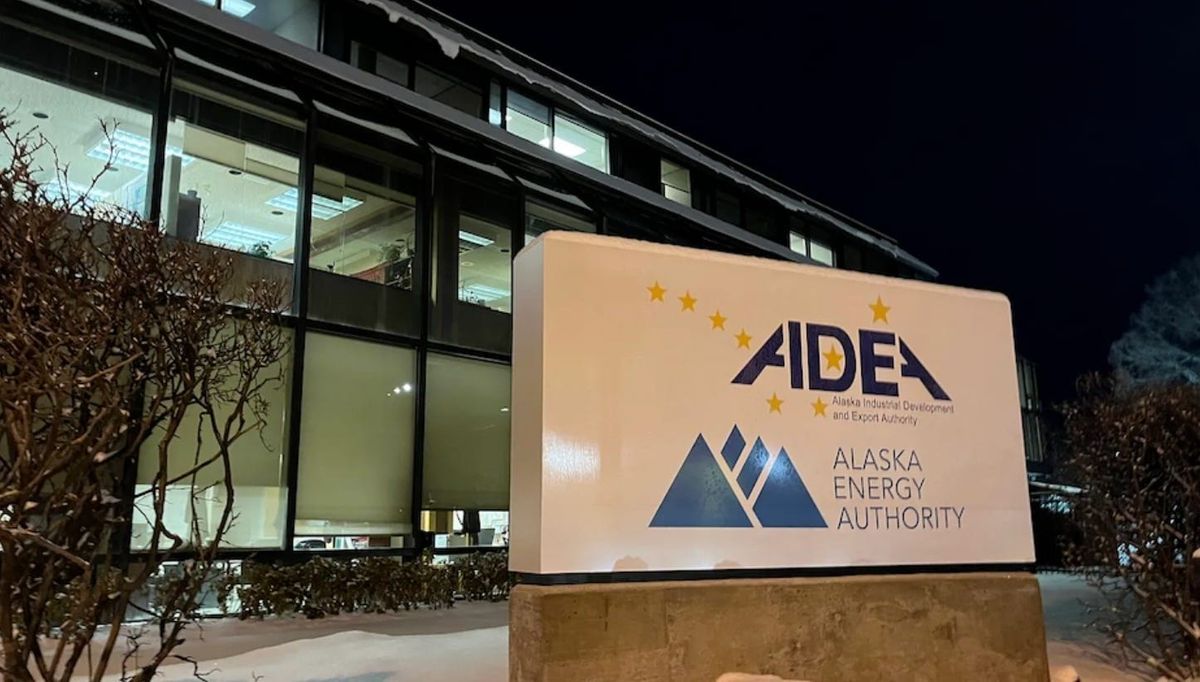
The state agency leading some of Alaska’s most polarizing development projects has approved a new communications budget, saying it needs to do a better job telling its own story amid attacks from critics.
The state-owned Alaska Industrial Development and Export Authority is run by a former chief of staff to Gov. Mike Dunleavy and is charged with promoting economic growth and expanding natural resource extraction and exports.
It is leading work to develop state-owned oil leases in the Arctic National Wildlife Refuge and also hopes to build two controversial new roads to access mining prospects in Northwest Alaska and outside of Anchorage.
Those projects have drawn sharp opposition from conservation organizations and other critics, including lawsuits, critical op-eds and campaigns that have labeled the agency “Bad AIDEA” and caricatured its leaders.

At a meeting in Ketchikan this month, board members, with no public discussion, authorized AIDEA’s staff to spend up to $700,000 a year on a new communications budget — formalizing a plan that the agency says was previously budgeted inconsistently through spending on individual projects.
The new communications plan, the agency said in its formal resolution authorizing the spending, will "ensure proper public engagement, transparency, and stewardship of the authority's mission." The money could go toward trade shows and conferences, responding to media inquiries and "other communications-related needs," according to the resolution.
The agency’s executive director, Randy Ruaro, referred questions about the plan to Dave Stieren, an AIDEA employee who ran an advertising agency and hosted a conservative talk radio show before joining the Dunleavy administration.
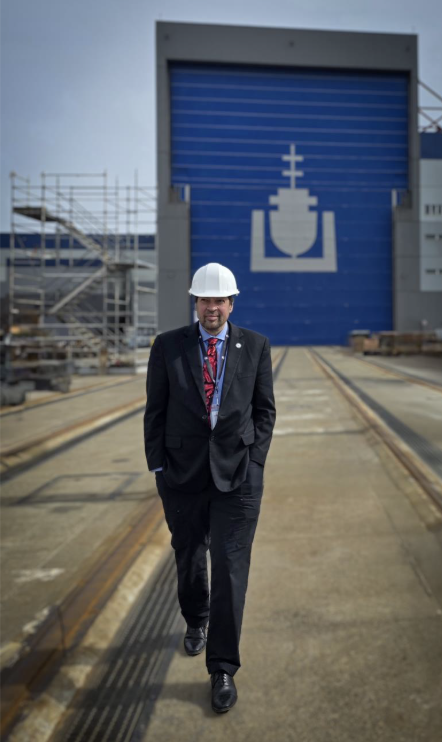
Stieren said he could not provide exact figures on AIDEA’s past communications spending, but he acknowledged that the new plan should allow the agency to meaningfully boost its public profile.
The $700,000 a year, he added, is a limit, and the agency will set a final budget through a request for proposals process.
“Mothership AIDEA has done, frankly, little to nothing on a consistent basis to tell our story,” Stieren said in an email — particularly when it comes to its loan programs that have helped finance tourism and hospitality businesses, like the Alaska Club fitness chain and Anchorage’s Bear Tooth pizza restaurant and theater.
“We're far more than roads,” Stieren said. “But since we've really not promoted or showcased our efforts in traditional finance areas, I understand the narrative or lack thereof that folks may have.”
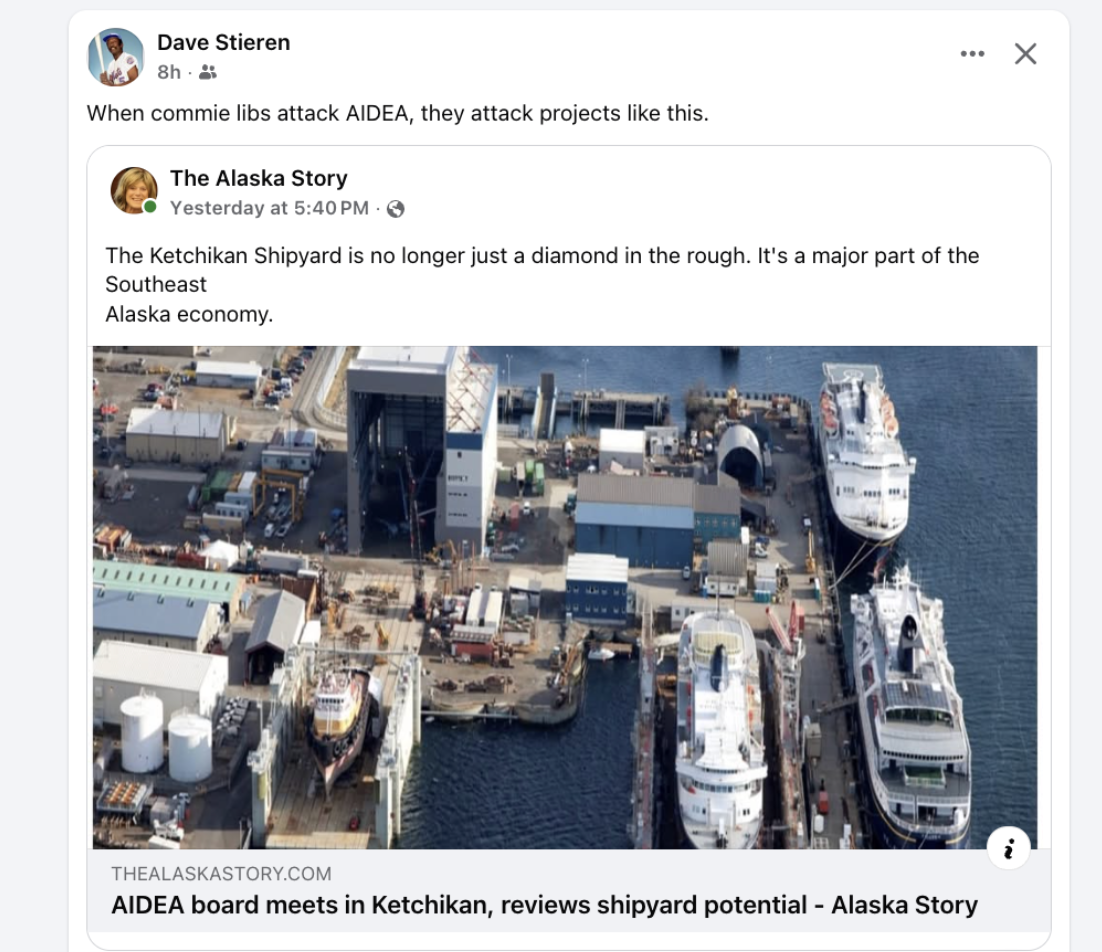
Stieren has also personally defended AIDEA on social media, including over the weekend — when he posted a conservative news website’s positive story about an agency-owned shipyard and said that “when commie libs attack AIDEA, they attack projects like this.”
AIDEA’s board chair, Bill Kendig, declined to answer questions about approval of the new communications budget when reached by phone.
At the Ketchikan meeting, one AIDEA critic, Melis Coady, credited the agency with formalizing communications spending as a “step toward accountability.” But she said that the plan doesn’t “deliver the transparency it describes” because it gives Ruaro, the executive director, authority to approve communications spending, and only requires that he report it to the board if asked.
"The authorization is broad, the dollar amount is undefined, and expenditures are approved solely by the executive director,” said Coady, who leads a conservation group called the Susitna River Coalition.
Ruaro, in an email, said AIDEA will issue reports on communications to board members “whether requested or not.”
Reporting like this takes time and money. Northern Journal's primary revenue source is contributions from readers. If you're already a member, thank you. If not, we'd be grateful if you'd consider a voluntary subscription.