For Alaska’s gubernatorial candidates, a sprint to find running mates
The clock is ticking before a June 1 filing deadline.
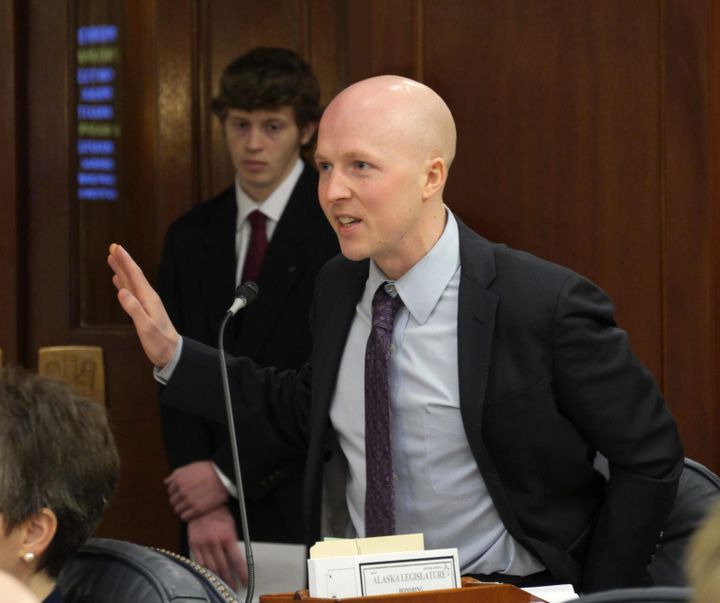
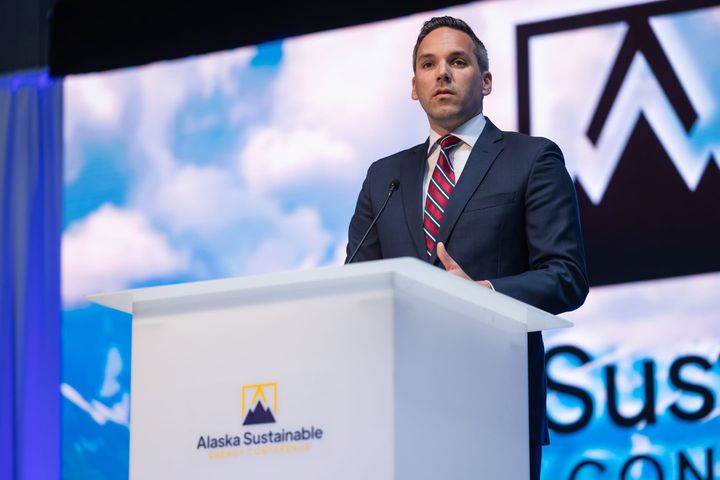
Matt Heilala, a Republican and a podiatrist, says he’s running to be the next governor of Alaska, and he’s put up real cash to back it up: He’s invested more than $1 million of his own money in his campaign.
But officially, Heilala isn’t a candidate. And he won’t be until he’s found someone to join his ticket as a candidate for lieutenant governor. That’s because state law requires a running mate before filing an official declaration of candidacy for governor.
With the June 1 filing deadline looming, Heilala is not alone. Of 18 candidates who say they’re seeking to succeed GOP Gov. Mike Dunleavy, who is termed out, just five have announced running mates — leaving more than a dozen candidates with just two more weeks to find one.
Heilala said that at one point, he’d secured a “high-profile” Republican who initially agreed to join the ticket before backing out weeks later, just before an announcement. Others have volunteered who just haven’t been the right fit — one who, Heilala said, was “kind of lazy,” and another with “kind of a sordid background as a politician.”
Heilala, who’s never held elected office, said he’s looking for a running mate with “new and young energy.” But, he added, it’s been hard to find someone who will settle for the $140,000 lieutenant governor salary, when people in their 30s and 40s are in their “prime earning years.”
“They come back and say, ‘You know what? This would be a $50,000 to $70,000 pay cut for me,’” Heilala said. “You don’t want someone as a running mate where the worst-case scenario is that we win.”
The job of Alaska’s lieutenant governor involves supervising the agency that runs state elections and regulating use of the state seal; they also finish out a four-year term if a governor resigns or dies.
The current matchmaking process is a relatively new development in Alaska politics. It’s an artifact of a successful 2020 citizens initiative that redesigned state-level elections to include a nonpartisan primary, plus the use of ranked choice voting in the general election.
Prior to that initiative, gubernatorial and lieutenant governor candidates ran in separate party primaries, with the winners merging their campaigns for the general. The 2022 gubernatorial election was the first in which candidates paired up before the primary — but with Dunleavy seeking re-election, the field was far smaller, without much jockeying for running mates.
This time, 12 Republican candidates have said they’re running, plus three Democrats and three independents.
None of the Democratic candidates — former state Rep. Jonathan Kreiss-Tomkins, former state Sen. Tom Begich and current state Sen. Matt Claman — have announced a running mate.
On the Republican side, longtime political operative and activist Bernadette Wilson, one of the party’s frontrunners, picked former state Sen. Mike Shower as her running mate in September.
Former state Sen. Click Bishop recently announced that he’s running with Greta Schuerch, an independent who works in a leadership position for the company that runs Red Dog, one of Alaska’s largest mines. Former state Sen. Shelley Hughes last month said that she’d picked a retired U.S. Air Force brigadier general, Blake Gettys, as her running mate.
But several other top GOP candidates, like former attorney general Treg Taylor, former revenue commissioner Adam Crum and current Lt. Gov. Nancy Dahlstrom, have yet to announce their selections.
At this point, with so many candidates in the race, recruiting is “tricky,” said Suzanne Downing, a conservative political writer who’s highlighted the running mate-less candidates on her website.
“Anybody who's qualified for that job and smart enough is probably going to say, ‘Gee, 18 people in the race,’” Downing said. “It's a big risk for anybody to put their name in the hat.”
One Republican who found himself on the end of multiple recruiting efforts was Rick Whitbeck, a former vice chairman of the state party who recently left a job as state director for U.S. Rep. Nick Begich III.
“I got three calls in less than three weeks,” Whitbeck said in a phone interview. By calling him, he quipped, the gubernatorial hopefuls were “going deep into their bag of candidates.”
The calls were exploratory more than they were outright job offers, Whitbeck said.
“You know, ‘What do you think my chances are? What do you think you could add to the ticket?’” he said. “They were good conversations — I would say they were serious, but I don’t think they were looking for an answer or offering the position outright.”
Whitbeck ended up taking a job with a trawl fisheries nonprofit, leaving the GOP lieutenant governor recruiting pool even smaller.
With two weeks to go, political observers say that one logical outcome is for some of the running mate-less candidates to combine their campaigns.
“In both parties there are credible, capable candidates who, if they pair up before June 1, can probably strengthen their ticket,” said Mead Treadwell, who served as lieutenant governor under Republican Sean Parnell between 2010 and 2014. “I would say that's the race right now, for combinations that can consolidate votes.”
Meda DeWitt, a traditional Tlingit healer who’s running for governor as an independent, said she’s been asked by “a few of the other candidates” to be their running mate. DeWitt says she’s amenable to the idea, but her allies don’t want her to take a back seat, she said.
“People who are around me, who are advising me, who are supporters and have their ears to the ground say there's a good buzz around me being an Alaska Native person at the top of the ticket,” DeWitt said. “They would not have the same excitement if it was same old, same old at the top of the ticket.”
DeWitt said her own recruitment process is ongoing.
Her "shining star" pick for a running mate had work commitments they couldn't abandon, she said. In a meeting with her advisors last week, they together picked three other top options whom DeWitt now plans to ask.
“What I'm looking for isn't just an appendage," she said. "What I'm looking for is someone who can actually be a teammate who can dig in, because there's so much work to do."
Heilala acknowledged having his own conversations about merging his campaign with other gubernatorial candidates — including one he said he had with Taylor, the former attorney general. But after a discussion about becoming Taylor’s lieutenant governor running mate, Heilala’s own advisors thought he would make the better gubernatorial candidate, he said.
“I hate to use phraseology, but I’m the change agent. I’m not the status quo guy. And I bring a very different skill set,” Heilala said. “I can’t be coaching them along from the backseat with things that I bring to the table.”
A spokesman for Taylor, Evan Lee, responded to an interview request about lieutenant governor recruitment and Heilala’s comments with a prepared statement saying that “we’re excited about the momentum behind the campaign and the team coming together for the fall.”
“We’ll share more on the ticket in due course,” Lee said. “Right now, Treg is focused on the fundamentals of winning a statewide race: communicating a clear message, raising the resources to compete, and earning voters’ trust across Alaska.”
Begich, one of the leading Democrats in the race, said he’s also been asked by another candidate about his interest in merging tickets and running as lieutenant governor. His answer: “I'm not looking for any job. I'm looking for this job.”
Begich said that after direct conversations with five different people, he’s chosen a running mate. He’ll reveal their identity, he added, in an announcement May 27th.
Reporting like this takes time and money. Northern Journal's primary revenue source is contributions from readers. If you're already a member, thank you. If not, we'd be grateful if you'd consider a voluntary subscription.