More Alaska crude flows to Asia as Strait of Hormuz stays shut
Two tankers have departed Valdez for Asia in recent weeks — the same number that shipped oil to Asia in all of 2025.
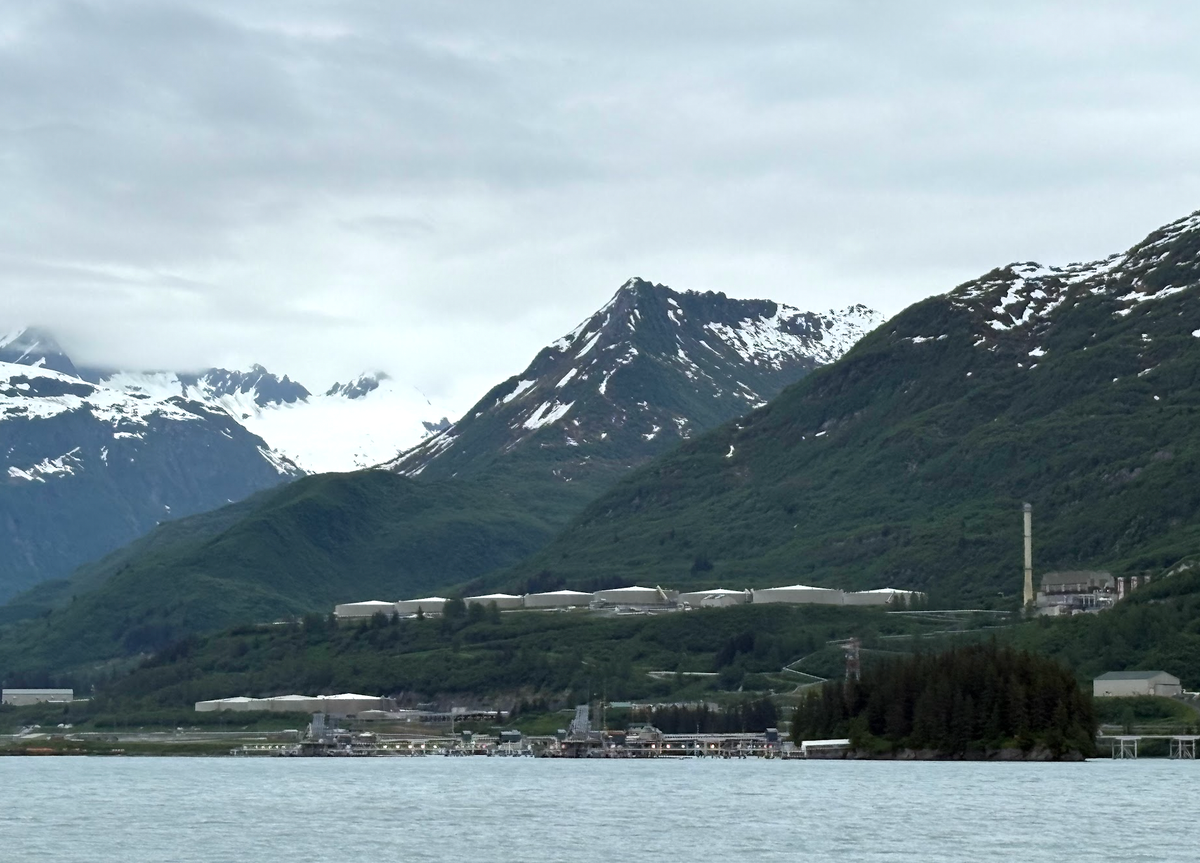
The Maritime Glory tanker arrived empty last week in Valdez, the mountain-flanked port town where the trans-Alaska pipeline comes to an end.
A day later, it departed, laden down with a cargo of some 700,000 barrels of Alaska North Slope crude worth, at last week’s prices, some $85 million — making it the second oil tanker to depart Valdez for Asia in less than a month.
The two cargoes represent only a tiny fraction of the crude produced by Alaska’s oil industry — about three days’ worth. And Valdez has sent far more Alaska oil to Asia in past years, including during the coronavirus pandemic in 2020.
But the two recent shipments do amount to a noticeable uptick that could be linked to the market disruptions caused by the war in Iran. Just two tankers brought Alaska oil to Asia in all of 2025, according to data provided by S&P Global Energy, a commodities information service.
The shipments come in the context not only of war, but also a market for Alaska crude that may be shifting more broadly amid refinery closures in California, where much of the oil shipped from Valdez is sent. Those shifts could have ramifications for the industry beyond any potential re-opening of the Strait of Hormuz, experts say.
But for now, refineries in Asia — which have traditionally depended on oil sources now locked up inside the Strait of Hormuz — need to find replacements for that crude, said Aaron Brady, S&P’s executive director for oil markets.
“It wouldn’t be surprising if the most recent (Alaska) shipments are the leading edge of a pickup in cargoes to Asia over the next few months, since Asian refiners have historically been so dependent on Middle Eastern crude,” Brady wrote in an email.
Oil companies are notoriously secretive about where and to whom they sell their crude.
But an array of public and private sources — which leverage data from ships and satellites — make it possible for analysts like Brady, as well as hobbyists, to keep tabs on where the oil is flowing.
Apps like MarineTraffic have become hugely popular as the Strait of Hormuz closure has wreaked global economic havoc, with users following the movements of individual ships as signals of the war’s direction. Comedian Steven Colbert calls Marine Traffic “the best app of all time.”
Ship tracking data show that in mid-April, the Washington was the first tanker to leave Valdez for Asia since the start of the war, with the 760,000-barrel vessel delivering a cargo of crude to the South Korea port of Daesan.
Historically, the Washington was owned by a subsidiary of North Slope oil producer ExxonMobil, before the tanker was sold to another company and chartered back to the ExxonMobil subsidiary in 2018. It’s now managed by a third company, Florida-based Fairwater, a representative of which declined to comment when reached by phone last week.
The Maritime Glory, meanwhile, is now headed to a port in Indonesia, according to navigation data it transmitted that’s available on ship-tracking apps.
That tanker’s registered owner is a company based in the Pacific Ocean nation of the Marshall Islands with the unrevealing name of GMF SNK No.10 S.A. (The “SNK” may be a reference to the vessel’s operator, a South Korean business called Sinokor Petrochemical.)
The tanker’s oil spill prevention permitting is also being handled by the same company, Fairwater, that manages the permitting for the Washington, the vessel historically used to move ExxonMobil's Alaska oil, according to public documents.
An ExxonMobil spokesperson declined to comment when asked about the Maritime Glory’s movements.
A market in flux
Other tankers that carry Alaska crude have, since the start of the war, stuck to their usual refinery destinations along the U.S. West Coast — Los Angeles, Washington state, the San Francisco Bay Area.
Those tankers include a fleet of five vessels owned by a ConocoPhillips subsidiary, while another fleet of four vessels works primarily as chartered tankers for another large Alaska oil producer, Hilcorp.
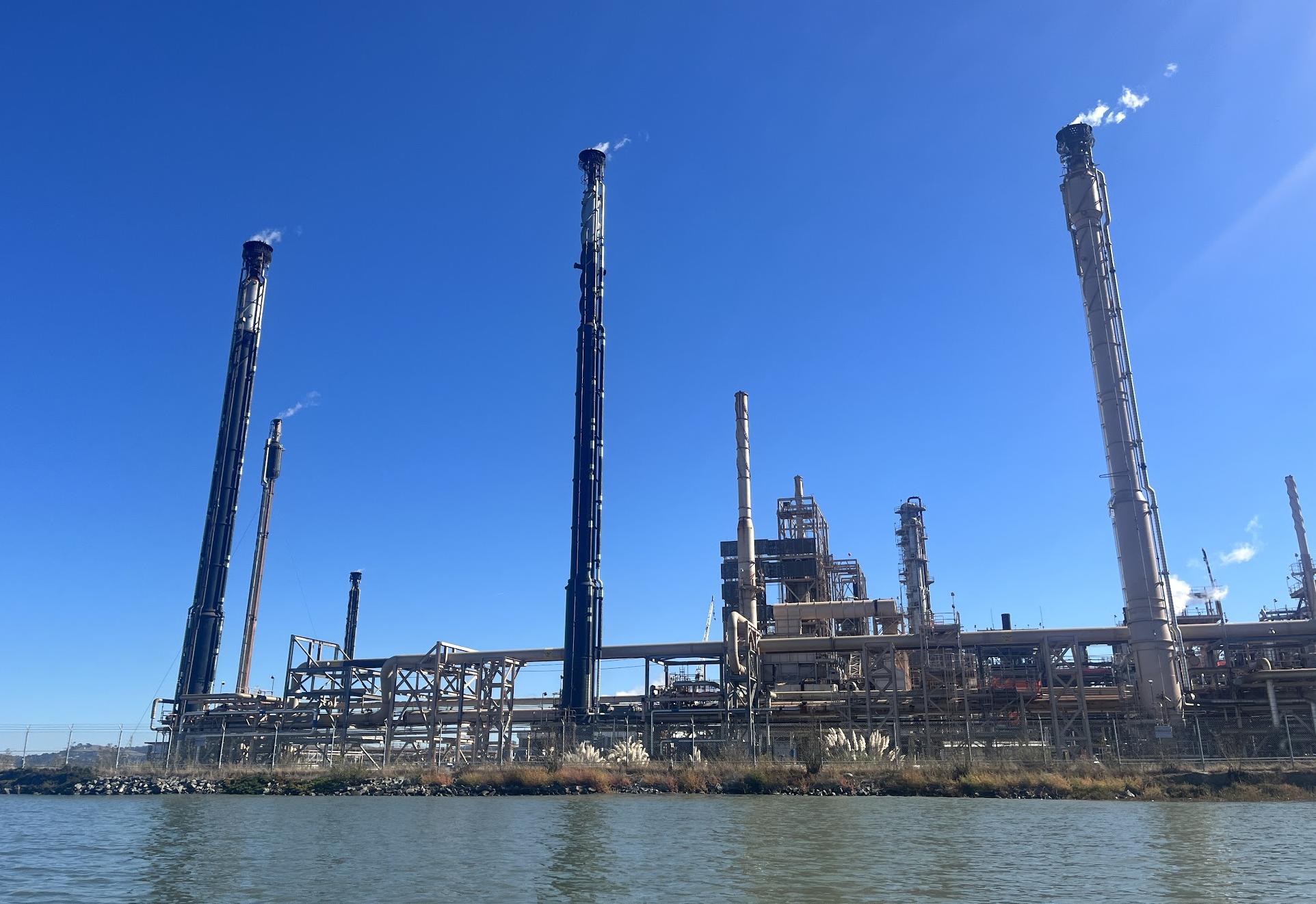
While Asian refineries could be increasingly looking to replace lost Middle East oil with Alaska crude — and have already turned to supplies from the Gulf Coast and Canada — Alaska producers may also be seeing higher demand from those U.S. West Coast refineries, according to Brady, with S&P.
That’s because California refiners, Brady said, also imported “a decent amount of Middle Eastern crude.”
“So, they will also be competing to keep these (Alaska) cargos in the domestic market,” Brady added.
The Wall Street Journal reported Monday that West Coast states have also been importing refined fuels since mid-March from the U.S. Gulf Coast, through the Panama Canal. Alaska, which doesn't have enough refinery capacity to produce all the fuel it uses, has even received some of the Gulf Coast shipments, too, the Journal said.
The rising Asian and West Coast demand for Alaska crude has been reflected, just like other types of oil, in the skyrocketing price since the start of the war: Last week, it reached $123 a barrel — twice as high as the price it commanded in January.
But the longer-term future for demand is less certain, according to Brad Keithley, a retired Alaska oil and gas attorney who now closely follows Valdez crude shipments and developments at West Coast refineries.
Two of the nine gasoline-producing refineries in California — a state that receives as much as half of Alaska’s oil shipments, according to public data — have closed in the past few months. Keithley said that has potential effects on the market for Alaska crude.
The question of what those effects could be is even more relevant, he added, given that Alaska’s crude production is expected to increase substantially over the next decade, as two enormous new oil fields, Pikka and Willow, enter production.
“The market seems to be in flux, and Alaska crude appears to be benefitting in the short term,” Keithley said. “If Hormuz reopens, the West Coast refineries continue to close and Alaska crude volumes increase, I can easily see a situation where the price starts reflecting a discount as it needs to increase flows to Asian markets.”
Reporting like this takes time and money. Northern Journal's primary revenue source is contributions from readers. If you're already a member, thank you. If not, we'd be grateful if you'd consider a voluntary subscription.