ExxonMobil won big at a big Alaska lease sale. Months later, its bids are still in legal limbo.
Other companies also have their leases tied up in litigation from local and environmental groups.
Northern Journal is merging with the Anchorage Press! Read our announcement and other information here, and support us with a subscription here.
This spring, ExxonMobil made big news in Alaska.
For years, the multinational oil giant had ignored the periodic auctions for drilling rights on public land in the state, instead investing in projects in other parts of the world like the South American nation of Guyana. Other big companies like Shell and BP had also walked away from holdings in the state — raising fears that Alaska’s oil industry was on the decline.
But in March, after a series of recent big oil discoveries in the National Petroleum Reserve - Alaska, ExxonMobil came back in force, placing winning bids on two dozen leases in an auction in the federally owned area. Shell, in partnership with a Spanish oil company, also placed surprise bids of its own, as did an array of other firms that collectively offered $163 million in winning bids.
Four months later, though, the Trump administration has yet to issue most of the leases that ExxonMobil bid on and won. A federal lawsuit filed by representatives of the area’s Indigenous residents has tied up 17 of the company’s 24 plots in legal limbo — with the U.S. Bureau of Land Management blocked by a federal judge from issuing leases to the company.
Other big oil players like Shell and ConocoPhillips won leases that don’t face the same legal complications — though multiple smaller companies’ bids are also caught in the litigation.
Last month, the Trump administration stepped back from an appeal that aimed to unblock the issuing process, leaving an underlying legal dispute to play out in a lower court.
At stake is the future of a huge area of the reserve, roughly 1,500 square miles, that some companies covet for its oil-bearing potential but local residents want conserved to protect caribou that they hunt for food.
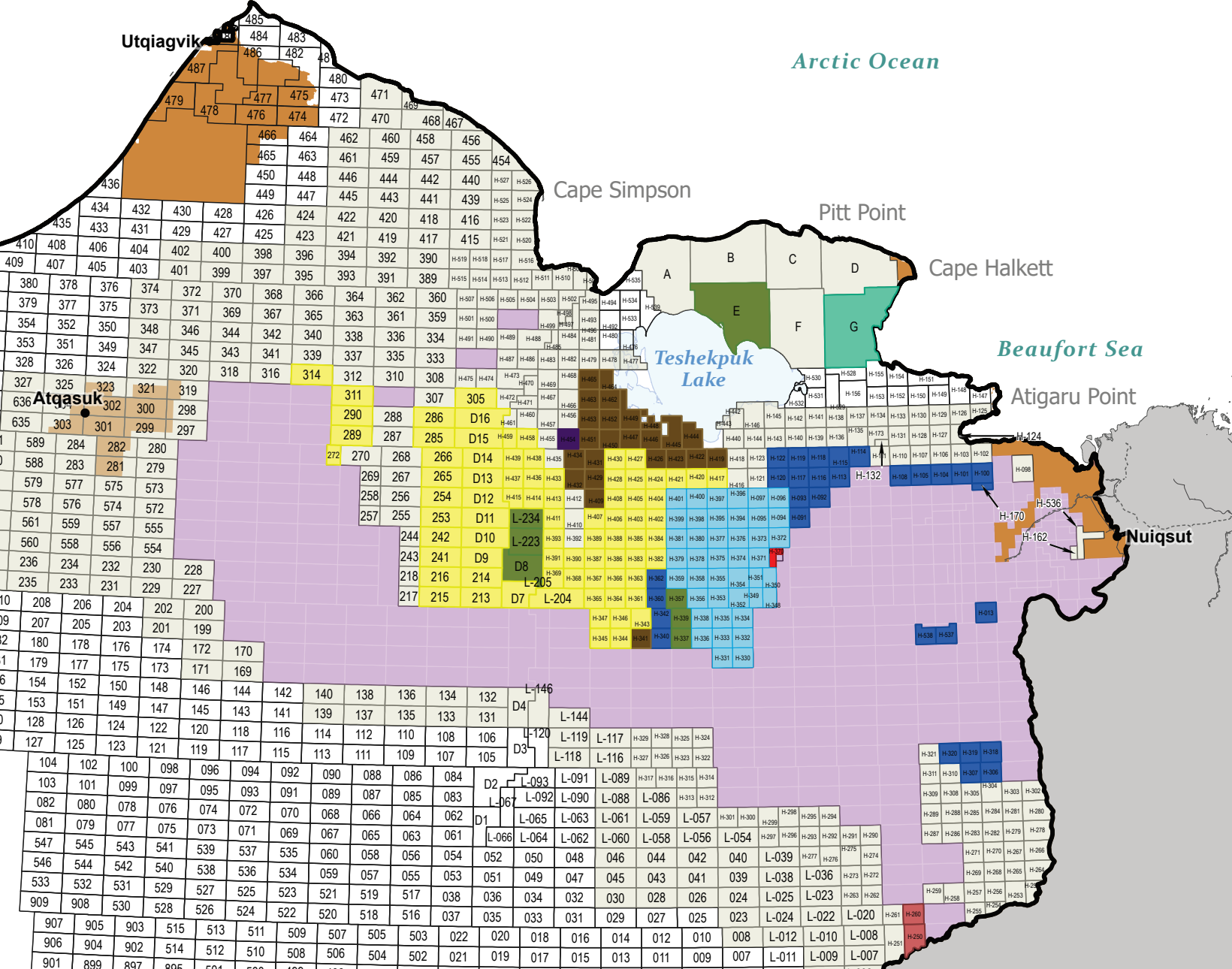
Under a deal struck with the Biden administration, oil leasing was barred in the area unless it was approved by a group representing municipal and Native entities in the Iñupiaq village of Nuiqsut, about 50 miles southeast of the lake.
The Trump administration subsequently canceled the agreement and the group sued, winning an early victory from a federal judge who restored the deal. That means the recently auctioned leases can’t, in fact, be granted in the area without the local group's consent.
“As development continues, it becomes more important to make sure that our subsistence remains healthy and accessible,” said Roxanna Oyagak, a board member of Kuukpik, Nuiqsut’s local for-profit Native corporation, which is part of a municipal coalition participating in the litigation. “We want to make sure that future generations can have that connection going forward.”
Multiple additional lawsuits challenging other aspects of the recent auction are also playing out at the same time. If successful, the litigation could also end up overturning leases that the Trump administration awarded to ConocoPhillips and other companies earlier this year.
Supporters of development are fighting back. In one recent 80-page motion, attorneys for ConocoPhillips wrote that conservation groups have been in “perpetual disagreement” with a policy choice by U.S. Congress to set aside the petroleum reserve for oil development.
“They will never be satisfied because their long-held policy goal of impeding and preventing all oil and gas activities in Alaska (and beyond) irreconcilably clashes with Congress’s mandate for expeditious leasing and development of the Petroleum Reserve,” the brief said.
Oil, birds and caribou
The national petroleum reserve spans an area the size of Indiana on Alaska’s North Slope, and it was originally created a century ago, as the U.S. Navy was converting its fleet from coal to oil power.
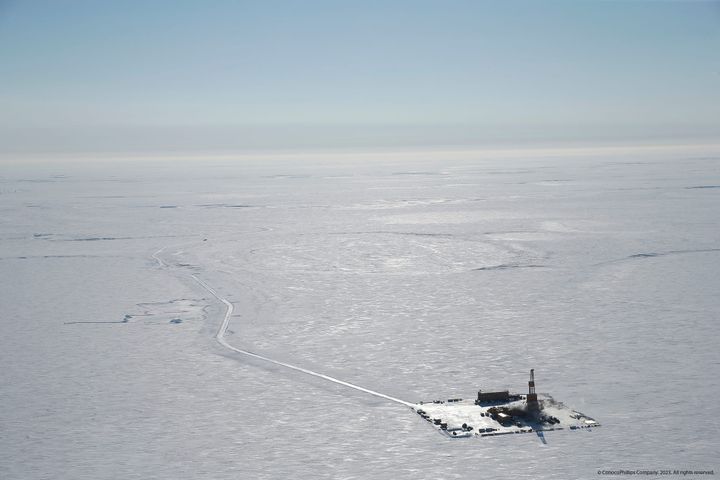
While federal geologists say the area could hold billions of barrels of oil, it also encompasses sprawling wetlands and robust populations of migratory birds, polar bears and caribou.
Conservation groups call it the Western Arctic rather than the petroleum reserve, and point to a half-century-old law that directs federal land managers to protect the reserve’s fish and wildlife, and environmental and scenic values.
The reserve sits at the far western edge of the North Slope’s existing oil infrastructure, and companies hadn’t actually produced any petroleum in the area until a decade ago.
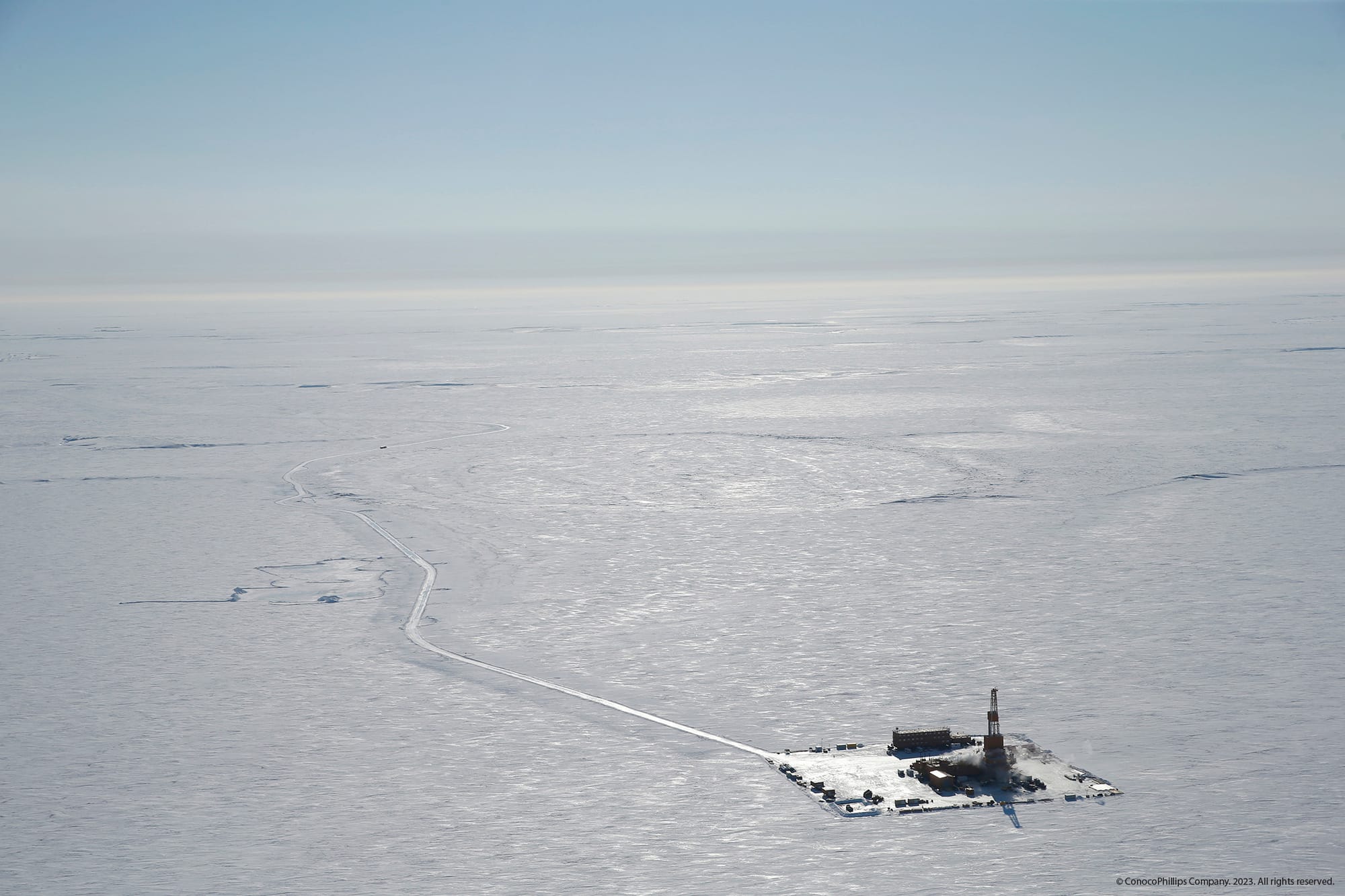
Its conflicting characteristics have spawned decades of political battles and court fights over how much of the area to open to the oil and gas industry. And recent huge petroleum discoveries there, including ConocoPhillips’ Willow project, have further charged the debate.
An Obama-era management plan protected roughly half of the reserve, while the first Trump administration opened 82% of the area to leasing.
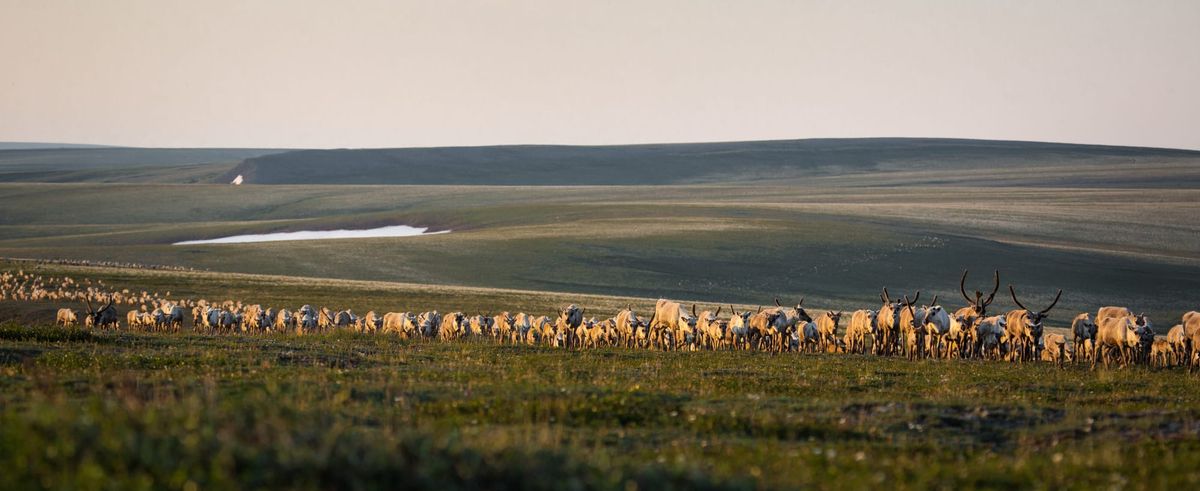
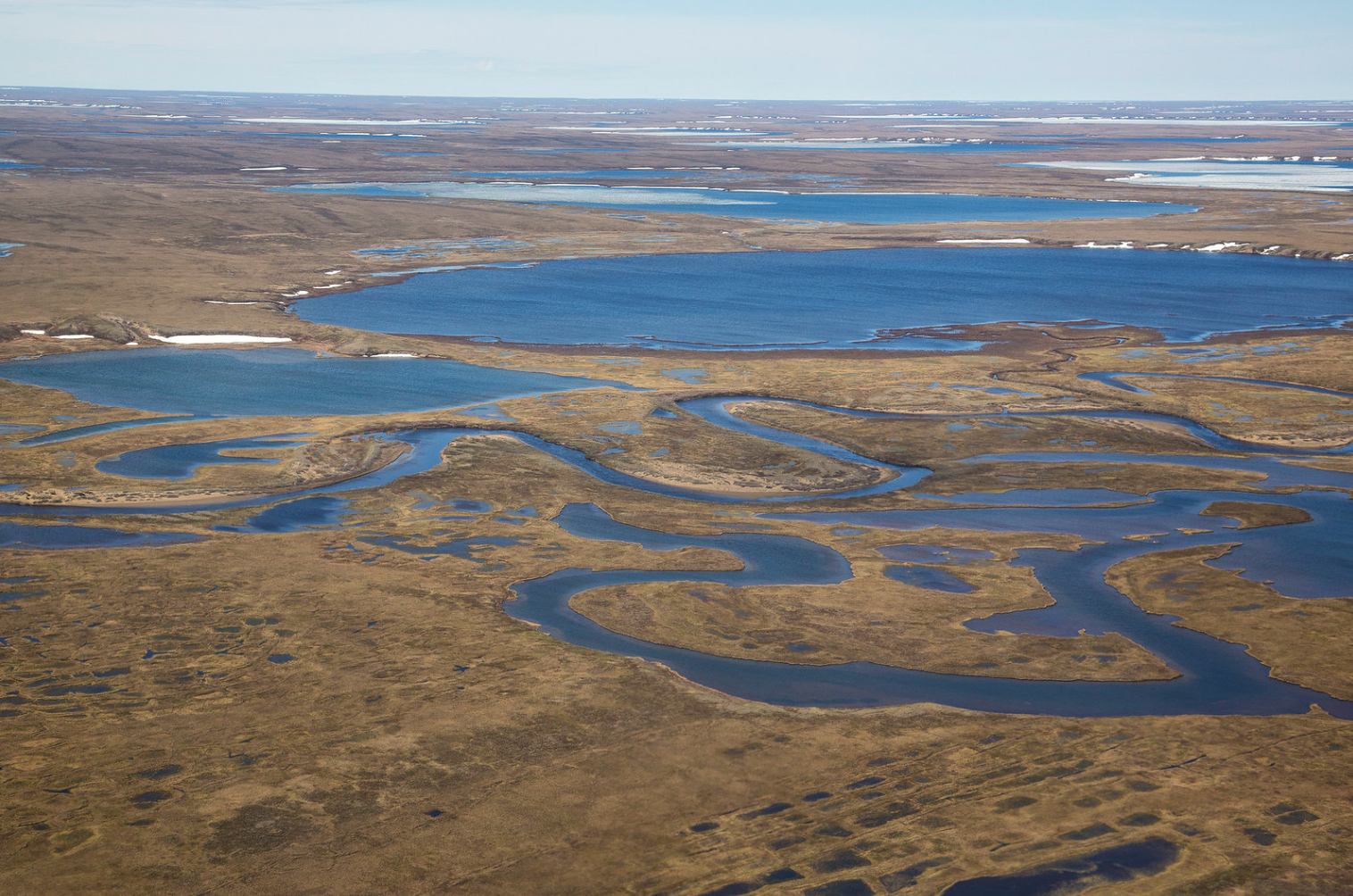
One area that’s particularly disputed is the 300-square-mile Teshekpuk Lake and its surrounding tundra, near the reserve's northern coastline. That spot is essential feeding and resting habitat for birds like tundra swans, bar-tailed godwits and buff-breasted sandpipers, and for the Teshekpuk Caribou Herd — a population of some 60,000 animals that residents of Nuiqsut and the North Slope hub town of Utqiagvik depend on for food.
Given its ecological value and importance to traditional hunters, federal officials have long granted the Teshekpuk area special protections, though some Republican presidents, including Donald Trump, have worked to shrink them.
The Biden administration took a new approach, establishing a conservation area around the lake as part of its efforts to offset the impacts Willow — the ConocoPhillips project in the reserve, which faced strident opposition from local and national conservation groups.
In a late 2024 deal with a group representing three Nuiqsut entities — the village’s for-profit Indigenous-owned corporation, its tribal government and city government — the administration protected 1 million acres, banning oil development there without the local group's consent.
The Biden administration structured the protections as a formal “right-of-way,” citing authority from a 1976 law, the Naval Petroleum Reserves Production Act.
Then, in late 2025, a top Trump administration official canceled the agreement, saying it gave Nuiqsut’s leaders illegal “veto power” over projects in an area with high oil and gas potential and that the deal blocked an “essential purpose” of the petroleum reserve. The Bureau of Land Management then said it would auction off dozens of plots around Teshekpuk Lake in the March 2026 lease sale.
 Max Graham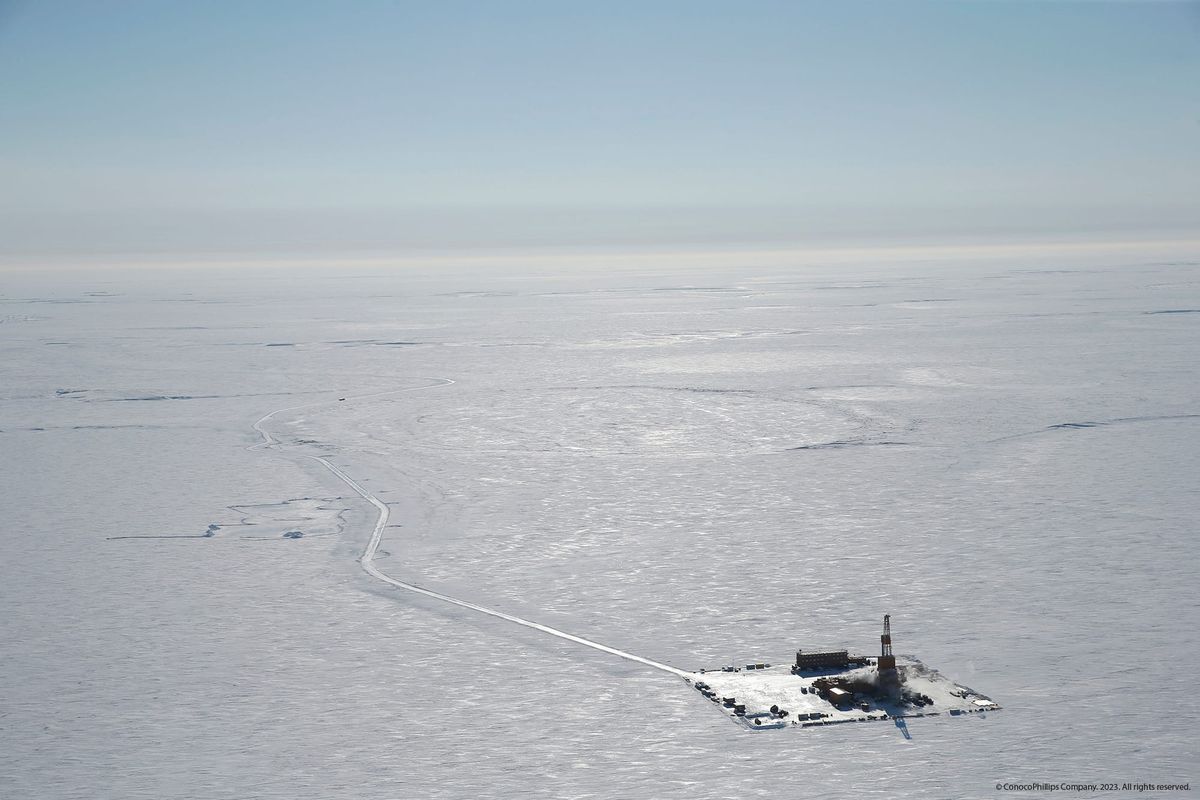
In response to the cancellation, the Nuiqsut group sued, saying the Trump administration’s action had “clearcut” the government’s obligations to protect subsistence.
On the same day that bids were due in the auction, a federal judge, Sharon Gleason, restored the Biden administration’s agreement and issued a temporary ruling putting the protections back into place. The written ruling, known as an injunction, was notable because Gleason suggested the Nuiqsut group had a good chance of winning its underlying case.
But in the meantime, oil companies had placed bids — one of which exceeded $2 million — to lease land within the protected area. ExxonMobil was the highest bidder on a number of plots directly along the lake’s southwest shore; Epoch Oil and Gas, a Denver-based firm, won a large tract along the lake’s northeast edge.
Epoch and another company that bid in the conservation area subsequently contacted Nuiqsut’s Native village corporation, Kuukpik, to discuss their plans for the area, according to Andy Mack, Kuukpik’s chief executive. ExxonMobil, however, did not, he said.
“I have no idea what they’re thinking or what they’re doing,” Mack said in a recent phone interview. “If they have a plan, I don’t know what it is.”
An ExxonMobil spokesperson, Curtis Smith, declined to comment.
Legal wrangling continues
After the March auction, in written correspondence with ExxonMobil and other companies, the Trump administration said Gleason’s ruling blocked its ability to immediately issue leases in the protected area.
But it said it was “vigorously pursuing” its options, including litigation. And in May, the administration appealed Gleason’s ruling to a federal appeals court.
Then, last month, the Trump administration quietly reversed itself, dropping the appeal in a one-paragraph motion that didn’t explain why. A decision from Gleason in the underlying litigation over the Teshekpuk Lake conservation agreement is expected in the coming weeks or months, according to attorneys following the case.
In an email, a U.S. Department of the Interior official declined to comment, and would not specify what its decision means for the leases that Gleason has blocked the agency from issuing.
The Trump administration did say, in its correspondence with ExxonMobil after Gleason’s ruling, that it had requested a waiver of the Teshekpuk area oil leasing prohibitions from the Nuiqsut group.
An attorney for the Nuiqsut group, Patrick Munson, declined to comment. But officials from Kuukpik — the Indigenous corporation that’s one of the group’s members — didn’t sound inclined to consent to a waiver any time soon.
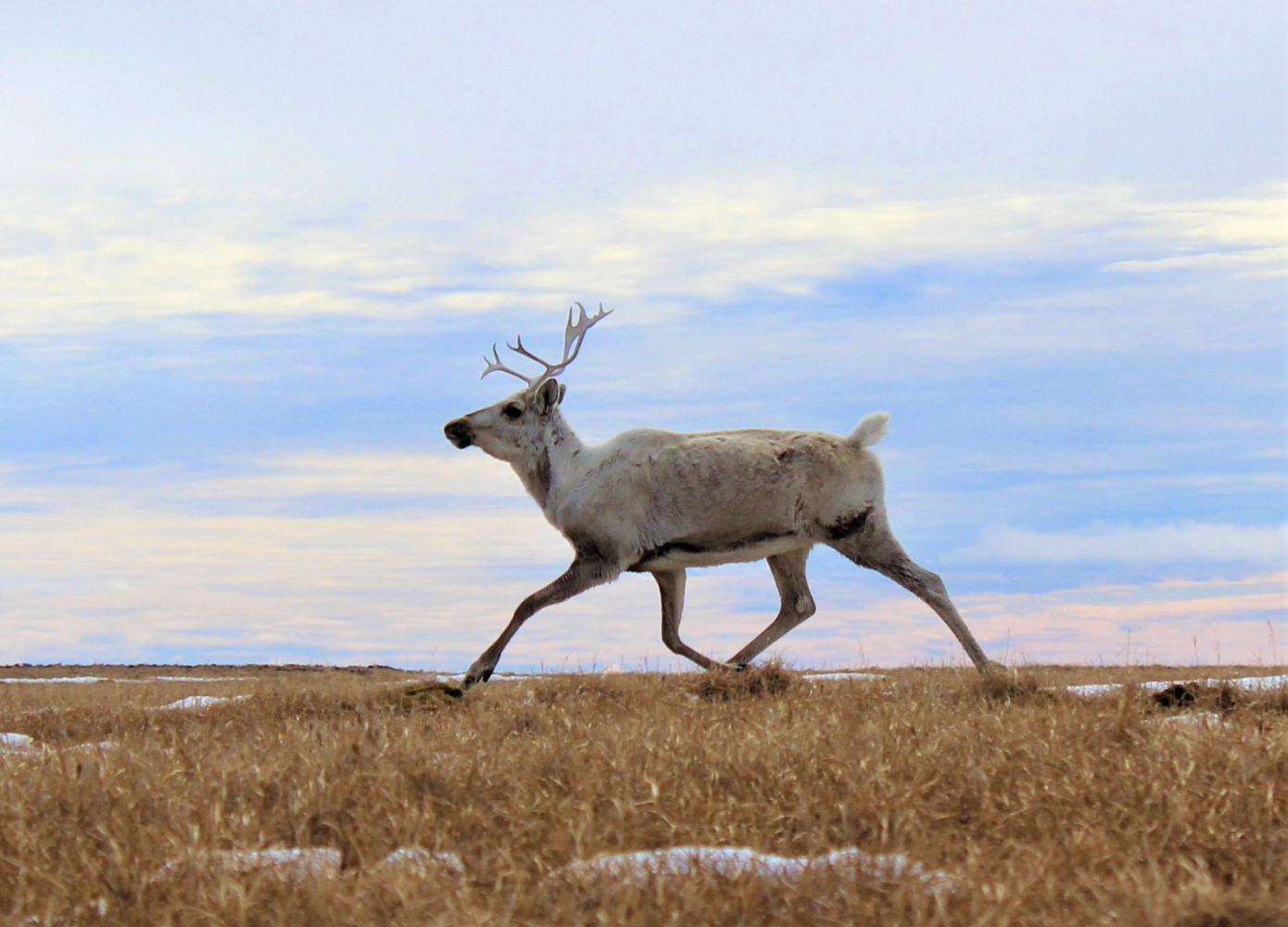
“That Teshekpuk Lake area is very important to that caribou herd, which the community really, really relies on and still hunts to this day,” said Oyagak, the Kuukpik board member.
Oyagak didn’t rule out that Kuukpik could, at some point, agree to limited development in the conservation area. But she said any such decisions would come only after engagement and conversation.
“We'd have to carefully consider important conditions with that,” Oyagak said. “It’s not about no development. We want to make sure our voices are heard and that our knowledge is included.”
She added: “We have to have a seat at the table. We have to listen to the people who live there.”
Oyagak’s corporation does have a long history of withholding support for neighboring oil developments before ultimately striking deals with petroleum companies that have made concessions — like hiring Kuukpik subsidiaries or adapting projects in response to Nuiqsut residents’ concerns.
Meanwhile, separate lawsuits filed by conservation groups aim to overturn the entire March lease sale — not just the bids in the area of Teshekpuk Lake.
Rosemary Ahtuangaruak, a Nuiqsut health advocate and former village mayor, said her nonprofit, Grandmothers Growing Goodness, is participating in one of the other suits in part because she’s not a Kuukpik shareholder and wants to make sure the community’s broader, non-corporate interests are represented in the courts.
“It's about protecting our community overall,” Ahtuangaruak said. “It's about making sure our community is going to be able to live in our lands and waters, and feed our families and our elders.”
The lawsuit from Ahtuangaruak’s group faces broad and vehement opposition from supporters of petroleum development.
Multiple oil companies, including ConocoPhillips, Epoch Oil and Gas and affiliates of Armstrong Oil and Gas, filed lengthy briefs last month arguing for the lease sale’s results to stand, as did attorneys for the state of Alaska.
So did the Alaska Oil and Gas Association trade group, which cited the ongoing war in Iran and resulting high oil prices in saying that the request to set aside the lease sale results is “out of step with the nation's domestic energy needs."
The association's brief cited the 4,500 workers employed in Alaska's oil industry and some $925 million in wages paid to state residents in 2024 — plus billions more in taxes and royalties collected by state government.
The reserve is one major area that companies have targeted for new projects needed to sustain or increase Alaska’s current oil production levels; if the lease sale is invalidated, the association said, it would threaten the "backbone of Alaska's economy."
Decisions on the broader cases are expected, also from Gleason, by mid-October.