This Democratic Socialist could cost Mary Peltola votes in November. But he says he’d actually boost her.
David Leslie, a longtime Fairbanks activist, scored a surprise fourth-place finish in preliminary results in Alaska’s U.S. Senate primary.
Northern Journal has merged with the Anchorage Press! Read our announcement and other information here, and support us with a subscription here.
Leading up to Alaska’s high-profile U.S. Senate primary, political groups spent millions of dollars to boost not only the leading Republicans and Democrats, but also fringe candidates who could tip the balance of a tight race in November.
Most of those efforts fell flat — namely, those that tried to boost spoiler candidates who don’t even live in Alaska, like Arizona resident and Green Party candidate Richard Grayson, who garnered just 343 votes in preliminary counts.
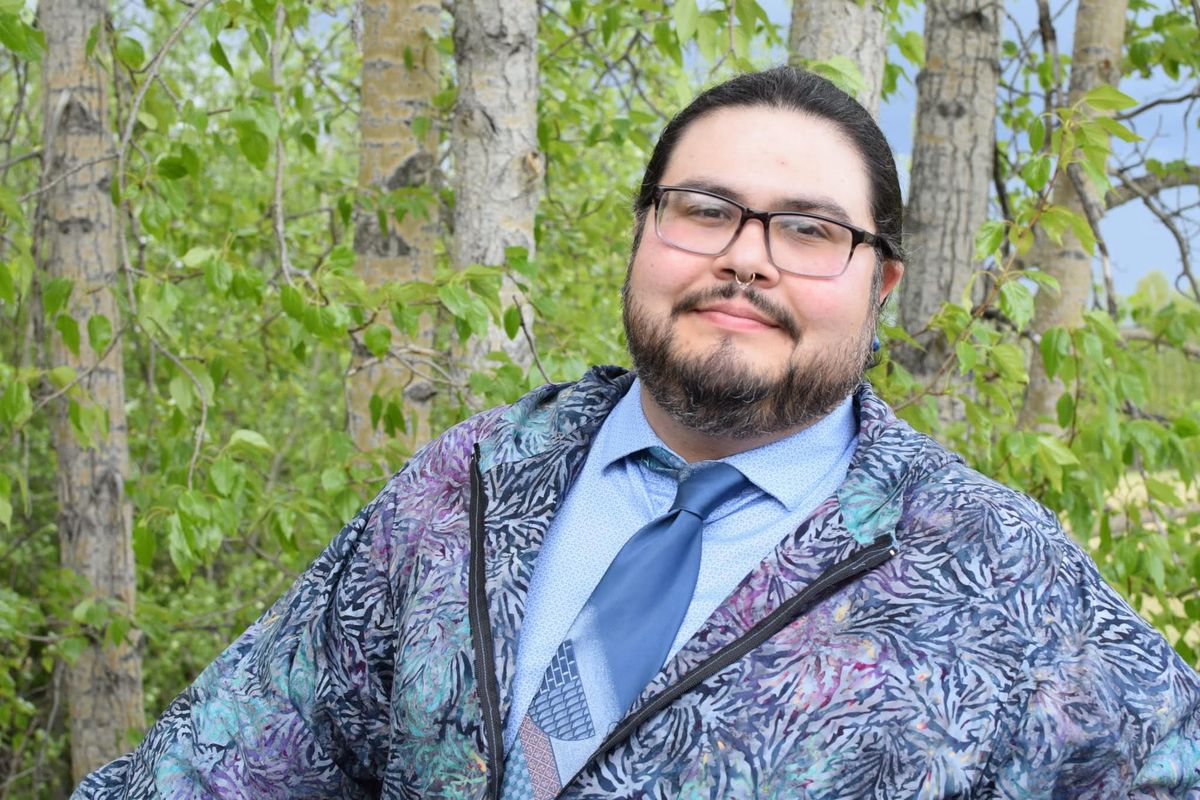
One novice candidate who did crack the top four, though, and is now poised to appear on the general election ballot is David Leslie — a Democrat, Democratic Socialist and Fairbanks resident who, unlike some of the other longshot candidates, has spent years in Alaska politics.
If preliminary results hold, Leslie’s presence on the general election ballot, as a Democratic candidate, could represent a win for conservatives who want to see as few Republicans as possible in the race, to avoid competition for votes for incumbent GOP U.S. Sen. Dan Sullivan.
 Nathaniel Herz
But if Leslie were to drop out before an Aug. 31 withdrawal deadline, it could bump the fifth-placed finisher, Republican Gerald Heikes, onto the ballot — which some politically operatives say would boost the chances of Democratic challenger Mary Peltola.
We wanted to know what Leslie was thinking: why he’s in the race, and whether he might drop out. So, on Thursday, the Anchorage Press called him.
Below is a transcript of the interview, edited for clarity and length.
Nathaniel Herz: For people who don't know David Leslie, who is he?
David Leslie: I am Iñupiaq. My mom was born in Kotzebue. She was sent to Nome for school when she was four or five, and she was raised in Fairbanks by my white adoptive grandparents, Chuck and Carol Leslie. Chuck was really high up in the plumber pipefitters union, Local 375. I grew up going to all of the union holiday parties. And I was born in Louisiana — my mom finished high school there. My mom was in a terrible car accident when she was pregnant with me — she survived, but that’s why, as soon as I could get on a plane when I was a few weeks old, we moved from Louisiana back to Fairbanks so my grandparents could raise me.
My biological grandfather was John Schaeffer, the first president and CEO of NANA.
Herz: What's your history in politics?
Leslie: I first really got involved in activism when I was 16 years old, a junior in high school at Lathrop High School (in Fairbanks). I became the vice president of the Gay-Straight Alliance, especially because I was the only openly queer guy in my class. As an Iñupiaq person, raised by my white family, I've been on a journey of reconnecting and rediscovering my Iñupiaq family. I actually met a lot of my aunts and uncles through organizing around NANA’s ICE detention contracts, and that has been a silver lining — to realize that I'm not just against these contracts, but my family, who I've never met before, we all share these same values.
I was involved with Occupy Fairbanks when that went down in 2011, 2012. I was out there protesting for, like, six months at 50 below. I also was the union steward for the Fairbanks Pioneer Home, and for biographical purposes, I'm still on the board of the Northern Alaska Environmental Center.
If you follow politics, you know that I have been involved. I'm not this weird outsider person, a perennial candidate. I am someone who cares deeply about the community, and I'm deeply involved in many different facets of Alaska politics, and this is just the obvious next step.
Herz: How do your values differ from Mary Peltola’s, and why did you feel the need to run against her?
Leslie: There are three main issues why I decided to primary Mary Peltola. There also was ranked choice voting, which is an important part of why I made this decision. If we did not have ranked choice voting, I would not be running, because it is so important that we get Dan Sullivan and Republicans out of power.
But the biggest issue was the genocide in Palestine. Alaska Native people are still enduring a genocide here in Alaska. And if you can deny that blowing up children, blowing up grandparents, starving tens of thousands of people is a genocide — if you can deny that, you can deny the genocide of Alaska Native people happening in front of us here.
Herz: What do you mean by ongoing genocide of Native people?
Leslie: You talk to our elders, they remind us that this genocide never ended.
Our languages are still dying off, and the state and federal government are not ensuring that we don't lose these languages. We have an epidemic of murdered and missing Indigenous women, two-spirit people, and just people in general. The cops still kill Alaska Native people at higher rates. And also we see our land being continually encroached upon by industry in ways that harm not only our people, but also make us less able to live off the land in our traditional ways — which is both harming us physically, but also harming us culturally. And we still have not seen a proper reckoning of the boarding school era, which didn't end until the 1990s.
All of these things compound to show that there is still a genocide. There has not been reparations for boarding schools. There has not been a full-on attempt to stop the dying of our languages, and there has not been an investment in investigating all the murdered and missing Indigenous people in the state.
Herz: When it comes to Israel and Palestine, you’re critical of Mary Peltola’s position there?
Leslie: I really wanted to see Mary Peltola explain why she took AIPAC money, and then commit to not taking it, to saying that there are allegations of human rights abuses and crimes against humanity and genocide, and address that. But her Alaska-centric campaign is better fit for a gubernatorial candidate, and the fact that she has not answered these yet is such a huge issue.
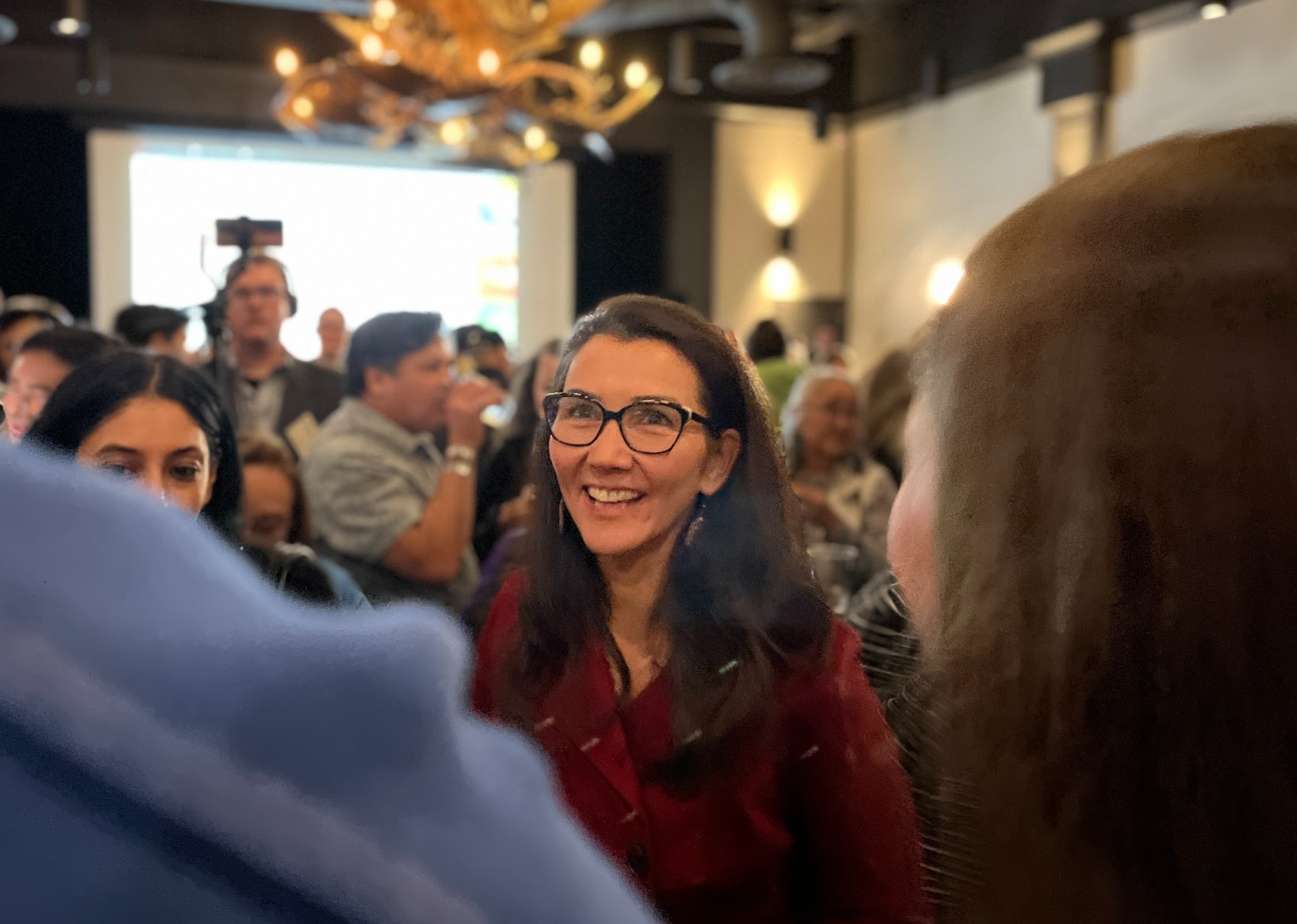
Another issue I decided to primary her on is the environment. Her support for the Willow project, as climate change is destroying our actual villages. You know, Kotzebue, my people’s ancestral homeland, damn near eroded into the ocean from one of the typhoon remnants. We saw how those typhoons destroyed other villages. We cannot continue to ignore how the oil companies are causing climate change, which is destroying our homelands and making them unlivable.
And then, third, when the U.S. Customs and Border Protection agents, ICE, murdered Alex Pretti and Renée Good, we need someone who's going to say, ‘These ICE agents are murdering people. They are tools of violence. They're equivalent to brown shirts, and that their camps are concentration camps that are crimes against humanity and must be shut down.’
( Peltola’s campaign did not respond to a request for comment on Leslie’s statements.)
Herz: What's your take on Peltola, generally?
Leslie: Mary Peltola is obviously better than Dan Sullivan in so many ways, but we can't be running campaigns on not being as bad as the other person. We need someone with strong vision and a strong value that actually aligns with our Alaska Native values to be the leaders in our country. And running concentration camps, continuing this rhetoric that borders are not under control — which has led to the murder and rape of immigrants — is not our Alaskan Native values. Native people don't know borders. The borders crossed us.
Herz: Obviously, there is a concern among liberals, progressives — I think even among some folks who are very closely aligned with you politically — that your presence in the race, assuming the results hold, risks making you a spoiler to Peltola. I'm wondering what your response is to that contention.
Leslie: I have met so many people who will not vote for Mary Peltola because of her stance on the genocide in Gaza.
By having someone who will take a strong stance on Palestine and Gaza, I am encouraging people to show up to the ballot who normally wouldn't, and will rank her second. These people have strong moral convictions, which is good — but they need someone to get them to the polls in the first place. I am that candidate that will allow these people to vote their values, and then they will rank Mary Peltola second. If I was not in this race, they would not be there at all.
Herz: Do you encourage them to rank Mary second?
Leslie: I do. When I first announced my declaration of candidacy, I said, ‘I will ask people to rank Mary Peltola second, because Dan Sullivan and the Republicans are the party of white supremacy, Christian nationalism, and genocide on our own lands. We must remove them from office, no matter what.’ (A Sullivan spokesman, Nate Adams, said in a statement: “Alaskans can come to their own conclusions about David Leslie’s radically liberal worldview, but at least he has principles.”)
I am running so that more progressives, liberals, and Democrats show up — so they will at least rank me and Peltola, so we can get Dan Sullivan out of office.
Herz: There are clearly, though, some Republicans that see you and your presence on the general election ballot as advantageous to them. How confident are you that your participation won’t hurt Peltola?
Leslie: I have had people express concern that people will only vote for who they believe in the most, and ultimately end up submitting an exhausted ballot. I really, truly believe we are still fully understanding the importance of ranked choice voting, as we continue to relitigate it.
There is so much power in ranked choice voting. It has been so important for us to have that in Alaska. We are setting the path for so many other states to join us. We have to believe that ranked choice voting operates as it should.
There are some people who are only going to vote for one person, and that is their right. But we must exercise our rights and tools of democracy to make sure that we get the best candidates we can. And I believe ranked choice voting is that way, and again, I am only running because we have it. It is so important that we maintain it and we use it to its fullest extent.
Herz: What consideration will you give to dropping out before the Aug. 31 deadline, if you do end up being the fourth-placed candidate in the primary?
Leslie: The things that I am running on, the values I hold, are strong. I am not here to waver in my beliefs. I think it's good that we have two progressives in the race. I believe that by dropping out, I would be platforming dangerous Republicans who are white supremacists and Christian nationalists, and we must not allow their rhetoric to take hold. That is also dangerous.
Herz: Have you heard from Peltola or the Alaska Democratic Party since Tuesday?
Leslie: I’ll be meeting with someone from the leadership of the Alaska Democrats later today.
Herz: Is there a world in which, if there was a commitment from Peltola or others on the issues that matter to you, you would entertain the idea of dropping out?
Leslie: A lot can happen between now and Aug. 31. I don't want to take any options off the table. But at this point in time, there's so many huge issues that are important, and these issues will determine whether or not tens of thousands of people will die.
Max Graham contributed reporting.