On Trump, salmon and bison confusion: An Alaska-themed Q&A with the Yukon Territory’s top official
Currie Dixon is premier of the Yukon Territory. A lot of the issues on his mind might also be on yours.
Northern Journal is merging with the Anchorage Press! Read our announcement and other information here, and support us with a subscription here.
Currie Dixon spends a lot of time thinking about political issues that are also on the minds of many Alaskans: energy, salmon, resource development.
He's in touch with Alaska Gov. Mike Dunleavy, and has met with the state's commissioner of fish and game, Doug Vincent-Lang.
But many Alaskans have never heard his name. That's because he's a top political official not in our own state, but in our frequently overlooked neighbor: the Yukon Territory.
The Yukon, population 50,000, is part of Canada. But Alaska probably has more in common with it than with any state in the Lower 48.
We share a 750-mile-long border, the Yukon River’s iconic salmon runs, border-spanning caribou herds and Indigenous nations — plus a rich mining history, and a highway that connects us to the rest of the continent. Many Alaskans have friends in the Yukon; residents of the small towns of Haines and Skagway, near the U.S.-Canada border, even go to its hub town, Whitehorse, to shop, swap tires, or see a vet.
Dixon is the leader of the Yukon’s right-of-center party, the Yukon Party. He was elected premier in November, ousting the center-left incumbent, Ranj Pillai. At 40 years old, Dixon has spent years in politics, but he also had a stint in the mining industry. He's the Yukon's first premier born in the territory.
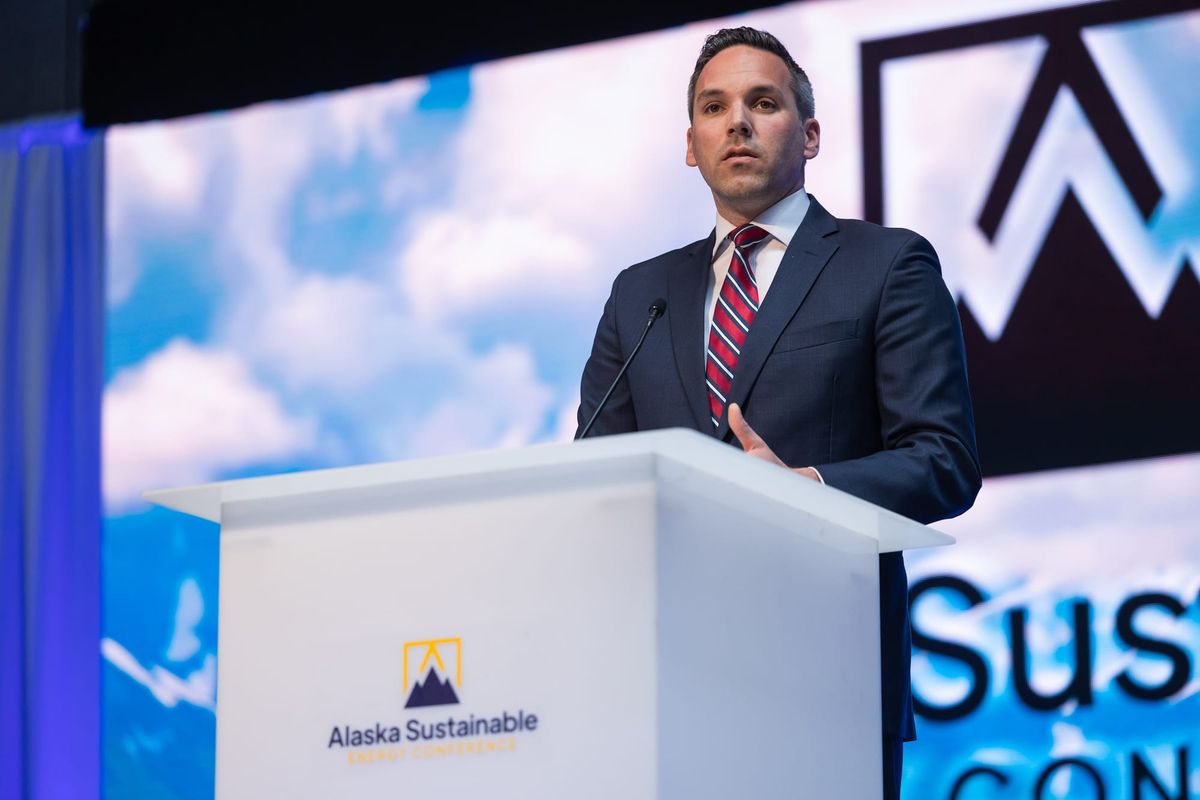
In May, Dixon visited Anchorage for an energy conference hosted by the Dunleavy administration. While in town, he and Dunleavy renewed an agreement promoting collaboration on salmon management, cross-border tourism and more. Dixon also met with Vincent-Lang and transportation commissioner Ryan Anderson. And he toured local medical facilities with Indigenous leaders from Whitehorse to learn about Alaska's Native healthcare system.
It was his first visit to Anchorage as premier.
At a downtown coffee shop, Dixon sat down with the Anchorage Press’s Nathaniel Herz and Max Graham for a wide-ranging interview — about political tensions between the U.S. and Canada, the status of funding for the Alaska Highway (and an international treaty called the Shakwak Agreement), Yukon River salmon, energy and other issues. Dixon also tried to clear up a rumor about transplanted bison.
Below is our interview, edited for clarity and length.
Nathaniel Herz: What, broadly, is your agenda here?
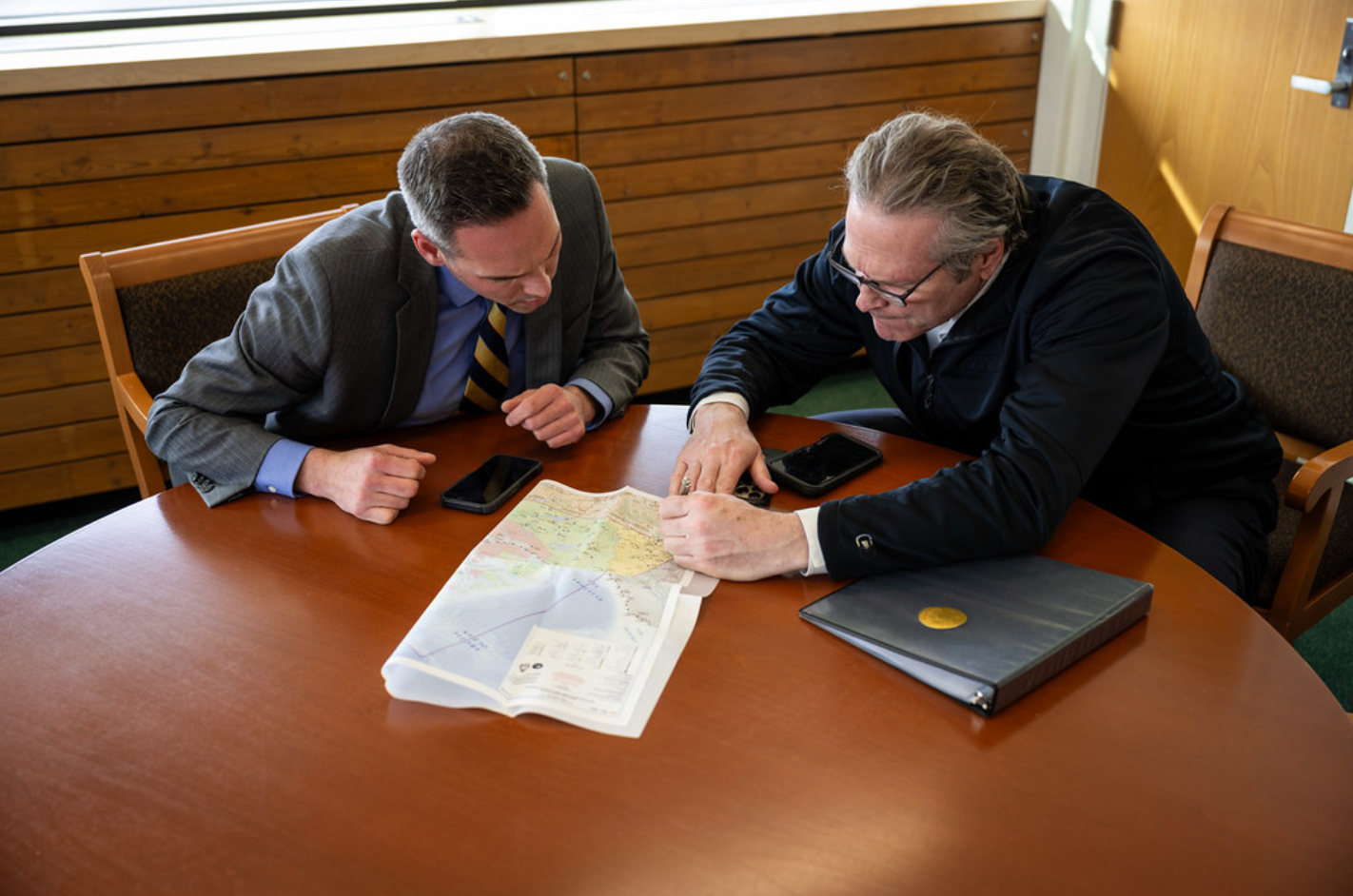
Premier Currie Dixon: I was originally invited by the governor when we met in the Yukon. The governor came to the opening of the Arctic Winter Games in Whitehorse (in March). We had a bilateral meeting there, as well, and the governor noted that he was hosting this conference, the Alaska Sustainable Energy Conference, and invited me to come and speak. We also met with the governor again here, and we signed a bilateral accord between the Yukon and Alaska to highlight the important relationship that we have between the state and the territory. Some of the national-level tensions that exist between Canada and the U.S right now, around trade and tariffs, can suck up a lot of attention. But it's important to remember that we still have those enduring relationships at the state and territorial level that that are so important to both of us. That's what the governor and I both agreed on.
It's a broad agenda, from energy to roads to salmon to the bilateral relationship between Alaska and Yukon.
Herz: How would you describe the vibe between you and the governor, compared to, maybe, the acrimonious relationship between Canada Prime Minister Mark Carney and President Donald Trump?
Dixon: I mean, look: I think that the relationship between Canada and the U.S. is a complex one. Both President Trump and Prime Minister Carney have to navigate that in their various respects. But I think the point that the governor and I have made with each other, and publicly, is that despite what's going on at that level, despite some of the noise, it's really important that we maintain a strong bilateral relationship at this level. We just do too much together — there's too much overlap and too much work being done at the state and territorial level to let us get caught up or distracted by the federal stuff.
Herz: I was in Dawson City (in the Yukon Territory) last summer, and there was at least one guy at a little Thai pop-up restaurant wearing an anti-Make America Great Again hat. It was clear from our reporting and reading and talking with our contacts that there's quite a bit of frustration among folks in Whitehorse and on the Canadian side. People were saying, 'We're not going to drive over to Skagway and do our business there.' Has it evolved a little bit since then, and has it softened, or do you feel like that's still really present?
Herz: Former premier Pillai had implemented what I thought were very savvy responses to Trump's tariffs — ideas like: 'We're going to scale back or cut off our Starlink contracts, and not buy any Teslas.' Have you maintained those responses?
Dixon: No, they were never actually implemented. The premier talked about it, but it never actually happened. That would kind of be cutting off our nose to spite our face a little bit, right? For some of our remote communities or remote highway camps, they rely on Starlink to stay connected and communicate, and that's important. So, that never happened, even under the previous government.
Across Canada, there's been fairly strong consensus at the provincial, territorial level that there's some measures that are being taken that are being done basically uniformly. Some provinces are outliers. But for the most part, we are letting the federal government deal with the tariff stuff. That’s why we have a federal government, to be able to deal with those types of foreign policy issues. As much as they impact us in the Yukon a little bit, we try to focus on our own constitutional authorities.

Herz: I know there was a relatively recent agreement announced on Shakwak and the Alaska Highway. Is there anything beyond that, or building on that, that you're hoping to achieve in the future when it comes to roads, or is it mostly just maintaining the agreement that exists?
Dixon: The agreement was a big one for us. This was a federal investment from the American federal government in the Alaska Highway in the Yukon.
For a territory that's only got 48,000 people, and therefore 48,000 taxpayers, our budget is a little more limited than is available to Alaska. You combine that with the fact that the Alaska Highway is really important to Alaska — it's the terrestrial link between Alaska and the Lower 48. Pretty much every single thing that's driven into Alaska, other than those coming on the barge, will come up the Alaska Highway. So there's a lot of good reason why the American government would want to invest in the Alaska Highway. What we're trying to do now is strengthen that relationship over time, so we're not reliant on single applications and single funds, and instead have a more predictable, steady investment coming from both the Yukon and the Alaska government, or the American federal government, in the highway.
For years, there was the Shakwak agreement, an international treaty that provided funding for that. That disappeared over the last couple of years. Now we're trying to reinvigorate that relationship. So, while we've been successful on the significant investment that we're going to receive, and we're receiving already, we want to continue to work with Alaska to make sure that we have a steady, predictable system.
Herz: Would the idea be actually to negotiate it between the state and territorial government, so you get the toxicity of the federal relationship out of the way?
Dixon: The way it's worked is that the state applied to the American federal government for the money, and then they flow it to us. So we’ll tender the work. Canadian construction companies will do the work on the Canadian side, and then we recoup the money from the state of Alaska.
Herz: On salmon — I understand from the commissioner of the Alaska Department of Fish and Game that they are trying to push you guys on salmon passage on the dam of the Yukon River in Whitehorse, because they're not maybe totally satisfied. Could you describe how you see that issue?
Dixon: Salmon are very important to both Alaskans and Yukoners, especially Indigenous populations, who have relied on salmon culturally, (as a) food source, all the cultural aspects of salmon over the course of millennia. And the declining salmon populations have been a huge problem for both of us.
 Nathaniel Herz
Obviously, there's the Pacific Salmon Treaty between the United States and Canada, and there's the creation of the Yukon River Panel that manages the salmon population, so there are established bodies to respond, from a management perspective, to the salmon population issues.
Bilaterally, there's obviously a relationship between Alaska and Yukon as well. We are very much appreciative of the significant sacrifice that Alaskans have made in the seven-year moratorium (on king salmon harvests). That's a big step. I met with Commissioner Doug Vincent-Lang yesterday and talked about that, and expressed my appreciation. I think they are keen to work with us as well, and there's a few things that they'd like to see us do more, and I'm sure there's a few things we'd like to see them do more. But we have very respectful, positive conversations about those.
On the dam issue itself, it does have issues with the salmon, and we want to see improvements to that over time. Those kinds of improvements aren't cheap. And we've got limited financial ability to respond to that in a big way. So we're going to look to (the Canadian federal government) for some improvements there as well. But for now, those dams are critical to our generation capacity. Over 90% of our power comes from hydro, and from those three hydro dams: Aishihik Generating Facility, the Whitehorse Generating Facility, and there’s one up in (the central Yukon town of) Mayo as well.
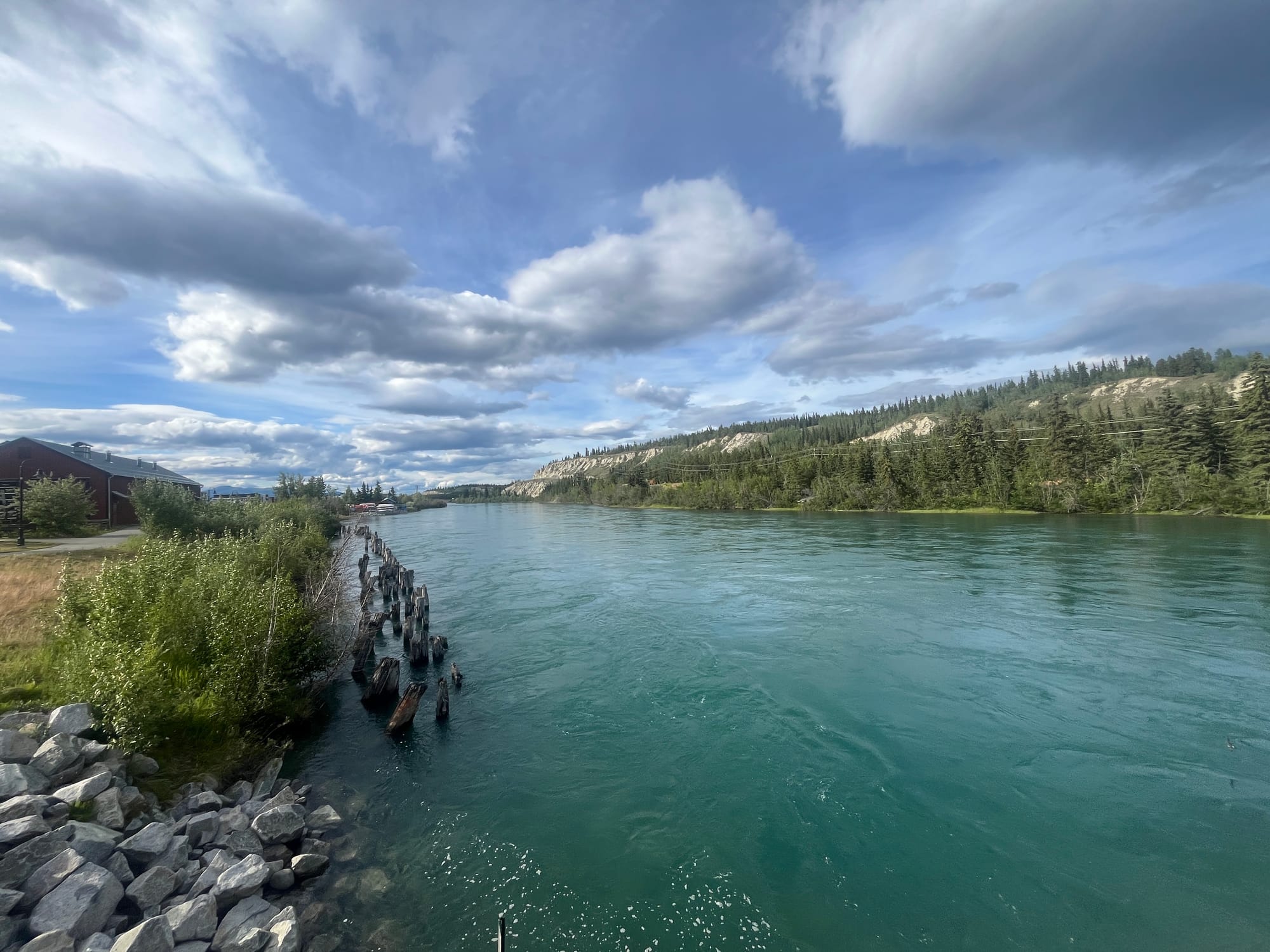
There's more work we have to do to improve those facilities, and we're willing to do that. It's just going to take a little bit of time. And then from a policy perspective, we're continuing to engage the Yukon River Panel with the government of Alaska. Meetings like the one with Commissioner Vincent-Lang yesterday are examples of that.
Herz: On the subject of energy, I was tracking what you guys were dealing with this winter, with warnings that the grid was under 'significant strain' during a cold snap.
Obviously, there's not an easy way for you guys to plug into Alaska's grid. But knowing that we do have some specific resources here, whether it's Southeast Alaska hydropower, or the fossil resources that we have on the North Slope, or potentially importing natural gas, I’m curious if there's any consideration of ideas or policy options internationally, where you might be able to look to Alaska for either short-, medium- or long-term solutions?
Dixon: You’re right, there's not an easy obvious connection between the main piece of Alaska and the Yukon. But when you look at Southeast, there's some real opportunities.
The corridor between Skagway and Whitehorse is an obvious one. That's probably the most important corridor from our tourism industry. You've got hundreds of thousands of tourists coming into the Port of Skagway, and then either by train or by road into Carcross and Whitehorse, and that provides us with a huge economic opportunity. But that connection also has other aspects of it as well, and over the years we've looked at the possibility of power line transmission through that corridor. There's a huge demand in Skagway for power, not just for the community, but for the dockside power for the (cruise) ships, and it's at a time in the summer when we actually happen to have a lot of power in the Yukon. We've got power issues, obviously, in the Yukon, but in the summer we're pretty good. We've got those hydro dams to provide us with clean, affordable power in excess.
So, if there's an opportunity for us to connect that summer opportunity with the demand in Skagway, we're interested in that. In years past, we've done agreements with Alaska to study that, and I think that's something we could further study now, with the relationship we have with Gov. Dunleavy and the state of Alaska, and whatever government comes after November. So, there's an opportunity there. I wouldn't describe it as a near-term opportunity — it's probably a mid- to longer-term opportunity — but it's certainly an opportunity.
Herz: Does that feel logistically and economically feasible?
Dixon: Economically, I think it would be. It's just the technical part that is the challenging part. That's a high avalanche area. It's over the pass. Not an easy place to build a power line, probably, but something we should definitely be thinking about. That is also an important supply chain corridor from an energy perspective, too, because I think 60% or 70% of the diesel we use in Yukon comes through Skagway.
Herz: Can you describe where you guys are at with renewable energy development — the obstacles and time horizon?
Dixon: So, we totally support renewables and want to see them added to the grid. Just where we found ourselves, though, is a situation where we created a micro-generation policy back when we were in government last time, and it was carried forward by the previous government — so it's had bipartisanship support, I guess you might say. But it was paused by the previous government, and we've continued with that pause because it was so successful. It added so much new rooftop solar at your house, or small solar in your yard, it immediately created grid instability for us.
The answer to grid instability is, in part, storage. We have a grid-scale battery that's going to come online. We've had some issues with it; it got affected by the cold last winter, so there's some technical issues with it right now. But it's planned to be added to our grid to help facilitate that stability.
The other aspect is: If it displaces diesel or fossil fuels, it's great, but there's a seasonality aspect to that. Because in the summer, solar is just displacing hydro, which is not really helping us. When we need the power is when it's dark and cold — January, February, Christmas time. When we faced that cold snap (last winter), that was in the deepest, darkest months of the winter.
Max Graham: One totally unrelated question. I'm curious if you and Commissioner Vincent-Lang spoke about bison at all, and the Yukon sending bison to Alaska?
Dixon: Yes, we did speak about bison. I think there's been a bit of confusion over the years. Alaska has purchased bison from Alberta. I think that there was a sense that maybe there's confusion about which Canadian subnational entity they're buying from. But Alaska has purchased bison from Alberta, and there was a sense that maybe that was from the Yukon. But it's not.
Graham: Who was confused?
Dixon: I think that a previous agreement that Premier Pillai and Gov. Dunleavy signed referenced the idea that Yukon would provide bison to Alaska. Somewhere in those conversations, I think it got lost that Alaska was getting bison, but not from the Yukon. They were getting them from Alberta. I don't know for sure. I just know that there was an agreement previously between Alaska and Yukon that referenced the Yukon supplying bison. We would be fine to have a conversation about that — we've got a healthy herd. But it would be costly to go capture these wild bison and then tranquilize them and truck them to Alaska.
Graham: So, to be clear, the Yukon has not sent any?
Dixon: Zero.
Obviously, I mean, they may travel across the border on their own. But no, we haven't captured here. We’re willing to have a conversation with Alaska about that. We've said that. But it would be a little more complicated than in Alberta, because it's a wild herd in the Yukon. So you'd have to literally pay somebody and go tranq bison.
We've had tremendous success with our bison in Yukon. We've got a healthy, big herd. There's always debate about how big it should be. I think there's competing views on it, but from the perspective of wildlife management, it's been a real boon. It's been a success story because people hunt bison frequently, and it takes pressure off other species. If you're filling your freezer with bison, you're maybe not getting a moose that year, and that reduces hunting on other populations.
Herz: Have you ever gotten one yourself?
Dixon: Yeah, a couple years ago. I haven't hunted bison in a couple years, since I got back in politics.
Herz: Okay, last question.
There isn't an obvious way to connect the population centers of the Yukon and Alaska — it's a 14-hour drive between Anchorage and Whitehorse, and there are no commercial flights.
I'm just curious: Is that at all a priority or an item of discussion in your conversations with the Alaska government? Do you see any ways to strengthen not just government-to-government but citizen-to-citizen opportunities, across the border?
Dixon: I would love it, right? I would love if there was a direct flight from Whitehorse to Anchorage. Even to Juneau would be good.
To answer your question: Yes, it is a topic of discussion. When I had a conversation with the (Alaska) commissioner of transportation yesterday, they actually asked about it, because there's a company in the Yukon, Air North, that has in the past had direct flights into Alaska, mostly to Juneau.
I think at one point they looked at Anchorage as well. I can't remember if there actually were scheduled flights, but it was something that came and went. I think at the time it was just deemed not economic for the company. I think there's an interest generally in seeing if that's changed. So, we're going to have a conversation with Air North about whether that was something that they'd look at. And if there was, either from a permitting side or a regulatory side, some issues that we could help with.
I think the economic opportunity would be considerable if you could connect Whitehorse with Anchorage. It's such a big city relative to Whitehorse and the Yukon that getting access to that market would be useful, I think, from an economic perspective. But it has to make sense for the company, too.
Connections have existed in years past. Air North got its start flying scheduled flights to Juneau. When my parents got married in Juneau — they met in the Yukon in the 70s and flew over to Juneau to get married — it was a regularly scheduled flight. Joe Sparling, who is the CEO of Air North, was the pilot that flew them over.
If you value journalism like this, please consider a voluntary paid membership to the Anchorage Press/Northern Journal. If you're already a paid member, many thanks.